


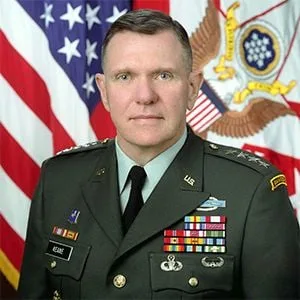
General Jack Keane Retired Four-Star General, U.S. Army
The Next Phase of America's Strategy in the Middle East
Transcript
Automated transcript · uncorrectedHow we use electricity can be smarter, cleaner and greener. At Electric Garland we can help guide you there. Our net zero hub has all you need to know about smart meter plans, home EV chargers, solar panels, heat pumps, and much more, making your usage clearer, your trips greener, your home cozier, and your world brighter. Find our net
zero hub at Electricarland dot i.
E Sunday morning. Well, Father’s Day. We’re trying to relax, but there’s always Iran. There’s always what’s going on in Israel, Hespalt Lebanon. But us today is General Jack Keene. Well, he knows his ears are close to the ground and he knows what the heck is going on ninety nine percent of the time. General Jack Keene, give us your
your pulse of the situation.
Well, I think what we have in front of us. Obviously we have an MoU that now has been signed, and what the deal really is. It’s a recognition that there’s a major shift of the administration’s priorities away from military objectives the economic and political objectives, and what has happened here. The president’s advisors have landed the idea with
the President that the oil and gas prices that rose as a result of Closingingustraits of a Mouse, coupled with Iran’s ability to retaliate if military operations were resumed against the Golf State’s oil and gas infrastructure and be effective against that infrastructure, those two things together would produce a worldwide depression. And as a result of that we have
entered into these negotiations. And just to give you a sense of it, remember the war began on the twenty eighth of February. On the second of March, the Iranians closed the Straits of a Mouse. Then a number of weeks later we went to a cease fire, giving the rise in oil prices that were taking place and the
concern that would have politically and economically. Four days later we began a naval blockade. Recognized that we needed some leverage against the Iranians. After a few weeks of negotiations and nothing was happening to get them to close the straits, it became obvious they didn’t care about the economic peril the blockade was putting on their people and we needed
more leverage. So as a result of that, then on May the fourth, the administration initiated Project Freedom, which was to open the straits of a moose forcibly using military in the thirty six hour, the presidents stopped the operation at the request of Saudi Arabia and other Arab states.
Why they were concerned that one we wouldn’t be able to get it done effectively, two that Iran would retaliate against their oil and gas infrastructure. So as a result of that, we stopped Operation Freedom, and we continued to go on.
In Iran was retaliating against the UAE and Saudi Arabia and Qatar and.
Everybody was it day from the outset. They had two strategies. One was to shut down the strait of a mouse, and that obviously was effective, and two to retaliate immediately, not just against Israel, but actually much more so against our allies and partners in the region, particularly those that own oil and gas infrastructure, because they wanted them to
understand that they were going to be vulnerable to them. This was not going to be about the United States, Israel and Iran. This was going to be about them, and they wanted that pressure from them to be put on the United States. And that was somewhat effective, as I just described, and even when we were ready to
go back into military operations, and that was just a few weeks ago, and the President was pretty close to it. The Pakistanis, the Arab States, the other Islamic states came to the President in that meeting and they asked them not to do it, to continue into negotiations and see if you could get a diplomatic solution. So I wanted
our audience to understand why we are on the path that we are on. It was a major shift in presidential priorities away from the military operation. Remember the military operation lasted four to five weeks. Objectives take everything offensive away from the Iranians, nuclear ballistic missiles, drones, support for proxies as well, weaken the regime so much that eventually,
in time the people would be able to take charge of Iran once again. So we walked away from that because of the economic and political objectives that the President began to kempt to achieve, and that produced the deal that’s in front of us now. With the challenge of the deal, the most immediate challenge John that deals with
Israel and Hezbela. Iran is trying to separate the United States from Israel over the Hesbela and Lebanon issue. Iran doesn’t have any claim to Lebanon. Yes, they support Hesbela, They’ve organized them, they have resourced them, They’re their number one major proxy. But these are Lebanese citizens operating in Lebanon in the interests of Iran. And if they’re attacking
Israel under the ceasefire, which they have done in the last twenty four hours and have been doing since April seven, seventeenth, Israel has every right to respond to that. What they have done. Hesblas or audience understands. They have attacked into northern Israel with two thousand rockets and drones since April of seventeenth, and within the last twenty four hours with
the recent cease fire, and as a result of that, over three hundred Israeli citizens have been wounded. They have moved out of the towns and villages in northern Israel. The kids are not going to school, they’re living with families or they’re in motels, and Israel cannot stand for that.
There’s no way that Israel can have their sovereignty violated that and not respond militarily. We need to support Israel publicly, not just privately. In doing this and not let Iran drive a wedge.
Well Friday General on Friday, I mean Thursday night, they Hesbela attacked Israel. Israel hit them back twice as hard, and the White House made no comment. So making no comment is acknowledging that you have to do what you have to do.
That is true. But also there have been other statements made by the Vice President as you heard, trying to get Israel to calm down, so to speak. Israel has to do what is appropriate for what is in the sense of what is being threatened on them. They have the intelligence, they know what they are doing here, and
we need to support them privately as well as publicly, and we cannot let Iran have a veto over Israeli’s operations in Lebanon, and that’s what they’re trying to do by pressure in the United States. I think the President understands this, and I don’t think he’s going to put pressure on Israel to stop their operations when they’re fighting
for their sovereignty. I mean, so the audience understands Iran’s objective is to destroy the state of Israel. What they mean by that, it’s not the physical destruction unless they had a nuclear weapon, they cannot defeat Israeli military. What they want to do is create such a volatile security situation inside of Israel among a relatively small population in
the world, seven million Jews, and make that situation so volatile and insecure that they want to raise their family and kids there. In other words, they would migrate out of Israel. That is what they’re trying to achieve, and in northern Israel right today, they are achieving that by the families moving away from that danger area. So yes,
they must respond and they must complete the operation of getting Hesbela out of the southern part of Lebanon. They cannot let that stand.
Do you well, I mean, I guess this is an hour by hour situation. This is a day by day situation, and there’s no way to make it looks like the piece is going to hold. It looks like the straighter her moves will will stay open because you know, Iran does not dare do anything to change that, because you’ll
go in there and kick their butt.
Well, what the president is holdings as leverage, He has a couple of things. One, he has financial resources that he can hold on to and two, obviously military leverage and that’s the reality, and they certainly are aware of that.
And I think, John, what the Runnings will do is drag out these negotiations as they already had. Remember we started out with two weeks of negotiations when we went to the ceasefire back on April the eighth, to get the straits of Harmos open. Well, they dragged that out for nine weeks, and they’re going to drag this out
for sure. The whole sixty days is what the clock is, and likely longer than that, because they believe the closer you get to the midterm elections in the United States and they pay close attention to what’s happening here, the less likelihood John, that the president would initiate combat operations and as a result, the straits of the Moves would
be closed again, all prices going up very close to the election. Here’s what I think over the long term, I trust the final end state here. If the President doesn’t give a deal to meet all of his objectives, I don’t believe there will be a final deal. Despite some of the problems with this memorandum of understanding, and
the President’s got two more years plus to be president of the United States. He is not, and I say, he is not going to pass this rounding problem to his successor as Biden passed it to him and presented him with something of a mess here. He’s not going to do that. He will resolve this one way or
the other. If he can’t resolve with negotiations in time, he will go back and physically destroy Aran in terms of its military capability and its industrial and economic might. That I’m absolutely convinced of.
I agree with that. Well, General, thank you so much for an update on a Sunday morning, and let’s pray for peace, and let’s pray for common sense. And happy Father’s Day.
Happy Father’s Day to you and Joe, our audience out there. Great talking to you. I always
Sunday, June 21, 2026
Common-Sense Leadership Focused on Border Security, Fiscal Discipline and Economic Growth
John E. Sununu Former U.S. Senator from New Hampshire; nominee for U.S. Senate

The Push for Peace Abroad and Election Security at Home
Roger Stone Political Strategist & Consultant
Cracking Down on Waste, Fraud and Abuse in Government Programs
Claudia Tenney U.S. Representative from New York
Restoring American Identity Through Education and Technological Leadership
Van Hipp Jr. Chairman, American Defense International
Iran Diplomacy Has Reached Its Breaking Point
David Paterson Former Governor of New York

Why Ohio Will Play a Crucial Role in America's Future
Robert Sprague Ohio State Treasurer; nominee for Secretary of State
High Spending and Tax Burdens Are Driving Wealth Out of New Jersey
Declan O'Scanlon NJ State Senator

Balancing the Kennedy Legacy with Modern Solutions
Jack Schlossberg 2026 candidate for Congress, NY-12

New York's Economic Future Depends on Staying Competitive
Steve Fulop President & CEO, Partnership for NYC

Rethinking Life Insurance as an Asset, Not an Expense
Jay Jackson Chairman & CEO, Abacus Global Management

New Tax Plan Could Create Major Risks for Co-op Buildings
Suzanne Miller President, Empire State Properties; WABC Real Estate Analyst
Trump Administration Shifts Away from Offshore Wind Projects
Bonnie Brady Executive Director, LI Commercial Fishing Assoc.

Celebrating Fatherhood Through Community Service
Mark Zauderer Trial Attorney & Partner, Dorf Nelson & Zauderer LLP

Protecting Prostate and Bladder Health for a Longer Life
Dr. Peter Michalos WABC Medical Expert

Diving Into Deep Sea Mysteries and Cosmic Frontiers
Steve Kates Space and astronomy broadcaster (Dr. Sky)

Bipartisan Coalition Demands Stronger Safeguards for Kids Online
Lynn Shaw Founder of Lynn's Warriors

Stocks Rebound Near Record Highs Despite Hawkish Fed Surprise
John Terrett WABC Financial Analyst
General Jack Keane
Confronting Russia, Iran and China as Global Threats Intensify
General Jack Keane Retired Four-Star General, U.S. Army
American Military Strategy Targets Iran's Weapons, Infrastructure and Proxies
General Jack Keane Retired Four-Star General, U.S. Army
Why the U.S. Is Massing Military Power in the Middle East
General Jack Keane Retired Four-Star General, U.S. Army
Israel will not stop until Hezbollah is wiped out.
General Jack Keane Retired Four-Star General, U.S. Army
ISIS at our borders and Russian warships in Cuba.
General Jack Keane Retired Four-Star General, U.S. Army
New weapons will make difference in Ukraine.
General Jack Keane Retired Four-Star General, U.S. Army
