


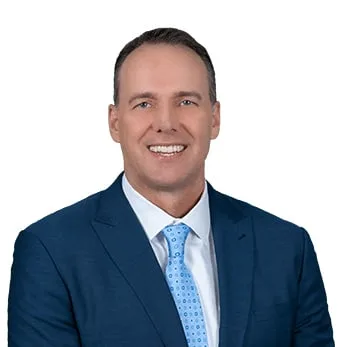
Jay Jackson Chairman & CEO, Abacus Global Management
Turning Life Insurance into Retirement Income
Transcript
Automated transcript · uncorrectedSunday morning. What is today is Jay Jackson, Chairman and chief executive officer of the Applicist Global Group, New York Stoffics surance company with the symbol of ABS. He’s a good friend and boy. I mean I heard him speak the other day and I said, you have to come on the w ABC and and talk about it. He
predicts his financial company predicts the life expectancy of almost anybody and buys back, buys back insurance policies and better off spending the money while you’re alive than than dying and you don’t get the money. Well, Jay, I mean, did I describe it right? Yeah?
I think that’s fair. I would just make sure we’re clear. The symbol is a Apple B boy x X ray, just so all the listeners have it. And you did describe the company, I think really well. And it’s in layman terms. We use data, updated medical data to help people better understand right where they are in their position
in life today and what the outcomes look later. I mean, John, what’s so important is what’s the number one fear of somebody entering retirement. It’s running out of money? Right, shouldn’t they have a better understanding of how long they’re going to be in retirement, and that type of financial data can be applied in lots of different ways. We also
use it to give them a current value of their life insurance policy. That was something that they do.
You know the scamily you know, the scaring thing is that you’re ninety percent of the time you’re correct. So I’m scared to have you run I’m scared to have you run on me.
Well, you know what’s interesting though, is it wouldn’t you rather have me be greater than ninety percent correct and not correct at all and putting out false data? But what you touch on is super important. People might say I’m afraid of knowing what that data is because I don’t want to impact the way I look at life.
My point is very much the opposite. This should help you look at a more positive way in life. Listen, John, we’re not going to be here forever, right Like you know, Dick van Dyke was the first centurion ever over six foot tall. Think about that. There’s never been anybody over six four age ninety five. Like, when we start to
think about our planning, we need to have a better and clearer understanding of what that means.
Now, I heard some statistics. You were on with my friend Greg Kelly a couple of weeks ago, and I heard some statistics that said, Holy count. I mean, you know the old Flulver Zoo. Holy count. Give me some statistics that you told Greg. Yeah.
Some of the things that we were focused on was just getting a better understanding of how we think about our finances in retirement, because ultimately, what happens is nine times out of ten, what people do is they’re so concerned a running out of money, they don’t spend enough to take care of themselves. And ultimately, where that leaves
them is a place that we forget about mental health. Mental health can be a crisis in a lot of areas. But here’s some people don’t understand. The population segment with the highest suicide rate by age. You know what that is over the age of seventy five, over the age of seventy five, the high suicide rate in the United States.
It’s crazy, and it’s always because when we think about this, right, we’re so afraid of saying, oh man, do I want to know the results. My point is, once you get there, you lose sida. What’s really valuable, what’s really important. What our premise is by giving you this data, you can actually have a huge impact on your life. Meaning what’s
your most valuable asset? Everybody thinks it’s their car, their home or whatever. Watch who knows. I say it’s time And if I can give you time back, we have really given you something powerful in the sense of understanding how much time you have left? Right, Because if you’re age sixty five, you’ve got a fifty to fifty shot
to live in a ninety How are you managing that? How are you having those conversations? Are you looking at all your assets, including your life insurance policy? That’s an asset, job, that’s personal property that can be sold and utilized today versus waiting when you pass away.
Now, what’s the age groups that people start to look at that? Is it at sixty five or is it at seventy? Is it at seventy five? When do you start to think about it?
Great? The actually really great question. I think it’s sixty five. People are fine tuning what’s going to happen, right, and then when they get into their seventies, everything is physically they change, and then financially they change. They’re downsizing, they’re looking at a lot of things a little bit more closely, and nine times out of ten, nine times out of ten,
this is what every life insurance policyholder does. They just stop making payments. And that’s a tragedy, right because they’re just leaving money on the table. When that happens, they cancel the contract. Insurance company wins. If they visit with us, we could say, hey, that contract maybe worth several hundred thousand dollars in today’s value. Use that capital to fund
your retirement, and your errors will appreciate you more for it.
Now, I would look at it as good news in a different way. If I was, well, let’s say I’m seventy five right now, and I said to me, you you do the analysis on me, and you say, oh, you’re going to live to eighty five, then the other thing I made do is try to eat healthier, have
more examinations, and try to extend that life.
That’s exactly right. We give you that data, and we have all the data to support that. Says By the way, John, I would come to you and say, one of the biggest impacts that you can make to your lifespan and your health span for that matter, is exercise. Right, go for a walk and put some weights in your hands.
Understand that using weights is super super important, So eating healthy, making some of those changes. Like, there’s a couple things that really change people in life. See you ever hear about that person that has the heart attack and all of a sudden they get healthy. Why wait till the heart attack? Right? My question and what Greg and I
spoke about and with John, with you and I want to focus about. I’m trying to flip people’s mindset to say, listen, if you’re in your fifties, sixties, seventies, you’ve got to answer this question single day, look in the mirror and ask what would my eighty year old self say to me right now? But we all want to go back
in time, right, But it.
Would be like, you know what eat? Let’s steak eat less? Take an eat eat less? Taken and have more fish. I guess.
A baby, but I would say steaks okay, right? If you’re getting protein, I think it would probably say things like have some weights. Man, I don’t want to sit in a wheelchair right now. I want to be as mobile as I can. I want to be active, I want to be engaged. We’ve got this silver tsunami of
baby boomers who are starting to adopt this and what Abacus is doing that’s so different. We’re building customized solutions for them based on their lifespan and how they can impact it by making these improvements.
Jake Jackson, thank you so much for coming on this Sunday morning, and thank you for the tips. And I think it can be helpful in many many ways. And let’s catch up again real soon.
Look forward to it. Thank you. John
Sunday, May 3, 2026
Americans Are Hurting From High Costs and a Divided Washington
David Paterson Former Governor of New York


High Taxes Driving Wealth Out of Blue Cities
Jesse Arm Vice President of External Affairs, Manhattan Institute

DEA Targets Fentanyl Supply Chain
Frank Tarentino DEA Associate Chief of Operations, Northeast Region

The Threat of Political Assassinations Is Very Real
Roger Stone Political Strategist & Consultant


Expanding President Bush's Vision of Service
Jennifer Sirangelo President & CEO, Points of Light
Transport Industry Hit Hard by Fuel Costs
Spero Georgedakis Founder & CEO, Good Greek Moving & Storage

U.S. Withdrawals Weaken Global Deterrence
Tidal McCoy Venture Capitalist & Former Asst. Secretary of the Air Force


Urgent Matters Amid Iran Losing Its Grip
General Blaine Holt Brigadier General USAF (Ret.)
Reforming High Healthcare Costs and Hospital Inequities
Jason Smith U.S. Representative from Missouri



New Mars Discoveries and Aviation's Greatest Mystery
Steve Kates Space and astronomy broadcaster (Dr. Sky)


AI Is Undermining Students' Critical Thinking
Lynn Shaw Founder of Lynn's Warriors
Jay Jackson

Rethinking Life Insurance as an Asset, Not an Expense
Jay Jackson Chairman & CEO, Abacus Global Management
Helping seniors capitalize on life insurance policies.
Jay Jackson Chairman & CEO, Abacus Global Management
