


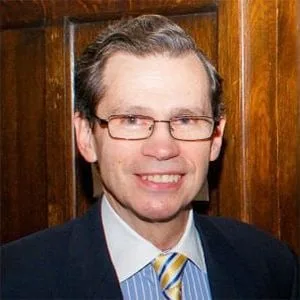
Tidal McCoy Venture Capitalist & Former Asst. Secretary of the Air Force
U.S. Withdrawals Weaken Global Deterrence
Transcript
Automated transcript · uncorrectedSunday morning. What is this morning?
Is Time McCoy, well, a west Point, a former Assistant Secretary of the f for US well, a patriot and one common common sense guy. Well, Time McCoy, you know it’s forty years later. What makes you stay up at three o’clock in the morning.
Now, Well, John, thank you. It’s good to be on with you and all your wonderful moderators and people that you bring Sunday morning as well as weekly to your show. And what’s worrying me now is looking back at what happened having served in Vietnam with my classmates, a number of who didn’t come back, and looking back today fifty
one years ago in Vietnam the order went out. I was sitting on the right hand of James Rodney Slessinger, the Secretary of Defense, when the order went out to depart Vietnam to withdraw, and it was finalized the next day.
And as we evacuated, we evacuated and effect lost that conflict because the South Vietnamese troops were not being supported. They were folding under North Vietnamese assault. And the reason they were is because the Democrats and Congress, particularly in the Senate, had begun restricting aid and the ability of US air power to support the South Vietnamese forces that
we had built up over ten years with a loss of fifty eight thousand American lives. And the Democrats had a scout they were looking for, which was Richard Nixon and the Republicans, because it had beat them in sixty eight and seventy two, and so they thought if they could inflict a defeat on US forces and effect in Vietnam,
it would hurt the Republicans and they could win, which they did in the mid terms in seventy four and in nineteen seventy six. So what we lost when we called out of Vietnam is we lost our honor, We lost to trance, We lost nations to communism. We lost millions of lives they were killed by the communists in
Cambodia and Vietnam. We left POW’s behind some that were left behind and lost, we left equipment, and we lost allies around the world. In fact, shortly thereafter we lost Afghanistan to the Russians, and I ran to the Mulla Hill.
I was going to say that did President Biden read that book? Because of the fact that the same thing that happened in Afghanistan with President Biden.
Indeed, you know, we cut and ran when we didn’t need to. We tried to have a deal that we could persuade people. That was a deal that was made with some kind of honor. And then Biden, who apparently was not briefed well at all by his staff or anybody else, while he was using the auto pen, all
of a sudden, the even the withdrawal with a dishonorable stain on it, collapsed in Afghanistan, and we had people killed, and we had a lot of our allies lost on all of the Afghan forces that we had trained and were loyal to us, they were captured and killed and they’re still being So these withdrawals without honor, without a
plan place are very bad. And that brings us to this point. What do we do now as we look at the situation in Iran?
And we will situation time equoy. A few days ago, the German Prime Minister.
Went after President Trump and said to him that the Iranians are making fools of us. And then the next day President Trump says to him, well, maybe we should withdraw our weapons our basis from Germany.
I guess I think he then apologized or something.
Well, I’m not sure. You know, the problem is that everybody gets used to these open tweets and get used to criticizing each other in public. A lot of this used to be done behind clothedwords. When leaders would have differences with each other over major policy things, they wouldn’t be trying to fit into the eight hour television you know,
sound bike cycle, And as a result of that, it leads to a lot of frayed nerves. It leaves to a lot of tension. It leads to very important alliances and national security interests that we have around the world that are kind of being thrown apart because we have to be careful now with these delicate relations we have
with our allies. Now.
I just saw a graft the other day. I don’t know if General Keane showed it to me. Who nine hundred billion dollars the United States is spending defending NATO or Europe and Germany of that only spends ninety eight billions something like that. I mean that’s ten to one.
I mean we’re saving there behind and they don’t appreciate us.
Well, yeah, starting with winning World War One and World War two for them, and then the Marshall Plan. If you count that in together with what we’ve done in NATO since nineteen forty seven, it’s probably four or five times any number that we can think of. And of course the European Union, the NATO nations have about four
hundred and fifty people. They have a GDP that’s the same as ours or larger. They could have and should have been doing much more for a much longer period of time, and they took a free ride, and Americans let them get away with it, let them do that.
And now as President Trump has called on them to come around in his last term and this term and do their part, they’re being very petty and very jealous and very insecure about it because they know they have failed their own people, and they have failed to provide for the defense and the economy and the sovereignty of
their borders. And they don’t like having a finger pointed at them. And unfortunately this has to be done among friends sometimes, and our friends are not thinking it. Well, that’s for sure.
Well, now where do we go? Would Iran?
I mean, President Trump is in a tough position, but I think I want to ask them for the I’m in Prime Minister. I want to ask the King the other day who I was with. I mean, I think the King realizes that we don’t want I ran to have nuclear weapons. I mean, he gave a fantastic speech
at at the White House and at Congress.
Well he did. And he’s from a long line of leaders, sovereigns in England who have seen the United Kingdom, with the United States and our European I llist fight and win wars. And they did that by toughing it out, by by hitting hard, as President Roosevelt and Winston Churchill did, and they made a decision that we are not going
to go for a negotiated settlement with the Japanese and with Hitler. We’re going for an unconditional surrender. We’re going to hit them, We’re going to hit them hard, We’re going to knock them out, and we’re going to finish.
Finish this. And if you don’t finish something when you’re fighting the bully in the schoolyard, the bully just going to come back and keep picking on you and you’ll be laughed at. So we’re in a situation now by having this been let go for so many years both in NATO and with the Irans funding care all throughout
the world. That this has been going on so long now that the Irans think they can get away with it and want to continue, and somebody’s got to draw the line, and that has been President Trump. So I think now we have to make it clear. We have to finish the job that we started, and we have
to hit them hard, and we have to take out whatever we have to over there to make it clear that American power, if it’s challenged, is going to come in and it’s going to clean the table, and it’s going to take you out.
I agree with one hundred percent. Well time, McCoy, Thank you for everything you’ve done for our country and continue to speak out for our country. And let’s catch up again real soon.
Sounds good. Thank you very much. Jean. Good to be with you today.
Sunday, May 3, 2026
Americans Are Hurting From High Costs and a Divided Washington
David Paterson Former Governor of New York

High Taxes Driving Wealth Out of Blue Cities
Jesse Arm Vice President of External Affairs, Manhattan Institute
DEA Targets Fentanyl Supply Chain
Frank Tarentino DEA Associate Chief of Operations, Northeast Region
The Threat of Political Assassinations Is Very Real
Roger Stone Political Strategist & Consultant
Turning Life Insurance into Retirement Income
Jay Jackson Chairman & CEO, Abacus Global Management
Expanding President Bush's Vision of Service
Jennifer Sirangelo President & CEO, Points of Light
Transport Industry Hit Hard by Fuel Costs
Spero Georgedakis Founder & CEO, Good Greek Moving & Storage
Urgent Matters Amid Iran Losing Its Grip
General Blaine Holt Brigadier General USAF (Ret.)
Reforming High Healthcare Costs and Hospital Inequities
Jason Smith U.S. Representative from Missouri


New Mars Discoveries and Aviation's Greatest Mystery
Steve Kates Space and astronomy broadcaster (Dr. Sky)

AI Is Undermining Students' Critical Thinking
Lynn Shaw Founder of Lynn's Warriors
Tidal McCoy

Rising Tech Competition and Strains Within Western Alliances
Tidal McCoy Venture Capitalist & Former Asst. Secretary of the Air Force
The American people are entitled to know the truth from the public media.
Tidal McCoy Venture Capitalist & Former Asst. Secretary of the Air Force
Russia and China have decided to expand the war to Ukraine.
Tidal McCoy Venture Capitalist & Former Asst. Secretary of the Air Force
What are these drones?
Tidal McCoy Venture Capitalist & Former Asst. Secretary of the Air Force
The war in Ukraine.
Tidal McCoy Venture Capitalist & Former Asst. Secretary of the Air Force
Ukraine is on the offensive,.. invaded Russia.
Tidal McCoy Venture Capitalist & Former Asst. Secretary of the Air Force
