


Transcript
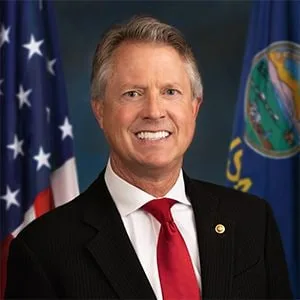
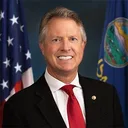
Automated transcript · uncorrectedSunday morning. Well with us today is Senator Roger Marshall from the Great State of Kansas and Middle America. Common sense, common sense, common sense, And Senator, you’re also a physician, and the prices of drugs all of a sudden, it looks like Washington, the prices are coming down. Can you fill us in on that.
Yeah, well, we’re sure trying. I think some of our efforts are finally taking russo to so to speak, but you know, to speak with To start with President Trump’s most favored nation pricing, most of the largest pharmaceuticals have agreed to basically bring those prices down and bypass the middleman.
There’s something called a pharmacy benefit manager, and they get about fifty eight cents of every dollar. So you go to the drug store, you get the one hundred dollars a month for a prescription. Fifty eight dollars of that’s going to these pharmacy benefit managers. Think of them as wholesalers, setting between big farm who’s making it in your local
pharmacy as well. In our Working Family tax cut bill, we trim some of their edges. We didn’t do enough. We got more work to do. But I think some of those efforts are coming to roost as well. Something else that I worked on actually in the Biden administration was helping promote biosimilars to get to market sooner, and
I think we’re seeing that happen as well. So some of these things are coming together. John. The real driver of cost of healthcare, though, is at hospitals. They have the biggest chunk of the pie. Prescription drugs make about seven percent of the healthcare spend in this country. The big expense is going on in hospitals. These huge nonprofit
systems are printing money right now, The big hospitals are printing money. And would love to talk to you about my Price Tags Bill.
Please tell me about your Price Tags Bill, because right now it seems like President Trump and Secretary Kennedy I’ve done a great job bringing pharmaceutical prices down. Tell me what you’re doing.
Yeah, So, our price Tag Bill would force every healthcare provider in America to show you the price upfront and let American consumers shop. Just like you shop for a new car. You should be able to shop for where you want your hip replacement done. The same MRI might cost two hundred dollars at one facility, it might be
two thousand dollars. At another facility you need a hip replace, it might be fifteen thousand dollars at our hospital and Great Bend, but another hospital is getting fifty five thousand dollars. So we even if you’re on Medicare, you know you’re still paying that twenty percent out of pocket. You’ve got a deductible. People have huge deductibles now. So we think
our price Tags bill would bring down the cost of healthcare literally maybe one thousand dollars a month for hard working families. So we’re looking forward to getting that across the finish line. We think we’ll have a hearing a mark upon it very soon on the Help Committee that I’m on. I think that’ll be some real relief for
all Americans, definitely.
I will tell you, Uh, we have doctors in New York. In New York, if you go and give them your Blue Coross card, it’s thirty three hundred dollars for mr. If the doctor calls up and says this, this gentleman doesn’t have any healthcare, and you give them, and you give the hospital, you give the place of cash, you
get it done for five hundred and six dollars. I mean, is you got it? There’s there’s something wrong here, you know absolutely.
What we want to force is that healthcare provide users to show you what it’s going to cost. If you have Blue Cross, what if you just paid cash? And for a lot of people, if you have a five thousand dollars deductible, you’re gonna say, well, gosh, it’s cheaper for me just to pay cash other than to use
my insurance. We’re seeing that with prescription drugs all the time too as well. But you’re spot on something as rotten and denmark as much family I used to say. And when you’re just your common sense to your point, John shows you tells you something is not right. Let’s let the American consumers see those prices up front and
make it easier for them to go shopping for healthcare just like they go shopping for a car.
Well, I’m glad you’re there as a physician to give the American people value on what they’re getting. I’m glad the President Trump and Bobby Kennedy are doing what they’re doing. What else, I mean, when are we going to bring interest rates down? I know that Senator Dane was saying you shouldn’t. You shouldn’t go after Powell because he spent
four billion dollars or three billion dollars, I forget the number on the FED building. Okay, And President Trump says, Okay, we won’t. But Powell make sure that the interest rates stay high. And I’m not sure he’s following all the rules.
I know a little bit about finances. Do you know about medicine? I know about finances, and if we get the right fetchaman in there. And I think if we bring interest rates down where people can afford to buy one family homes again, you tell me what you think.
Yeah, Johnny, Like you said, you’re a better financial expert than I am. But my common sense would tell me. What I can do as a United States Senator is trim the budget in Washington. D C. When we borrow money. When we’re borrowing, uh, we’re paying a trillion dollars this year on interest alone. When we are spending seven trillion but only taking in five trillion.
That delta leads to the United States government printing dollars, and that’s inflation. So my responsibility to help impact that interest rate is to trim our federal budget and our working family tax cuts did that. Our bill was the largest tax cut and the largest spending cut both in American history. We’re now spending less. We’re spending less this
year than we did a year ago, less than two years ago. So we’re trying. It’s really hard. This is a big ship, at the seven trillion dollar ship, and to try to turn that down and attain this spiece is really tough. So that’s my responsibility. I think the quantitative easing and the quantitative tightening it concerns me as
much as the interest rate and how they’ve used that going back to brock Obama to manipulate financial policy as well. So I’m excited about our new director coming in there and we’ll work on that as well.
Well, we got time for one more item. What what’s on your mind? What wakes you up at three o’clock in the morning.
Well, I still it’s still the cost of living, and may make sure your family’s safe. Of course, what can we do to make sure that we have secure borders? We need to get the Secret Service funded again, my gosh, you know they’re part of this DHS funding deal as well.
So hoping the Democrats will will come across the aisle and fund your your nation’s security again. So that’s what’s keeping me up. It’s really hard to get much else done here and Whyington until we fund dhs, including the Secret Service, the Ice, Officers of War, to patrol people.
So that’s what’s probably keeping me up or getting my attention first thing in the morning, John.
Senator Roger Rushall, thank you for everything you do. Thank you for the common sense of Middle America, and keep fighting for all American people in Washington, and we’ll catch up again real soon.
All right, John, thanks for having me on, have a great week. Thank you.
Sunday, May 3, 2026
Americans Are Hurting From High Costs and a Divided Washington
David Paterson Former Governor of New York

High Taxes Driving Wealth Out of Blue Cities
Jesse Arm Vice President of External Affairs, Manhattan Institute
DEA Targets Fentanyl Supply Chain
Frank Tarentino DEA Associate Chief of Operations, Northeast Region
The Threat of Political Assassinations Is Very Real
Roger Stone Political Strategist & Consultant

Turning Life Insurance into Retirement Income
Jay Jackson Chairman & CEO, Abacus Global Management
Expanding President Bush's Vision of Service
Jennifer Sirangelo President & CEO, Points of Light
Transport Industry Hit Hard by Fuel Costs
Spero Georgedakis Founder & CEO, Good Greek Moving & Storage

U.S. Withdrawals Weaken Global Deterrence
Tidal McCoy Venture Capitalist & Former Asst. Secretary of the Air Force

Urgent Matters Amid Iran Losing Its Grip
General Blaine Holt Brigadier General USAF (Ret.)
Reforming High Healthcare Costs and Hospital Inequities
Jason Smith U.S. Representative from Missouri

New Mars Discoveries and Aviation's Greatest Mystery
Steve Kates Space and astronomy broadcaster (Dr. Sky)

AI Is Undermining Students' Critical Thinking
Lynn Shaw Founder of Lynn's Warriors
Roger Marshall
A Conservative Vision for Economic Growth and Fiscal Responsibility
Roger Marshall U.S. Senator from Kansas
His Vision for Election Integrity and America's Future
Roger Marshall U.S. Senator from Kansas
Cutting Healthcare Costs By Tackling Industry Monopolies
Roger Marshall U.S. Senator from Kansas
