


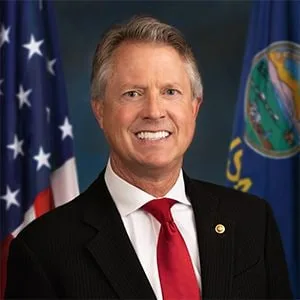
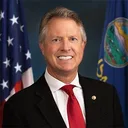
Roger Marshall U.S. Senator from Kansas
Cutting Healthcare Costs By Tackling Industry Monopolies
Transcript
Automated transcript · uncorrectedSunday Morning with US Today Senator Roger Marshall from the great state of Kansas, and not only is a US Senator, he’s also a physician and knows a little bit about being well. He was the military too. Well should I call you, Senator Roger Marshall? Should I call you doctor?
Senator Roger Marshall.
Well, John, I think I’m a first generation college student. My mom and dad are so proud of me becoming a doctor. That was a lifetime dream. So most my friends call me doc, but I’m cutly honored to be cold senator as well.
Okay, you know a little bit about healthcare, and you’re concerned about certain things, and you’re happy that President Trump is moving forward to make it more affordable.
Exactly so. And over the last week, President Trump has released what he’s calling the Great Healthcare Plan. And let’s face it, the cost of healthcare is a top three issue for every family, for every business, and and doctor Oz and myself been working on over the past year.
What would the policy look like to help bring down the cost of healthcare? This week, President Trump announced Trump or x, where you can go on SiGe and buy your prescription drug directly from the pharmacy company rather than going through the PBMs, and that’s going to bring down the cost of prescription drugs. But the bill that I’m
really excited about is our price tag bills that forces every healthcare provider to show you the cost up front of what your surgery is going to be, your lab draw your X ray, those types of things, and you can literally find a ten x difference between one facility and another. So we think by turning patients into consumers again,
creating competition, showing Americans prices, we’re going to drive the cost of healthcare down maybe one thousand dollars a month for American family. So I’m excited about the work we’re getting done in healthcare right now.
Santa. I live in New York, and I if I if I go for an MRI, it’s and I give them my Blue Cross card, it’s thirty three hundred, thirty five hundred dollars. And I’ve heard that friends of mine that don’t have insurance, and the doctor tells the MRI company they don’t have insurance, they charge them four hundred
five hundred bucks cash.
What’s the real price, And that’s what, Yeah, that’s what’s whatever They make it up to be those different than going to buy a car. You see the retail price, so that’s what they’re charging your Blue Cross. They’re charging them a retail price, but their break even point is probably that the one you’ve mentioned, the three to four
hundred dollars price as well. So we’re going to force the hospitals, the doctors, the surgeons, the labs to show you those prices upfront, to show you the cash price as well as what it would be out of park with your insurance. And my goal is that you would have an app, a smart app on your phone that
Blue Cross will provide that for you, and say you need your hip replaced, you would punch in the code for that surgery and everything would populate within sixty miles of you. What the cost of that service would be along with outcomes that we had the technology today to be able to do that. And again, the whole idea
is we want to turn patients into consumers. Again, we want to create competition. You know, no different than driving down on New York you don’t get too many gas stations with the prices on them. But back home, you know, you drive down Main Street and you’re going to see fifteen gas stations, and they’re all within a penny of
each other. So I think that’s what we’re trying to force here, is forced healthcare providers to show you the prices and let patients become consumers. Again, this will bring down the cost of healthcare at least one thousand dollars a month.
Well, that sounds fair and squire to do that. I mean, you know, it’s just I don’t understand how a lot of stuff was being hit. Now. I saw a lot of articles last week that the fact is about the insurance companies. Were you at that Senate hearing when they asked all those insurance execs or the pharmaceutical execs there
their investments in pharmaceutical companies and funds and drug stores, et cetera, et cetera.
Yeah, I was not there, but I’ve had those same folks in front of me. You know, to your point, what Obamacare did was create lots of regulations. When when an industry becomes over regulated, there becomes the consolidation of those companies, the consolidation of industry. So United Healthcare is a great example of this. Their CEO is making what
one hundred million dollars a year. Their profits are tens of billions of dollars. They own not only the health insurance company that they owned the pharmacy benefit manage your company, they owned the drug store, they owned the doctors, so they owned the entire vertical system. And then there’s three of them that control about eighty percent of healthcare. So
they’re indeed able to set their prices wherever they want to. And that’s been the whole gest of my legislation now for several years, is to bust up these monopolies as well. But as you can imagine, they have a huge presence here in d C. They’ve given a lot of money to a different members of Congress, and they stick together
with the big hospital. They’re all just very happy with this five trillion dollars that America spends every year on healthcare, and each one of them just grabbing a pile of money as it goes by. But I have no use at all for these for these big monopoly companies like United Healthcare, knowledge.
Anything else you want to tell the American public, And I guess Sunday morning they’re sitting from you.
Yeah, so look over this next week, we’re gonna have a big fight in Washington, d CEE, you we’re funding for DHS, And the first thing I would tell people’s look, I feel like the Democrats are holding ICE hostage, but they’re also taking on with them funding for the TSA.
They’re taking down funding for FEMA as well as the Coast Guard. That ICE only makes up nine percent of this funding that’s left. You know, the good news is we have eleven of the twelve buckets funded, but DHS is the last one. And I think this is just the next chapter of the Democrats defunding the police. In
this case, they want to defund ICE and then they want to make so many changes the way ICE is operating. Remember, everybody, it was not too long ago that President Obama deported three million people under these same rules. The big difference between today versus when President Obama was an office that we now have these sanctuary cities. These sanctuary cities aid
and a bet criminals that they prevent law enforcement from doing their job. John, If you could imagine if the police were holding a violent illegal alien there in their jails and they called ICE. It only takes two ICE officers to go pick that person up. But if they’re trying to pick them up in more of a public place.
It takes twenty of them to do their job. So the lawlessness in Minnesota has created so much of the angst and the riots, all these things happening. I think the focus should be really inning sanctuary cities as we know them. Where I grew up, you worked with the law and order. You did not aid in the bet criminals,
and you didn’t interfere with the law. So that’ll be the fight next week that people can see, and I hope they’re listening to that debate.
Well, thank you so much, senator, and let’s talk again real soon.
All right, John, great to be with you.
Thanks, thank you.
Sunday, February 8, 2026
Local Policies That Ignore ICE Are Endangering Communities
Jim Jordan U.S. Representative from Ohio
The Democratic Party Has Shifted Far-Left, Away from Centrism
Mark Penn Pollster and CEO of Stagwell

Rare JFK Assassination Footage May Prove Multiple Shooters Theory
Mark Shaw Author and Former Criminal Defense Attorney
Remembering the Orangeburg Massacre Anniversary and Strife Within NY Leadership
David Paterson Former Governor of New York

Rockland County Real Estate Shifts and the Palisades Center Sale
Thomas Ossa President, Rockland News
Preserving Italian-American Heritage and Saving a Columbus Statue
Angelo Vivolo CUNY Trustee; Restaurateur & Philanthropist
The Importance of the SAVE Act and Election Integrity
Claudia Tenney U.S. Representative from New York

New York's Luxury Real Estate Market is Booming
Suzanne Miller President, Empire State Properties; WABC Real Estate Analyst
Dispelling Heating Oil Shortage Rumors During Cold Snap
Rocco Lacertosa CEO, New York State Energy Coalition
Science-Backed Strategies to Improve Health and Longevity
Dr. Peter Michalos WABC Medical Expert
Highlighting Teen Dating Violence and Emotional Abuse Awareness
Lynn Shaw Founder of Lynn's Warriors
The Stoler Report with Michael Stoler: Lou Adler & Robert Rahmanian
Michael Stoler Real Estate Expert

AI Fighter Jets, Space Delays, and New Space Mysteries
Steve Kates Space and astronomy broadcaster (Dr. Sky)
Roger Marshall
A Conservative Vision for Economic Growth and Fiscal Responsibility
Roger Marshall U.S. Senator from Kansas
His Vision for Election Integrity and America's Future
Roger Marshall U.S. Senator from Kansas
