


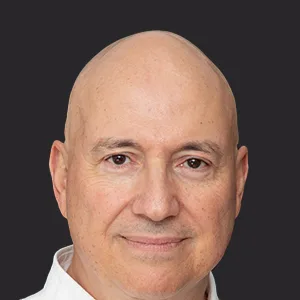
Dr. Peter Michalos WABC Medical Expert
Science-Backed Strategies to Improve Health and Longevity
Transcript
Automated transcript · uncorrectedSunday Morning with is doctor Peter Miclos and well live long and prosper is his nickname. And we need a lot of sunshine in our life, and we need a lot of vitamin D in our life. Well, doctor Peter Michlos tell us, how do we live longer?
Well today, John, We’re going to talk about medications and supplements based on real research and data that may help us live longer and have longevity. And a lot of times we talk about longevity and some of the things that hurt us. So the conversation was to start up with something called free radicals. And we always talk about
free radicals and antioxidants, but try to simplify it and understand it first. That’s really what speeds up our aging and free radicals are these molecules in our bodies that become uneven and what happens is they lose electrons and then they become very reactive and they attack our lipids and our proteins and even our They sort of become
like rogue rogue, sort of almost like a criminal that goes around and hurts other cells. And what antioxidants do is think of the pre radicals that are having a bunch of sharp knives, and the antioxidants go around putting on these kevlar gloves and covering those knives so they can’t injure the other cells because they donate these electrons
or these caps onto these sharp edges of these free radicals, so you have less problems. And the things that cause free radicals and inflammation are pollution, radiation, too much sunlight, poor diet, smoking, alcohol, high stress, and that’s how we end up getting things like hypertension and cancer and heart disease and Alzheimer’s disease. So you know, what can we
do to fight these free radicals? And some of them are called antioxidants, And of course on top of the list, we hear a lot about vitem and see and vitamin C is one of the antioxidants that seems to help calm down this process and another one in the anti aging world. And it was just to publish just a
few weeks ago. It was pretty fascinating that vitamin D. You know, we talk about the sun, we talk about how it helps depression immunity, but they at higher vitamin D levels, it seems to protect the telomeres, which are the end caps on our DNA and the longer you telomeres are, the longer you live. So vitamin D turns
out to be a great anti aging drug.
And what I found out, Peter, what I found out is that no matter how many vitamins you take, a vitamin D with the K two, you still need a little bit of sunshine.
Yeah, no, nothing like a little bit of sunshine goes a long way. And just try not to do it between noon and three pm because that sun is the strongest and you it’s apposed to be more skin cancer and more will sell scraam to sell the melanoma. But vitamin D is important and the people who don’t have
a lot of sunlight and vitamin DS, those areas have more depression. The other one’s called vers vitrol found in red grapes, and it has something called polyphenols and red grapes and that activates the longevity genes called the curtouins, and those help our longevity gene and then reduce inflammation.
And the other thing that activates the certuins are oleicus and an olive oil also found in avocado. And the other one is called NAD which is a molecule that decreases as we age, and what if that does is it boosts our DNA repair and our metabolic It makes us more metabolically healthy, and that helps longevity as well.
The other one that comes.
Now on the longevity issue, I understand that I’m just repeating what me and you have talked about in the past, is the fact that in addition to longevity, to the intermittent fasting.
Yeah, absolutely, and the men fasting helps with the cleanup of dead and dying cells. After about fourteen to sixteen hours, our body tends to clean things up, and people who fast, and in religions and cultures where they have fast, it helps make your labs better. And the way we follow all these things is doing our labs and our biomarkers
and we measure the effects. So fasting does help. Another one on the list is called spermidine from flax seeds and flax seeds. It turns on this cellular cleanup process called otophagy, and that also helps. We also know that fish oil has omega three acids and also plant based omega three fatty acids. They also are antiaging and help
us heal in our skin. Coenzyme two ten also helps boost our cellular energy. In addition, we have things called peptides and hormones that help. And a recent study just in twenty twenty four in Nature that did a big study of met forman and monkeys and they found that those monkeys had slower brain aging, better cognitive function, and
it also helped them live longer. So there’s always controversy, but it’s an old, inexpensive drug. And a few weeks ago they also published that people who were on med forman had less long haul COVID and during COVID they found something very interesting because they thought diabetics would be hospitalized more, for example in the ICU and stuff, but
those who were on met forman had less admissions to the intensive care units. So that’s also a big deal. So all these fascinating things that you can do to help to be healthier and stronger understood now.
But we had the discussion and intermitted fasting, and originally we spoke that minimum is fourteen hours and anything above fourteen hours to kill cells come out to kill anything bat in your body. Is there any update on that?
Yeah, Well, the clean up between fourteen to sixteen hours, that’s when it starts happening. That’s why the inter minifest I do is I only eat between noon and eight o’clock. Outside those hours, you can eat, you know, all the water and the black coffee you want. You don’t want your sugar level to go up. When your body sees
that it doesn’t have any sugar or nutrients coming in, an alarm goes off. Get ready. Times are hard, there’s no food out there. Start cleaning up, start healing, start repairing. And also we run on what’s called keytones instead of sugar.
And some of the animals, for example a fox, when they’re hungry, they’re running on keytones. They’re super sharp. And sometimes after you eat too much, you just feel like going to sleep and you can’t even concentrate, and you know, get what’s called alkalin tide. That’s why a tiger, a lion, it’s a big piece of meat. What happens does all
the acid in your stomach starts pumping into your stomach, so it makes your blood more alkaline, and that sends a signal to your brain rest, relax, rest and digest. And that’s why after a big meal, we just want to take it easy and lie down because all our blood flow goes to our stomach to focus on digestion,
so between into the fasting the vitamins we mentioned, and there’s also one that’s controversial, colled wrapamycin, which is an immune suppression used in transplantations, but they also found that it may have some anti aging properties as well. And initially some people thought that people who are on immune suppressants, for example, after kidney transplant, would have a bigger problem
with covid and stuff. That they found that because it reduces inflammation, people didn’t get as much of an inflammatory response, and some of those people did better and as we protected them from extreme inflammation and conditions like covid. So that’s another fascinating area that we’re going to be hearing a lot more in the future, and a lot of
new different medicines and ideas, and of course, gene therapy alter our genes is a company out there called Biobva that has done it with telling mer lengthening and we’ll see if those people live longer. And there’s about two hundred humans who’ve already done that outside the United States.
So we’re going to see a lot of amazing things and antiaging and we’ll keep you up to date. Listening to the cats Roundtable.
Thank you so much doctor Peter me Hello, is live, wrong and prosper And thank you for everything you do to have our listeners live longer. And God bless you and God bless you Mark.
Thank you John and Margaret for always allowing us to get the microphone to get the truth out.
Sunday, February 8, 2026

Local Policies That Ignore ICE Are Endangering Communities
Jim Jordan U.S. Representative from Ohio
Cutting Healthcare Costs By Tackling Industry Monopolies
Roger Marshall U.S. Senator from Kansas
The Democratic Party Has Shifted Far-Left, Away from Centrism
Mark Penn Pollster and CEO of Stagwell
Rare JFK Assassination Footage May Prove Multiple Shooters Theory
Mark Shaw Author and Former Criminal Defense Attorney
Remembering the Orangeburg Massacre Anniversary and Strife Within NY Leadership
David Paterson Former Governor of New York
Rockland County Real Estate Shifts and the Palisades Center Sale
Thomas Ossa President, Rockland News
Preserving Italian-American Heritage and Saving a Columbus Statue
Angelo Vivolo CUNY Trustee; Restaurateur & Philanthropist
The Importance of the SAVE Act and Election Integrity
Claudia Tenney U.S. Representative from New York
New York's Luxury Real Estate Market is Booming
Suzanne Miller President, Empire State Properties; WABC Real Estate Analyst
Dispelling Heating Oil Shortage Rumors During Cold Snap
Rocco Lacertosa CEO, New York State Energy Coalition

Highlighting Teen Dating Violence and Emotional Abuse Awareness
Lynn Shaw Founder of Lynn's Warriors
The Stoler Report with Michael Stoler: Lou Adler & Robert Rahmanian
Michael Stoler Real Estate Expert
AI Fighter Jets, Space Delays, and New Space Mysteries
Steve Kates Space and astronomy broadcaster (Dr. Sky)
Dr. Peter Michalos
Advances in Lung Cancer Detection and Personalized Treatment
Dr. Peter Michalos WABC Medical Expert
Healthy Eating, Stronger Immunity and the Science of Living Longer
Dr. Peter Michalos WABC Medical Expert
Limiting Sugar and Choosing Whole Foods to Support Healthy Aging
Dr. Peter Michalos WABC Medical Expert
Protect Your Skin From UV Radiation and Reduce the Risk of Skin Cancer
Dr. Peter Michalos WABC Medical Expert
