


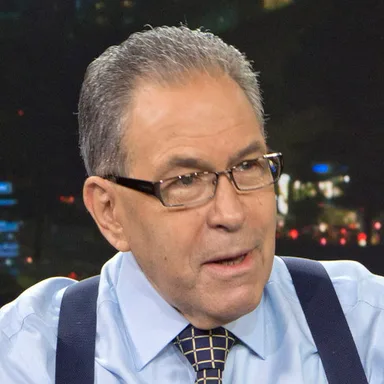
Michael Stoler Real Estate Expert
The Stoler Report with Michael Stoler: Lou Adler & Robert Rahmanian
Transcript
Automated transcript · uncorrectedGood morning. This is Mike Stoler for the Stolen real Estate Report. What’s happening in the rental and the condo and the co op business in New York City. Who’s better to answer that is that two young guys who are in the real estate business when they joined together at the age of twenty three, which was thirteen years ago.
Are my guests today Lou Adler, the co founder and co CEO of Real New York and his partner Robert Romani, who is the co founder and CEO of Real New York. Also, thanks for being here.
It’s an honor and a pleasure. Thank you for having us.
So how does twenty twenty six look to you with regard to the business that you’re in.
Twenty twenty six should be a very interesting year. We’re coming out of one that introduced the Fair Act, which.
Would you explain with my audience what the Fair Act is?
Sure, there was some regulation passed in June. The council member in Brooklyn passed it where basically the broker fee, which was an option to be paid by either the incoming tenant or the landlord, that no longer exists and now the new law only allows for the landlord to pay our broker fee. So that’s been a big transition,
and we’ve seen rents rise tremendously since then. That was back in June of twenty twenty five, and we’re going into our first year where the Fair Act is a you know, a big part of our business.
Speaking of that, what are the rents today, Lou, Yeah, we’re seeing higher highs right now.
You know, we’re seeing a market where we see a three to four percent rental increase year over year. So we’re expecting twenty twenty six to only feel that pain for tenants. Unfortunately, even more, the Fair Act, which Rob was presenting, you know, really backfired.
You know.
Unfortunately, the city is its own worst enemy, and the Fair Act just took a broker fee that the tenant was paying, increased rents by that amount, so that they’re paying broker fee every year instead of an initial broker fee to get into the unit. One caveat on that Fair Actress to note, tenants can still pay broker fees
if the unit isn’t advertised.
With regard to advertising, where do you see the most effective advertising?
Street Easy, Zillow, Building signage, apartments dot com. Those are really our best venues for advertising and getting rental leads across New York City thankfully. You know, Real New York does over four thousand rental transactions a year. We have well over ten thousand exclusive apartments. So we also have a lot of repeat clientele, a lot of clientele that
are not renewing in one property and want to stay within the Real New York ecosystem.
What about the repositioning the properties. I know you’ve been working on a couple of deals like that.
Yeah, that’s how we start in the business. I mean, we start in the Lower East Side back in twenty twelve, twenty eleven. A lot of these buildings we can purchase and repositioned from the stabliztock to free market the laws of change there. And now we’re working on a lot of repositioning. When it comes to office to residential, that’s
been a big topic of conversation over the last two years and since for sixty seven M has been introduced and we’re having a lot of fun with that. That’s really interesting conversation right now.
Yeah, we’re also converting a hospital to residential that’s at three thirteen E seventeen Street that should be going live soon. That’s a very special eighty seven unit luxury rental building, and we’re working with a couple of developers to consider hospital to residential conversions. So what we’re seeing in this marketplace is that with the lack of development sites and
with development costs being so high, a lot of the developers that were once focused on the Borough is not as much Manhattan are moving into Manhattan saying, hey, there’s a quick execution within these conversion plays. I don’t have to worry about the hole in the ground. We can get in this site and to the market within eighteen
to twenty four months. And they’re taking advantage of that and really working on these conversion players.
What’s the situation within ninety nine units.
That’s going to go down in history. So that’s part of the forty five X and within the forty ninety five X affordable component. To get the tax incentive, the only way to not engage a union is to have a ninety nine unit or less building. So what a lot of developers are doing is though doing side by
side ninety nine unit buildings to stay under that threshold. And one hundred years from now, people are going to look around and say why did we do this, Why did we create a situation where we’re actually lessening the free market and affordable product.
Yep.
That’s another one of those regulations that just is going to backfire. As Lue mentioned, we’re seeing developers build less units bring less housing stock to market because of it.
Question with regard to you’re working on a project on sixth Avenue, eighty seven floor development, tell me a little bit about that.
Sure, yeah, very excited about this project nine eight nine sixth Avenue, right on the southwest corner of thirty seventh Street and sixth Avenue. It’s going to be two hundred and eighty four rentals. There’ll be an affordable component to it as well, and twenty seven condos from floors fifty seven and up five floors of amenity space and these
are you know, this is a location calling it Brian Park, Midtown that hasn’t seen a development like this. It’s very es centrally located as I mentioned. But the finishes, the facade, the thought that’s come through the lobby all the way to the top is a state.
Of the art. Okay. With regard to the other property that you’re working on on forty second Street, tell me a little bit of that.
Yeah, not too far from where we are right now. Building that used to be leased out to a lot of embassy tenants. It’s near the un on forty second Street, and the floors six through eighteen are being converted into apartments.
Now it’s a deep floor plate, so you have some units that are about sixty feet long and.
Whirst we would call the Bowling Alleys exactly exactly.
And now with these Bowling Alleys, we’re getting creative in terms of how to utilize the space as best as possible. So what we’re seeing and you’re seeing in many other conversion projects right now, is what they call a studio plus or a studio plus plus because of the lack of legal light and air, you can’t call it a
one bedroom. And you have a long Bowling Alley unit with an interior bedroom, and we’re seeing a lot of that now.
Wevalue with regard to rents, what are rents today from market rated apartments throughout the city.
So rents are high.
Give me an idea of what rents are, Yeah, I mean, if you’re looking at a new development downtown, a south of twenty third Street, brand new, you’re looking at average price per square foot at.
One hundred and twenty two one hundred and thirty five a foot. You know, if it really depends on the asset type. But the luxury market right now and new developments, I would say, if you’re that’s on a rental, you’re talking.
That’s on the rental, and to translate that into monthly rent. Right, we’re looking at studios in the mid to high fours, one bedrooms climbing close to seven seventy five and two bedrooms nine thousand plus.
What about conversions in midtown? What are the apartments going to rent for?
So they’re going to come at a little bit of a discount, you said, the conversions right right, Yeah, they’re going to come in a little bit of discount. They’re not as efficient when it comes to these new developments, right, So that rent per foot you can shave off ten fifteen dollars there, you’re getting more space, you’re getting a
bit more value. But it’s a conversion.
Where are the opportunities for an individual to rent in an apartment reasonably priced? If there is any individually.
Placed Yeah, I think the highest value in a luxury product is going to be either financial district or Midtown when it comes to prime Manhattan. You know what you’re seeing with these conversions from you know, the Pfizer building coming up, up and coming, you’re going to have something closer to a ninety to one hundred per square foot.
So I mean, if you’re looking at a brand new construction property, that number of like we says, balloons to over one twenty. So that those are the value plays right now. Five eye Midtown. If you’re willing to get out of Manhattan, we’re seeing value still in Clinton Hill, Bedstye up and coming neighborhoods where there’s still an allure
but still not as much demand.
What about Williamsburg, don’t.
Look for value there with the rents and Williamsburg we were almost identical to the city. Now the new developments they are getting one hundred and twenty a foot plus.
What about Harlem, Harlem, you know it’s funny Harlem.
We have a lot of properties we represent Harlem and after COVID, we saw a huge surge into Harlem when everyone moved back into the city and the rents were just skyrocketing. They’ve I think because of the over supply in Southern Bronx oversupply mod Haven. It really dropped those rents where we were achieving up wards of eighty foot
and now it’s closer to sixty for new development housing.
What about Mond Haven not even you know.
There’s a lot of developers that were bullish on it, you know, Rob and I. It has never been a main focus of ours, Modhaven or the Bronx. We have some properties here and there, but there was just an extreme oversupply. They brought some really high end product to the neighborhood product that you know in Williamsburg Brooklyn would
get one hundred and twenty foot trying to get.
Thirty forty foot.
Rob and I are very happy that that’s not where the prime inventory of real New York’s is.
Yeah, and I think it’s interesting when you look at Modavn, or you look at a market like New Rochelle where they’ve brought in a ton of luxury product and what’s happened is the rents have come down and they’ve softened.
And so should we see more housing in Manadan or areas in Brooklyn I think will have a similar effect, But that’s not happening right.
So what’s your thoughts about twenty twenty six with regard to the rental market.
It’s a great question. I think as owners, you look at your rent role and you can’t it’s hard to imagine pushing rents more than five percent in the coming year. And I think there’s a tailor two cities. You have your existing product that you have to continue to reinvest in and compete with some of these conversion projects. They
are coming, and I think those rents and that market is going to see a three to five percent incre As we’ve seen in the last couple of years. Inventory is still short, demand is very, very high, and then you have the new developments, the luxury new developments that continue to see new highs and continue to get great,
great demand. And we’re optimistic. I mean it’s every building and every year we get into it, we wonder if the rents are going to go up. This is our fourteenth year and we’re seeing nothing but green shoots for the rental market.
Yeah, Rob, and I’ve thankfully timed the market pretty well since the inception of Real New York. One thing we’re also seeing too is because of rates is one side of it, but also the current administration. People are a little hesitant to buy right now. It’s keeping them in the rental cycle. So I think for that reason alone,
we’re going to see the rental market continue to creep up. So I would be surprised to not get three to five percent increases across the board.
I think twenty twenty six would be a good year for the two of you, and i’d like to thank you for being here, good and honor. Thank you.
Sunday, February 8, 2026


Local Policies That Ignore ICE Are Endangering Communities
Jim Jordan U.S. Representative from Ohio

Cutting Healthcare Costs By Tackling Industry Monopolies
Roger Marshall U.S. Senator from Kansas
The Democratic Party Has Shifted Far-Left, Away from Centrism
Mark Penn Pollster and CEO of Stagwell

Rare JFK Assassination Footage May Prove Multiple Shooters Theory
Mark Shaw Author and Former Criminal Defense Attorney
Remembering the Orangeburg Massacre Anniversary and Strife Within NY Leadership
David Paterson Former Governor of New York

Rockland County Real Estate Shifts and the Palisades Center Sale
Thomas Ossa President, Rockland News

Preserving Italian-American Heritage and Saving a Columbus Statue
Angelo Vivolo CUNY Trustee; Restaurateur & Philanthropist

The Importance of the SAVE Act and Election Integrity
Claudia Tenney U.S. Representative from New York

New York's Luxury Real Estate Market is Booming
Suzanne Miller President, Empire State Properties; WABC Real Estate Analyst

Dispelling Heating Oil Shortage Rumors During Cold Snap
Rocco Lacertosa CEO, New York State Energy Coalition

Science-Backed Strategies to Improve Health and Longevity
Dr. Peter Michalos WABC Medical Expert
Highlighting Teen Dating Violence and Emotional Abuse Awareness
Lynn Shaw Founder of Lynn's Warriors

AI Fighter Jets, Space Delays, and New Space Mysteries
Steve Kates Space and astronomy broadcaster (Dr. Sky)

Michael Stoler
The Stoler Report with Michael Stoler: Eli Weiss and Andrew Albstein
Michael Stoler Real Estate Expert
The Stoler Report with Michael Stoler: Eli Weiss and Andrew Albstein
Michael Stoler Real Estate Expert
The Stoler Report with Michael Stoler: Robin Schneiderman
Michael Stoler Real Estate Expert
