Transcript
Automated transcript · uncorrectedWith us today is Congressman Frank Colone Junior, and he is the US representative from New Jersey, the sixth Congressional district, and he just made a big deal, a bipartisan deal. It’s good to hear the word bipartisan in Washington for change with Congresswoman.
My god, it’s Kathy Rogers. She’s the chair of our committee.
That’s it. And you are she is Kathy Rogers is the chair of the Energy and Commerce Committee. And you are the ranking member.
Is that correct, the ranking Democrat? Yes, Democrat?
Okay. Now, the a lot of the car companies wanted to get rid of AM radio, and you both of you got together and say this is not right. Would you tell our audience and tell all our people that are listening on AM radio why you did this and why this is not right?
Well, AM radio is extremely Court and John, particularly during an emergency. So I remember when Sandy hit many years ago, the superstarm Sandy, A lot of people at the Jersey Shore, which I represent, were getting in their cars and turning on AM radio to find out information about the storm, where they could get gas, where they could get food,
and they had no other access to cellul towers were down, they had no TV and it’s just extremely important during an emergency. So when the automatifacturers said they wanted to start doing this, they were to initially say they weren’t going to have AM radio as a standard feature in electric vehicles. But now we hear it may go beyond
that to any new cars. And so we’re basically saying in this legislation bipartisan, that they have to include a device in all new cars, electric or not that can take then from AM radio in any passenger vehicle, and that that has to be a standard for which is not an additional cost.
Well, that sounds reasonable. I know that for a fact that WABC, which is stationing around right now is part of the FEMA emergency system. That if all the electronic systems go down, you’ll still be able to get AM radio on your car radio. You can get you still get it on your transistor radio. And it’s a form
of communications that that’s been going on forever. And you know, the car companies, who knows, there must be more agendas than we know of, but I know they’re lobbying very hard to get rid of AM radio and then probably FM radio. They want you to go right through their own electronic system.
I guess, well, I mean, I think you’re right, And the problem is that in an emergency, none of that that’s going to work. So for example, they had like about twenty five percent of the cellul hours were down during Sandy. So I mean, this is a fact we’re not, you know, not a guess. We know that. And you’re
getting to be more and more extreme weather conditions these days. So if you have another emergency and you don’t have your AM radio in your car, you’re gonna have a problem. And that’s why we want to make sure that they’re included in the standard package.
I remember when we had the Northeast blackouts. Everybody was hanging around in front of your cars listening and what’s going on? Why? What? What was it like ten or twelve or thirteen states they were out?
Oh yeah, And then they would communicate over AM like where you could get gas, what supermarkets were still open. You know. Basically it was a lifeline and an emergency for all basic Necessmenty well.
Frank Palone, I commend you for getting together a bipartisan and we, like I said, we need more bipartisan in Washington on that subject with the Congresswoman Rogers, tell me your a congressman from your Jersey. Are you what other things are bothering you that’s going on right now that you’re trying to fix?
Well, talk about bipartisan. Another issue right now is what I call data privacy. We had a hearing today and this is where all these you know platforms, social media, you know, Facebook, you name it, they all take your data and then they sell it. So they’ll get your health data and sell it. They’ll get your you know,
all kinds of information that’s not necessary for your use of whatever they’re selling. And so we have again, Kathy Rogerson, I have a bipartisan bill called National Privacy Act that would say that you cannot gather data when you use an app or whatever unless it’s directly unless that information is directly related to that business, you know, whether you’re
buying or selling something. They can’t collect your data and then sell to somebody else. And again this is bipartisan. And then we also have these data brokers, John. These are people that actually their only business is collecting your data and you know, creating a portfolio, and then they sell that. And so we have other legislation that actually
passed the House already bipartisans actually unanimously. It’s in the Senate now that says that data brokers can’t sell information to our adversaries like Beijing or Russia or North Korea or Iran, because this is what’s happening now. They have these data brokers that basically gather all this information on you and then they sell it and they make a profit.
Oh wow, I mean, there’s there’s so many things that are going on. And you were concerned as long as I was too. I mean, I love Wales, and I know the Wales got another whales got along the Jersey shore last week and they’re going to do an autopsate on it. And people are blaming the windmills. What say you, I.
Really, we don’t have any windmills. We don’t have any windmills. The basic problem is vessel strikes. In other words, every time they’ve been able to do an autopsy on these whales, they find that they were struck pretty much always by either by some ship or by sometimes they get tangled in fishing gear. And this problem is going to get
worse now because when the Key Bridge went down in Baltimore, John All the traffic from Baltimore has now been changed and most of it’s up coming up to the Port of New York and New Jersey now and goes right through areas where the whales breed this time of the year.
So there’s actually a federal rule that says that any ship that’s over sixty five feet has to slow down to ten knots within these zones where the whales are, and we want to make sure that that’s enforced, and particularly for the vessels that are coming out from Baltimore and being detroyted to New York Harbor, that they abide
by it too, And that seems to be the major reason why we’re having so many whales. They’re coming close to the shore and they’re being hit by these large commercial vessels. I mean, that’s the biggest issue right now when it comes to the whales and trying to prevent them from dying and being hit.
I agree. But the other thing I hear and not confirmed, and the people are checking into it that when they’re deciding to dig in those windmills, they’re using so hard to see where the best place to actually dig for those because I understand the windmills have a bottom of close through eight hundred feet or seven hundred feet and
text you have to drill in the right place, otherwise the windmill goes down. Well.
Sonar is used by you know, like for example, sonars are used alaw by the military. We have an old naval weapons depot that’s in my district, that’s right at the entrance to New York Harbor. But there there really there hasn’t been any evidence that the sonar is you know, it’s causing these whale fatalities. In every case, the autopsies
reveal that they’ve been struck by a vessel or sometimes get entangled in the fishing gear. So I think the real problem is the vessels, and we just have to make sure that these speeds are enforced. I think I heard that NOAH which deals with this. Noah is the federal agency. There’s only like maybe ten or twenty percent
of the time that they’re enforcing these vessel speeds. You know, you can imagine that if a big cargo ship’s coming into New York Harbor, you know, they want to get there as quickly as possible because every minute that they lose, you know, they lose money. But if they don’t slow down.
They’re going to hit the they’re going to hit the they’re going to hit the whales, and that’s what’s happening for the most part.
Well, Congressman, thank you for doing everything you do. You do, and let’s stay in touch and let’s talk more.
All right, Ton, it’s been a while I haven’t talked to you. I’m glad you had a chance to day it, Paul me and we have this opportunity. Thank your name.
Came up in Las Vegas and you’re famous in Las Vegas during the broadcast show that was going on.
All right, all right, thank you so much, thank you, thank you,
Sunday, April 21, 2024
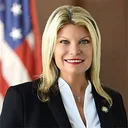
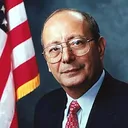
Working families are not doing well in this economy.
Alfonse D'Amato Former U.S. Senator from New York
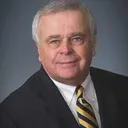
A list of automakers that plan to exclude AM radios in EVs.
David Donovan Senior Policy Adviser, NYS Broadcasters Association

New Jersey politics, Senator Menendez's problems.
Eric Shuffler Founding Partner, River Crossing Strategy Group

Almost three weeks overdue, and the budget is still being debated.
Zach Williams Transportation Reporter, Bloomberg Government
A revolution in energy production. Small reactors.
United Nuclear Group CEO Robert Percoco

Ukraine desperately needs arms to resist Russian aggression.
General David Petraeus Former CIA Director & Four-Star General

There are laws for finding a meteorite.
Steve Kates Space and astronomy broadcaster (Dr. Sky)