United Nuclear Group CEO Robert Percoco
A revolution in energy production. Small reactors.
Transcript
Automated transcript · uncorrectedWith us this morning. Is Bob Pacoppo. He worked for American International Group otherwise known as AIG. He was in charge of the Global Marine and Energy Division and one smart guy knows and knows his way around energy. Good morning, Bob Pacoppa, How are you good?
Good morning, John. It’s a pleasure to be on with you. Bob.
I asked you to join a United Nuclear Group because I believed in you and and I think we both believe in that the next form of energy that’s going to run America is going to be SMR small modular reactors that will replace oil over the next thirty forty years.
And I think you believe it too. And for our audience that doesn’t know what we’re talking about, is the same nuclear reactors that run submarines for the last fifty nuclear submarines for the last fifty years will be transformed to land models that you will be able to use it in small municipalities of five hundred thousand people and
above maybe, and they’re going to be called SMIs. You tell me what you believe in, what your thoughts are.
John, I agree with you completely. I think the US has gone off on the wrong tangent they’re going crazy building wind and solar, and at the end of the day, those are opportunistic capacities. If the sunshines, you want to get electricity that way, that’s flying. If the wind’s blowing, you want to get electricity that way, that’s fine. The
problem is as we decrease coal usage in the United States, and by the way, the rest of the world’s going in an opposite direction, especially the developing world, and that’s primarily because of how cheap coal is. But with the environmentalists doing a good job of killing coal in the United States, coal is base load capacity. That’s the electricity
we need twenty four to seven.
I understand China is building a new coal facility like one a week or two every week or something like that.
I believe they’ve got sixty one under construction now. And basically they are not clean coal plants. The US has some of the cleanest coal plants, but that’s a different topic. We really want to focus on the SMRs. You brought up nuclear submarines, and the nuclear navy.
Is over sixty years old.
The important thing on the nuclear navy side, and submarines are a big part of it. But if you look at an aircraft carrier that houses over five thousand sailors, that provides all the electricity, all the steam for heat, the steam to launch planes with the catapults, and the safety wreck has been exemplary. Now most of the backlash
of nuclear power in the United States has been fear of the unknown. Now there are three major events that people focused on. One is Three Mile Island, and three Mile Island.
Was a human error.
The automated systems immediately shut it down and there were no dangerous radioactive leaks. The next one was Cheroyl. Chernobyl was a testament to Soviet technology. The Russians basically built nuclear power plants with no containment. If anybody has been around or read anything about nuclear power plants, our power plants in the United States have been designed to take
a fully loaded passenger aircraft, including a full load of fuel, a direct hit and not cracked through the rebar and the cement. And they’re safe enough that when I went to my first nuclear power plant, which was Indian Point in New York, I took my with me, and believe me, if there were any fear of anything, he would not
have been there, and I probably wouldn’t have been there. But when you look at the large scale nuclear power plants that were built to date, they had one big problem. They were usually built for a load that would exist in five, ten, twenty years out. And as we all saw when we had the energy crash in the United States,
that load never developed. And while you are building for that future load, your current load is only surfacing a small portion of the course of the reactor. This is where small modular reactors came and people started a downsize.
Our companies started to downsize small modular reactors to fit the niche market. Iver believed that when you hear somebody like President but wring his hands every time there’s a disaster in Puerto Rico, permutas going through this. Now you look at the Caribbean, and you pointed to the fact that we want to get away from dirty oil fired plants.
Almost the entire Caribbean is dirty oil fired plants. We want to do something, Let’s do it on a worldwide basis. Uh, let’s try to marry up with somebody who makes a small module reactor h and we can. We can, in fact do something about climate change.
Wind and solar won’t do it.
Now, the joke I tell Bob a couple of the joke I tell is, if you think that solar and wind is going to is going to run this country, I’ll sell you the Brooklyn Bridge.
You al gore poised in the well with people’s minds, and you’re right, it cannot work. The other thing that’s an anomaly in there when you look at gas plants that people brought in and the environmentalists kind of forced the handle on that they brought gas in because it was cleaner than coal. Well, and now they want to
kill gas. The problem with killing gas, if you don’t have gas, you cannot effectively utilize wind and solar. You need that to load balance. So if you look at a stacking curve for electricity, the baseline the twenty the base load need had been historically coal, nuclear hydro power, and then rat cats and dogs like biomass, burns, waste
of energy plants, things like that. To go with this, it’ll come back to the in a minute. As we when you look at your peak, like let’s assume you’re in the summer environment here, air conditioning loads go up, and it follows it follows the bell shaped curve. Gas is ideal because gas is cyclical. If I walk in,
if I need more power, I can turn a switch on. Power goes on, turn that switch off. When I’m done with it goes away there. In addition to environmental issues with gas, the other problem you have with gas is about ninety five of the operating expens or a gas plant is fuel, So a small uptick in the price
of fuel has an enormous magnifying effect on your operating efficiency and gas plants. If you look at a cold plant, cold plants are steel. Nuclear plants are steel, specialty steel, the home line yards. You look at a gas plant, it looks more like aluminum foil. They’re not really they were never really designed to run twenty four to seven.
Small module reactors and conventional reactors are If I need forty megawatts of capacity, Now I get a forty megawatt module, I put it in place. I’ve got no dead electrons that aren’t generating in If I need another forty megawatch or a twenty megawatch, whatever, the next load increases, I get another unit and I gang it to it the
first unit. Conventional nuclear power plants need to be refueled every two years. Small module reactors can be refueled in segments up to twenty years, so it decreases the amount of spent fuel you have to deal with. There are many of them that have reactors reactor fuels that are non weaponizable, which is another reason why people kind of.
Shy away from nuclear.
But you know, going back on, we went through Chernobyl. Let me jump back onto Fukushima. When Fukushima Bleue, I was asked because of my background, I was asked to head up the task force to protect our twenty five thousand people in Japan, and that put me at odds with the US ambassador to Japan to put me at
odds the person that was designated from the DoD to act as special liaison. And all they did is they paradid the rhetoric that the Japanese government was putting out. What went wrong with Fukushima is they built spent fuel pools and I believe it was three meters above sea level.
And the reason for that was to make it convenient to offload spent fuel rods send them to France, haven’t reprocessed like France does what we call the UK does and Japan. So in order to make it easy, they took this chance, and they built the spend fuel pools at a level that was a fraction of what could
conceivably happen during the tsunami and a sizement event which caused the tsunami. Well, had the tsunami there was nine meters above sea level, So you had Japanese need for convenience jeopardizing the lives of people. Understood, this can’t happen in the United This has not happened, and it.
Hasn’t in Our nuclear subs have been like you said, sixty years have been safe. So for everybody to understand this conversation is uh. John katsimanthides, we’re going into a nuclear under company, United Nuclear Uh. Uh group yeah group uh that we’re going into the SMRs uh and you’re going to be the chief operating officer and and we’re
putting it all together and we’re getting the nuclear suburb of people that building the the the nuclear uh, the nuclear reactors for the nuclear subs are converting him to be on the ground. Uh and uh I. In my discussions Boba couple, they think think the first one could be installed in twenty thirty one two something like that.
Well, Bill Gates is going down there and following smart money is probably not a bad idea. Well, but no, you’re right, but but just there’s one nuance in there. We are piggybacking off the nuclear the nuclear Navy safety record.
The nuclear Navy has always stayed away from the civilian side. They don’t want the NRC getting involved in what they do. They need to move quickly and many of their most of their reactors, it’s my understanding, are uranium based and that can be weaponized. So there’s a big, marked, big push to develop fuels that are not weaponizable so that
you don’t run a foul of the Non Proliferation Treaty. But basically you’re doing the same thing. You’re modifying a fuel to get a buggaboo that you really don’t want to have the safety of safety, the security equivalent that you have on navy vessels running around residential communities. But the technology is there. The problem is, and this is
something that when I mentioned before that WIN and SOLO don’t get your where you want to be. I gave a speech in Washington probably ten years ago, and I was it was a nuclear conference and I was asked to give my view on the whole situation and before, and the room was filled filled with contractors, suppliers, developers
in the nuclear industry and they were you for work because the federal government had made available four hundred and fifty million dollars in subsidies to be shared between two companies and spread out over five years. And the room was just going crazy. The whole thing was buzzing with them.
And I said, let me bring one point out. View that four hundred and fifty million may sound like a lot, keep in mind that this same government has invested thirty billion dollars in wind and solar. Had we had a fraction of that in the nuclear side, we would all be living with small modular reactors right now.
I agree.
It was a major disservice.
And we’re at a time this is for Sunday of our Sunday show, and we only have an hour. But I want to thank you for coming on and explaining it to the American people what the future is going to be like and what is going to be the new green energy because Germany and France I’ve already called
it green energy is going to be like. And thank you for your expertise and me and you will help shape the future.
Thank you so much.
Take care, Jo, thank you very much.
Sunday, April 21, 2024
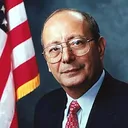
Working families are not doing well in this economy.
Alfonse D'Amato Former U.S. Senator from New York

A list of automakers that plan to exclude AM radios in EVs.
David Donovan Senior Policy Adviser, NYS Broadcasters Association
New Jersey politics, Senator Menendez's problems.
Eric Shuffler Founding Partner, River Crossing Strategy Group

Almost three weeks overdue, and the budget is still being debated.
Zach Williams Transportation Reporter, Bloomberg Government


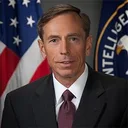
Ukraine desperately needs arms to resist Russian aggression.
General David Petraeus Former CIA Director & Four-Star General


There are laws for finding a meteorite.
Steve Kates Space and astronomy broadcaster (Dr. Sky)