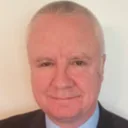
Bart Schwartz
Bart Schwartz on His Role as a Federal Monitor Tasked With Overseeing the New York City Housing Authority
Transcript
Automated transcript · uncorrectedSunday morning. So many things are happening in our city. What is today is my good friend Bought Schwartz. He’s the founder and chairman of Guidepost Solutions. And what does guy Post Solutions do? They provide compliance and investigative services.
He was also the chief of the Criminal Division of the United States Attorney’s Office in Southern District. And when there was a problem, when there was a problem with the New York City Housing Authority called NIGHTSCHA, the United States Attorney’s Office run by mister Berland at the time, Berman appointed I guess Bought Schwartz to oversee it and
to see what the problems are. Well, Bot Schwartz, it’s you’re on first base right now. What happened?
So thank you, Josh. Well, there were so many problems that and NISCHA was not facing them. That final the city, NISCHA, the federal government all agreed in a very lengthy document of the goals that NICHA had to achieve, the problems that it had to face, and the things that it had to do. And it was my job to oversee
their compliance with that agreement. I was not a receiver, I was a monitor. So I had a limited authority, but I had a lot of authority when it came to what was in the agreement?
What were you I understand, what were the findings? I mean, how many Knightscha apartments are there in.
New York, John, It’s enormous, although that’s often used as an excuse and it shouldn’t be. But it’s approximately as best people can tell, it’s approximately five hundred thousand people, about one hundred and seventy five thousand apartments. There were twenty three hundred buildings with people living in them, and over three hundred developments or campuses. So it’s it’s really
on its own. It’s one of the largest cities in the country.
That is a lot. That’s a lot of people. And I remember me and you discussing in just one day and the problems with that empty apartments or people that are not paying rent, et cetera, et cetera. What were your biggest apartments that you were facing? Security, people feeling safe walking around?
John? There were there are many serious problems there. I would say, though, the one I put at the top of my list is lead poisoning of children.
The lead poisoning of children in the Nighthobe buildings.
Oh my God and John children under six who are poisoned by lead and their brains are damaged. There’s no way to reverse that. So I, day in and day out, I told my team and reminded them that there’s that is there, that is the most important thing to be doing.
We can’t waste any days. But there were many other, many other problems there. The the culture was terrible. The the employees, UH, even management that failure for them, failure was always an option, not not not the reverse and and they and said when they failed, there were no consequences, so they kept they kept failing. There was a lot
of discipline. They didn’t use modern methods to deal with the cleaning and with the maintaining of the capital UH, aspects of the of the of the buildings. UH.
They didn’t have a code of conduct. They didn’t pay any attention to ethics. You know, and it may sound a little soft, but the fact is, when you can influence a culture at an organization so that they have values based ethics, you can solve a lot of problems.
There are two kinds of compliances. There’s that values based compliance and then there is organizational compliance, where that’s rules made by people but the basic compliance is values based, and if you can get people to understand what the values are and to have the right values, it can it can influence the entire operation. And we spend a
lot of time time on that and we we despite all of the problems there, we made some very effective improvements at NICHA, not only through the work that we did, but the experts we brought in to teach NICHA how to use the best methodology that the private sector was using.
Now, I understand that we have a new mayor in town and everybody wants to give me a chance to do the right thing by everybody, and he wants more affordable housing. If you were if if you were to be able to advise him, what would you say to him? Uh, the mistakes of NATRA versus the future affordable housing.
John, I would say the biggest thing would be that the failure to recognize that even if you have the structures, you must maintain them. It’s not just it’s not just that the apartment is available, It’s that that they that the building is maintained, that there’s training, that there are inspections, that there is that you limits and try to eliminate corruption.
There’s a lot that has to be done. It’s not simply saying that there’s an apartment or there’s a building and putting people in it. You’ve got to make sure that that building is maintained and that the people who are responsible for maintaining it are properly trained.
Well, Bot Schwartz, thank you so much for the update, and let’s let’s continue to talk about it, because the people in affordable housing deserve better, but the people the citizens of city, in New York and in the United States deserve better too. But let’s let’s let’s figure it out.
And I also must commend you. You’re doing a great job as the president of the Police Athletic League. And thank you for on behalf of the kids. Thank you for all your help and for those kids.
Thank you so much, John, that’s a pleasure. Thank you, Bye bye,
Sunday, February 22, 2026
Diplomatic Efforts Are Failing to Resolve Escalating International Conflicts
General David Petraeus Former CIA Director & Four-Star General
SEC. DOI Doug Burgum on the Accomplishments of President Trump's First Year in Office
Doug Burgum
Dr. Mehmet Oz Reflects on a Year of Republican Achievements
Dr. Mehmet Oz CMS Administrator
A Big Legal Victory After Ostrich Culling by Canadian Government
Katie Pasitney Spokesperson, Universal Ostrich Farms
Wild Horses Can Help Prevent Catastrophic Wildfires
William Simpson Founder, Wild Horse Fire Brigade
Executive Power Is Now Limited in Trade Battles and Amid Rising Global Tensions
David Paterson Former Governor of New York
Running for Comptroller to Fix New York's Fiscal Crisis
Joseph Hernandez Entrepreneur; nominee for New York State Comptroller

The Growing Danger of AI Hallucinations for Children
Lynn Shaw Founder of Lynn's Warriors
Einstein's Life and the Universe's Most Powerful Particles
Steve Kates Space and astronomy broadcaster (Dr. Sky)