


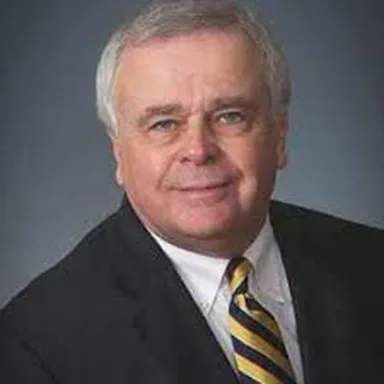
David Donovan Senior Policy Adviser, NYS Broadcasters Association
AM radio and Detroit automakers.
Transcript
Automated transcript · uncorrectedWith us today is David Donovan. He’s the president of the executive director of the New York State Broadcasters Association, and he is very very much concerned what is happening in the radio industry. And good morning Sunday morning. David, tell us about your concerns in the broadcast industry, of which were you our members?
Absolutely well, Thank you, John, and welcome and it’s a pleasure to be on ABC Radio. One of the things that we have found over the last year several years, of course, is the push to move to electronic electric vehicles.
But as part of that, what is happening is that your majormobile makers, a number of them, have decided to eliminate AM radio from the dashboard. And starting in December, Senator Red Marky, who’s the senior MARA from Massachusetts, sent out a letter to all the automobile manufacturers and came back with companies like BMW, Ford, Tesla, VW are all
indicating that they do not want to put an AM radio in an electric vehicle going forward. Yet at the same time, there are a number of others Honda, Hondai, Nissan, Kiya and others who have an AM radio and WILK indicated that they will continue to have an AM radio on the dashboard. So the issue is why is this important?
And I think it’s important for a couple of reasons. One, AM radio is incredibly popular in the United States, and in New York City you have eighty two million listeners people Americans who listen to AM radio every week. In New York you have one hundred and sixty one AM stations, which is roughly twenty seven percent of all the radio
stations in New York State. And even in New York City, including your station, John, you have twenty seven AM stations. They provide a variety of news and information. During news and information, including foreign language, whether it’s Hispanic on WADO, you have Chinese language stations who have Korean language stations.
So the vibrant fabric that is New York in terms of news talk and in terms of sending out information you’re going to find on AM radio. But it actually goes even deep. The concerns are even deeper than that, because what people have to realize is that AM radio is the cornerstone of the emergency alert service. In the
United States. Right now, ninety nine percent of all radio stations in the AM radio stations in the United States participate in this service. FEMA and the FCC have hardened a number of these stations, about seventy five to eighty of them that are designed that if the Internet goes down or if our communication systems break down, that they
will be able to get emergency messages out to the people across the country. Now, in New York you have four of what they’re called PEP stations primary entry points stations, and WAWC is one of them, WROW up in Albany is another one, and WHAM and Rochester is another AM.
Those three stations, the federal government will send out an emergency alert, They broadcast the emergency alert, and they are essentially the first domino in a chain of other dominoes in which, over time that emergency alert filters its way all through New York State, And if you start taking AM out of your dashboards, destroy the AM radio service.
As a result, the entire investment that you will see done by FEMA and by the FCC in terms of creating an emergency alert service frankly goes down.
The drain David. In fact, it’s saying something I was in Las Vegas last week at the National Broadcasting Convention, and I met with FEMA, and FEMA is very very upset about this because they said that all these stations that broadcast in case of emergency covers ninety seven percent of the American people. And also so they are very
upset about this. And I’ve also met with the FCC, which they say that the fact is that they are dedicated to system and we’re going to be breaking down the communications and one of the things that comes out it might not be just electric vehicles. Ford has said they’re going to do gas vehicles in twenty twenty four.
And I’ve put out a statement saying that Ford should look at what happens anheus a bush when people revolted, and people will revolt against this and Ford will suffer. And I have a call in next week to the CEO of Ford to interview him and let him know he shouldn’t be the next man hides a bush.
Well, I think the issue here is is that right now appears to be this trade off that if you want to push vehicles or you know, going forward, or electric vehicles or what have you, you have to give up somehow your ability to receive emergency message. Moving forward with any green new deal or what have you, doesn’t
mean you have to give up on national security concerns. And that isn’t that is a false trade off that the automobile industry has laid out.
David’s one additional thing. One additional thing that I must point out is that it might not be just a world culture doing that. It might be economics, because what they want to do instead instead of giving you a free two hundred dollars radio in your car, they wanted electronically digit you in and charge you nine ninety nine
a month. So it could be economics where they want to charge every American advisor car nine ninety nine a month to subscribe to the radio system versus getting it for free on the AM bands. Now, when you look at that, suppose there’s a problem with the grid. If the grid goes down, electronics go down, and the American people,
ninety seven percent of them will not get the emergency message.
And that’s the issue. John, you hit it right on the head because with the automobile industry, you’re saying, well, I can get AM radio over the over some digital platforms, whether you get a separate app or whether you’re on some of these digital platforms. The problem is fifty percent of the radio AM radio stations aren’t on any ath
or on any streaming service, and on these aggregators. So you are going to lose over thirty nationwide access to over thirteen hundred stations. But you hit it right on the head. The reason why you want to have the tuner in the car is because when that system breaks down the Internet or other systems, and we know how
that happens, we all live through Superstorm sand. The direct AM reception is absolutely essential to sending out life saving information. And there’s no reason if you look at the answers that the automobile industry sent back the Senator Marquee at one of them mentioned costs. All of them mentioned oh, it’s hard to filter because they may be interference with AM.
But you have a bunch of manufacturers in the United States who have AM in their electric vehicles and in the irregular vehicles who seem to have solved that problem. So the issue really here is going forward, what the dashboard is going to look like. And you’re right, there is a shift to move this from a free service
to a pay based service. But by doing that you’re running the risk of Americans not being informed during emergencies because you need the direct reception. And the final thing is the chip is in the car, by the way, the FM and AM reception chip you are in these vehicles.
They just don’t activate the amans and they’re threatening to deactivate the FM two going forward. Yes, and the whole idea is to create a pay based system in your dashboards a.
Month for every American. David, we have to talk about this further because this is something that is not acceptable to the American people. And thank you for coming on this Sunday morning, and we’ll work continue to work together for what’s good for all Americans, not just the people that want to earn another nine ninety nine a month.
Thank you so much.
Thank you John, it’s a pleasure to be with you, sir,
Sunday, April 30, 2023

Budget report. Governor Hochul says it's finished. Vote tomorrow.
Zach Williams Transportation Reporter, Bloomberg Government
Biden administration wants to make all military vehicles electric by 2030
Joni Ernst U.S. Senator from Iowa

Concerns about the impact of social media on young people and old.
Marsha Blackburn U.S. Senator from Tennessee; nominee for Governor
Only Republican on House Intelligence, Armed Services, and Foreign Affairs committees.
Mike Waltz U.S. Ambassador to the United Nations

Book: What's Left Unsaid My Life at the Center of Power, Politics & Crisis
Melissa DeRosa Political Commentator

Japanese Hakuto lunar lander lost contact. The Spring skies.
Steve Kates Space and astronomy broadcaster (Dr. Sky)

Coconut oil and Alzheimer's MCT. Seems to slow and stabilize cognitive decline.
Dr. Peter Michalos WABC Medical Expert
David Donovan
House Vote Advances the Fight to Keep AM Radio in New Cars
David Donovan Senior Policy Adviser, NYS Broadcasters Association
Movement afoot to draft legislation for AM radios in all cars.
David Donovan Senior Policy Adviser, NYS Broadcasters Association
AM radio has a big victory this week. Voted out of Committee 45-2.
David Donovan Senior Policy Adviser, NYS Broadcasters Association
A list of automakers that plan to exclude AM radios in EVs.
David Donovan Senior Policy Adviser, NYS Broadcasters Association
