


Transcript
Automated transcript · uncorrectedWith us today is Mario Ikunomo, a former banker at Zurich, London and New York, and he gives us our European report every Sunday. Mario, what the heck is going on in Europe and how’s it going to affect the United States?
Yes, good morning, Cats roundtable. A couple of things coming out of Britain out of England this week. The first is that Britain will be supplying the Ukraine with depleted uranium shells. If you recall, the Russians had said that if the British do something like that, they would actually consider it a nuclear type of attack. So the ball
will essentially now be back in Russia’s court. To respond to the fact that the English will be supplying depleted uranium shells to the Ukraine. Something else came out of England this week also, and that is that the chief economist I believe he is at the Bank of England essentially made certain statements which concluded and said that everybody
needs to essentially accept that we are all poorer now and this has to do with the energy crisis, the food crisis, and the fact that inflation is very stubborn and doesn’t seem to be going away. It’s true that.
We’ve been we’ve been saying that for the last six months, that we moved the wealth from North America, from Europe to the Russians, the Chinese and the Opic nations.
Yes, but we’re not chief economists of a central bank, and when they speak, people listen, and unfortunately I don’t think anybody has been listening to you and me. If they had, they would have ended this war a long time ago. Trade relations would have been re established and we wouldn’t be in the situation that we’re in. So
I think, on the back of what the chief economists at the Bank of England said, I don’t know if our readers are rather I’m sorry, our listeners are aware of certain statements that the US National Security Advisor Jake Sullivan said at an event at the Brookings Institution this past week, and basically, if it’s okay, I’m just going
to read the quote. It’s very important and it’s very short. I’ve taken this off of Bloomberg and it says burden sharing, when it comes to taking some economic hit to protect your national security, is harder to quantify and then harder to implement. But it’s the fundamental concept that is what makes alliance’s function effectively. Now, what he’s essentially saying here
is that the Europeans, who are of course America’s closest ally, need to accept the fact that there is going to be economic pain as a result of the position they’re going to be taking with the United States against Russia, China and the rest of the countries that are aligning themselves with Russia and China. It’s an interesting and it’s
a far reaching statement, and it ties in very interestingly with what the chief economists at the Bank of England said, especially the fact that we all need to accept that we’re poor. Now, moving on, just talk about two other quick things we know this week. This past week, the Russian Defense minister met with the Chinese defence minister once
again twice in less than a month, but this time they met in India with the Indian Defense Minister, which is an interesting development to say the least. We also know that Argentina is now going to be buying its Chinese imports from China in Chinese yuan. They’re saying they’re doing it in order not to deplete their US dollar
reserves and therefore they’ve entered into these agreements with China, but nevertheless it’s once again another country buying Chinese imports and the Chinese currency. I did see something off of another chart which indicated that the Chinese yuan has actually surpassed the US dollar in China’s trade settlements with other countries.
This basically means the China now is trading in its own currency with third party countries, and it’s a settally removing itself out of the dollars trading abilities or historical necessity. Moving to the Ukraine, let’s just touch on the fact that a certain gentleman there by the name of mister Podoliac, who’s an advisor to the President of the Ukraine, he
essentially said that the Crimea and the Dombas, which is the eastern part of Ukraine, will be taken back, even if it has to be by force, and they need to essentially be completely destroyed. That’s a pretty strong and far reaching statement, and it goes to show us that once again the differences between the Russians and the Ukrainians
are miles apart, and therefore I don’t anticipate we’ll see an end to this war conflict anytime soon. And the last thing I’d like to touch on today, if I may, is the situation in the Sudan. Now, the Sudan is in the throes of what appears to be a civil war, the specifics of which I’m not well versed in, other
than the fact of what we’ve been told that there’s one general who’s fighting another general that used to report into him. In the meantime, in the main city, the capital city of Khartoum, many Europeans and Americans for that matter, foreigners and non Sudanese people have been caught in the crossfire and they’ve been trying to evacuate desperately enter European Union,
where it has failed miserably to actually secure the safety of its own citizens. The way it was handled by the EU was each country essentially for themselves. Each country has to figure out how to get its own citizens out of the Sudan. There was no concerted effort. It took a while for everybody to figure out what was
going on, and that is actually reprehensible. One has to wonder what is the European Commission doing, And in terms of addressing situations like this globally, we know that The Germans did then one thousand paratroopers in order to secure the airport, and they did that. They did send some large jets and they were effective and evacuating not only
Germans but other Europeans as well. But this was hardly the concerted effort that one would expect out of something like the European Union, meaning there is no we can see no rapid deployment force that exists on an EU level.
That means a rapid deployment force ideally would be twenty thousand men and women, five thousand of whom would at least be combat ready and perhaps even war veterans, meaning coming out of the Afghanistan conflict, coming out of Sub Saharan Africa, where the French have been involved in major firefights, as well as fifteen thousand additional logistics personnel who could
assist in medical, humanitarian all these types of things. We saw a complete failure on the EU wide level. And this is actually alarming to me as a European because it makes me wonder how safe am I really when I travel around the world. For you Americans, it’s different.
You’re lucky because if an American is taken, if an American is in distress somewhere in the world. The State Department stands behind their citizens. The State Department if it has to get to other agencies involved in order to extract their citizen from that country. Unfortunately, we did not see this at the European Use Mario.
We have to talk about this further, but we’re at a time today. I will tell you the stories on the Sudan how it affected Bill Clinton when I was with him at tenth David, but thank you for the report, thank you for bringing all Americans up to date, and we’ll catch up again real soon, maybe during the week.
Okay, very well, thank you, enjoy your Sunday. Thank you.
Sunday, April 30, 2023
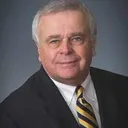
AM radio and Detroit automakers.
David Donovan Senior Policy Adviser, NYS Broadcasters Association

Budget report. Governor Hochul says it's finished. Vote tomorrow.
Zach Williams Transportation Reporter, Bloomberg Government

Biden administration wants to make all military vehicles electric by 2030
Joni Ernst U.S. Senator from Iowa


Concerns about the impact of social media on young people and old.
Marsha Blackburn U.S. Senator from Tennessee; nominee for Governor
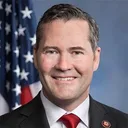
Only Republican on House Intelligence, Armed Services, and Foreign Affairs committees.
Mike Waltz U.S. Ambassador to the United Nations

Book: What's Left Unsaid My Life at the Center of Power, Politics & Crisis
Melissa DeRosa Political Commentator


Japanese Hakuto lunar lander lost contact. The Spring skies.
Steve Kates Space and astronomy broadcaster (Dr. Sky)

Coconut oil and Alzheimer's MCT. Seems to slow and stabilize cognitive decline.
Dr. Peter Michalos WABC Medical Expert