


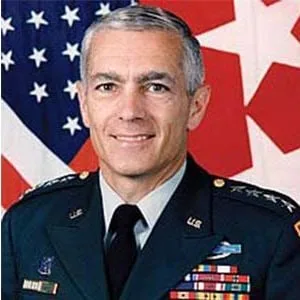
General Wesley Clark Former NATO Supreme Allied Commander
Why American Leadership Remains Essential to Global Stability
Transcript
Automated transcript · uncorrectedSunday morning, What is going on around the world. Well, we’re privileged this morning to have General Wesley thought he was a former NATO Supreme Ally commander. There’s nobody knows more about NATO than he does. And forced do General West point, General Clock, what the heck is going on with NATO? We saved that behind so many times, and
it doesn’t seem like they appreciate the United States.
I think that’s the opposite, John. They do appreciate the United States, and they think that we’re uh. They were part of NATO, and they’re wondering where we are. When they hear that we’re pulling troops out and so forth, they ask themselves, what could be more important than stabilizing Europe.
Why wouldn’t you want to deter Russia? Why would you want to pull troops out and redeploy and so forth and give Russia the feeling that, hey, maybe there’s an opportunity to So they’re asking some serious questions and we need some good answers.
I understood, and I understand that he was a little bit the President Trump is a little bit perturbed at I guess the German president, the premier, and he moved some troops over to Poland because I hear that the Russia was amassing their troops around the Polish border.
The fear is really for the Baltic states. So it’s not just in Poland, but it’s in Estonia, Latvia, Lithuania. And the fear is that the Russians seem to believe that if they say that Russian speakers in these countries and there are some are somehow being prejudiced against, and Russia has a right to intervene militarily and take over
the country. And that’s a pretext for war. We heard exactly the same kind of pretext before the invasi of Ukraine in twenty twenty two. It usually is a company based on legal action out of the out of the Putin controlled Duma, the sort of for a veil of legality over what they’re about to do. And so we’ve
watched this situation over several years, and we’ve watched the Russians build up their forces there. And you know, despite the poor results in Ukraine, how do we know that Putin’s not thinking, hey, I’ve got a quick win and against these nasty little people in the Baltics.
Well, he did say Putin did say that I think I got a quick win. Why should we give Afghanistan to China and I get nothing? Isn’t that what really happened?
Well, you know Putin is he is a strategist. He’s not a military guy per se, but he’s an intelligence spook and he’s a very smart, conniving, capable guy with some great intel assets. So that’s why he’s focused on the Baltics right now. They were part of Russia during the Tzar’s time. They always thirsted for independence. They had
some brief independence during the nineteen thirties, and then of course at the end of World War Two, the Soviet Union reoccupied them, and so since nineteen ninety one they’ve had their independence. They don’t want to lose.
It, understood, and give us the pulse of the situation. But what you think is going on in Iran in the Strait of Hormuz.
Well, right now it may look like a deadlock, but it’s like two people in a vicious arm wrestling match. You never know who’s going to give out. Iran’s economy is hurting for sure, but they’ve reopened their missile cities.
They can fire that. If we do anything to Iran, they attack our friends in the Gulf, our friends in the Golf don’t want the Iranians to have control of the Straight of Horror Moves. That’s a tough nut to crack.
It could be cracked, but right now we don’t seem to be. We seem to be sort of halfway sneaking some boats through, but not enough. And meanwhile, the Iranians are trying to use the negotiations over the Strait of Hoar Moves to block the Israelis from going after his blaw in Lebanon. But at the same time, his blaw
is not saying, well, if we stop fighting, will stop fighting? Is what wants to continue to fight. It’s all part of the Iranian strategy. So the President’s got a tough role here because it’s a tough battlefield, is a tough negotiation.
And then he’s also trying to keep the economy from suffering too much. He’s done a really good job on I think, in keeping the stock market up and and so forth. But is peace about to breakout? Seems unlikely understood.
What else would you like to tell the American people on Sunday morning? You know, we’re sitting around in America having a cup of coffee, and there are people out there that are suffering, whether it’s you know, Israel, whether it’s Lebanon, whether it’s Iran. I mean, you tell.
Us, well, I think you know from my experience. I’ve done a lot of work in foreign policy. But what I learned from General al hag when he was a NADO commander and before that, and his work with richissgeris that what happens outside our borders has a big impact on the American economy and the strength of the American dollar.
And that’s fundamentally. We’ve shaped the world since the nineteen forties by US security, US armed forces and the credibility, the stability, the consistency of American forum policy. And so I know the President wants to make a big transition here.
He wants to pull us out of Europe. He wants to focus on the Western hemisphere. He’s trying to cut a deal with China. This is high, high risk for the American economy because there’s nothing more difficult than that kind of a strategic realignment. People look at it, they say, what’s going on with the dollar? Maybe we should switch
to the Chinese. Maybe the Chinese are more reliable. Maybe we need to go to a goldback currency. A lot of these issues that look political and diplomatic come down to being financial and economic. We’ve been sustained by the flow of petro dollars from the Emirates from the Saudis for fifty years. Kuwait. They invest their money, they make
a lot of money off oral sales. They invested in the United States. By and large, if anything were to happen to that, our economy would definitely feel the impact. So I think the American people have to understand that what happens overseas is of immediate consequence.
You’re at home, General Wesley Clark. I want to thank you so much for coming on this Sunday morning and briefing all the American people. Thank you for everything you’ve done for America and continue to speak out for America and me and you will catch up again real soon.
Sounds great. Thank you, John
Sunday, June 7, 2026
Bringing Texas Values and Conservative Leadership to the Senate
Ken Paxton Texas Attorney General; nominee for U.S. Senate
Securing the Border and Protecting Election Integrity
James Lankford U.S. Senator from Oklahoma
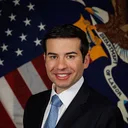
Strong Jobs Growth Signals a Bright Future for American Workers
Keith Sonderling U.S. Secretary of Labor
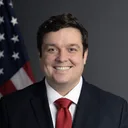
Putting American Safety at the Center of Foreign Policy
Tommy Pigott State Department Spokesperson

There Needs to Be Transparency and Reform Within the FBI
Nicole Parker Former FBI Special Agent; Fox News Contributor
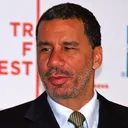
Political Division Threatens the Future of Democracy
David Paterson Former Governor of New York
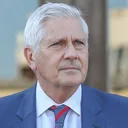
A Vision for Reviving New York's Economy and Communities
Bruce Blakeman Nassau County Executive; nominee for Governor

Lessons From the Clinton Era for Today's Political Challenges
Hank Sheinkopf Political Consultant
Battery Storage Fire Raises Environmental Safety Concerns
Bonnie Brady Executive Director, LI Commercial Fishing Assoc.

Running to Change the Direction of New York's Fourth District
Jeanine Driscoll Hempstead Receiver of Taxes; nominee for Congress, NY-4

Bringing Preventative Healthcare to the South Bronx
Dr. Mason Pimsler Geriatrician, Lincoln Medical Center
Running in a Competitive Race for Florida's 14th District
Mike Beltran Former Florida State Representative; nominee for Congress, FL-14

New York's Housing Crisis Is Being Fueled by Bad Policy
Suzanne Miller President, Empire State Properties; WABC Real Estate Analyst

New Research Offers Hope in the Fight Against Alzheimer's
Dr. Peter Michalos WABC Medical Expert

Blue Origin Explosion Delays NASA's Return to the Moon
Steve Kates Space and astronomy broadcaster (Dr. Sky)

The Take It Down Act Marks a Major Victory for Digital Safety
Lynn Shaw Founder of Lynn's Warriors
General Wesley Clark
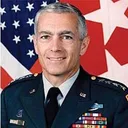
How Will the Russia-Ukraine War Be Resolved?
General Wesley Clark Former NATO Supreme Allied Commander
Ukraine will not surrender. Putin threatens nuclear war.
General Wesley Clark Former NATO Supreme Allied Commander
The budget will decide the Trump Presidency
General Wesley Clark Former NATO Supreme Allied Commander
General Wesley Clark Speaks at the CATS Roundtable Radio Show
General Wesley Clark Former NATO Supreme Allied Commander
