


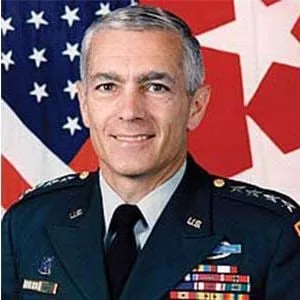
General Wesley Clark Former NATO Supreme Allied Commander
Ukraine will not surrender. Putin threatens nuclear war.
Transcript
Automated transcript · uncorrectedSunday morning. What is today is General Wesley Clock and he was Supreme Allied Commander of Europe of NATO. So one smart guy knows what the heck is going on. Well, General Pluck you the you’re a loyal American. Give us an update to all the American people. What the heck is going on?
Well, John, first of all, thanks for having me on. It’s always great to talk to you. I think you have to understand that this war is not a stalemate in Ukraine. It is a bitterly fought struggle between two sides and it could tip at any time if one or the other falters. For mister Putin of a Russian
soldiers the same as an artillery projectile, he uses them up. He gets, you know, one hundred and fifty two hundred thousand a year, use them up. For the Ukrainians, they’re like us. Every life is vital. They’re doing everything that they can to save the lives of their soldiers, but they want their country back, and so it’s a nip
and talk on the line. And if we give them the resources they need, they might be able to prevail. But without those resources they can’t keep up with the industrial might and the personnel strength of Russia, especially when Russia is receiving North Korean ammunition. Maybe a million rounds of one to five to five have come in Iranian
rockets and drones, and now we’re hearing these reports of these North Korean soldiers coming in. So it’s a tough fight for the Ukrainians. We’ve got to help them.
I understand that. And let’s go right now to Israel. I RAN, the terrorist groups that i Ran is funding. Tell me about that. I mean, you know what I’ve said publicly general, I’ve said that the free world is depending on the United States of America and depending on the White House to keep the free world free. Well,
right now, John, Israel’s keep the free world free.
Ahead, John, You’re right, the administration is trying to prevent the further escalation, greater spillover of economic damage, destruction, and loss of life in the region. But the problem is Iran’s feeding it. Iran is the source. You wouldn’t have that access of resistance if it wasn’t for Iran. You wouldn’t have Syria there, you wouldn’t have Isbelah or Hamas
without Iran. And at some point you have to simply say go to the source. And I don’t know if that point has been reached. Ye, I don’t know if the White House understands it yet. But at some point, for a country like Iran, you need to say that, because if they do finish their nuclear weapons program and
arm their missiles with nuclear weapons, nobody’s safe. And we can’t live in a world where a country like that has nuclear weapons and swears it will destroy another country.
The other day, a few days ago, sectary State Blincoln practically threatened Israel that if they don’t do certain things in the Gaza, the flow of defense weapons will suffer.
Every country has its own national interests, its own political interests, and Israel certainly has its political dynamics that are driving Israeli policy. It’s not just self preservation of Israel, but there’s also within Israel differences of opinion and political interests or some focus on the West Bank and so forth.
The United States also has political interests, and that’s really the only basis for the legitimacy of policy. So as Americans, yes, we want Israel to win, we’re also concerned about the loss of innocent life in Hamas and in Beirut area, and so forth. So it’s perfectly legitimate for the United States to give one hundred sent support to Israel and
at the same time asked Israel to do everything it can to avoid the killing and innocent civilians and the damage to infrastructure. That really has nothing to do with his law or the enemy general.
Right now, when we doubled the price of oil, when President Biden came in at certain points, almost triple that. They went from like fifty five dollars a barrel up to one hundred and one hundred and ten. At one time, we provided the money to Iran and made Russia rich too.
Doesn’t anybody in the administration think about that?
I think they think about it. You know, it’s a balance because this is a problem with sanctions and telling when you’re trying to sanction a country that’s a major oil exporter in the world, and you if you cut off all our oil exports, the whole world suffer. So somehow we’ve tried to put in a regimen where they
can only receive x amount. I think it’s sixty dollars a barrel, and if there’s a price of oil above that, they only get sixty. And you get the permission to buy that oil at sixty and if you pay more to the Russians than sixty, then you’re violating sanctions. But you know, I also want to say this, despite you know,
the Biden administration talking about green energy, actually oil production in the United States is way up. It’s never been higher. We’re doing gangbusters on oil production, and the administrations all behind it because they know that when you look at national strength, you’ve got to have what they call an oil of the above. You’ve got to have oil, you’ve
got to have gas, you’ve got to have nuclear energy, you’ve got to have wind, you’ve got to have solar. You got to do it all. And somehow over the next decades, we got to move to address climate change more vigorously. But you’ve got to do it in a way that protects the economy and especially now protects our
national security. But but we’ve never been in a stronger position in oil production. There are right now. And I’m really proud of the I’m in the energy business. I’m proud of these guys in the oil patch and what they’re doing.
I’m in the energy business, and the future of America depends on those small nuclear reactors or SMRs or whatever you want to call them, the same ones used in nuclear subs and nuclear aircraft carriers and converted to the land use.
You’re exactly right. I’m working small. I’m at nuclear engineering is my specialty at West Point. I’m working with an SMR company. We’re looking at the foreign countries where they’re needed, and it’s really all over the world. We just got to get them fielded there. You know, the SMRs are their new dimension and nuclear power. They’re sealed up, they’re
safe for most of them. You don’t reprocess the fuel, and when they need to be moved, you move them. And when they’re in place, you can put them underground, bury them, and you don’t have the risk of nuclear accidents.
Some are thorium fueled, and that’s even safe in terms of nuclear proliferation. But yeah, I think we got to move toward nuclear and rapidly.
That’s the future of America. But we’re going to have that discussion separately in another day. Let’s go back to how many countries have to be involved in a war before we call it World War three.
You know, in a democracy, we try not to label it a war because it’s bad for business. It’s bad for politics. But actually Russia is at war with us. We just don’t want to admit. It’s like the old Snoopy cartoon of what if they had a war? Nobody came, well, this is a war. We’re not calling it a war.
And in Western Europe especially, they’re very cognizant of Russian sabotage, Russian assassinations, Russian disinformation, Russian payoffs and inference and energy and business and so forth. There’s a couple of governments that seem to be leaning towards Moscow increasingly now, in addition to Hungary. So there’s there’s a lot of issues there.
And as far as Putin’s concerned, he says he’s at war with us. So I know we don’t want to say that, but I think we need to tighten up what we’re doing against Russia. We need to be taking away more of their bank permissions. You know, not all Russian banks are sanctioned. We need to be going into
their information space and telling the Russian people the truth about Russia’s aggression. Uncalled for aggression against Ukraine. And we need to be going after the assets of people like Vladimir Putin, take away his money. He still has money in Western banks. O.
It is he’s worth big. He’s worth biggest. Exactly the. YEP at least, I mean his pocketbook and in Russia’s treasury is synonymous. Uh. Well, is there anything else you want to tell the American people?
Well, I just want to say to the America if people look, I really admire the courage of the Ukrainians, their determination to fight for freedom and democracy, the same values we have. They’re fighting for us, and it is in a vital American interest that they succeed. So I think we need to do more to help them. I
think we need to be less concerned about mister Putin’s nuclear threats, and we need to take stronger action on the non military front, diplomatic, economic, and so forth against Russia. We need to really tell our allies who are sort of enforcing sanctions, stop selling sanctioned sensitive equipment to these stands that are then passing it back to Russia. Stop
the leakage of sanctions. If we’re going to try to hold the line here and roll it back, economics would work, but only if we really mean it, and we got to tighten those sanctions way up.
Well, General Clark, thank you for everything you’ve done for our country, continue to do for our country, and love our country. God bless you, God bless America.
Thank you very much. It’s great to talk to you.
Sunday, October 20, 2024
Electric vehicles are not as popular without subsidies.
TD Cowen Managing Director Gabe Daoud, Jr.
NYPD needs to get a hold of migrant crime.
Ray Kelly Former New York City Police Commissioner
This election will be a turning point for America.
Peter King Former U.S. Representative from New York
Suing energy companies not good for America.
Paul Zuber Executive Vice President, The Business Council of New York State

Comedy festival, 200 comics. November 8-17, NYC.
Carolines Comedy Club founder Caroline Hirsch


NYC crime is much higher today than in 2019.
Nicole Gelinas Manhattan Institute Senior Fellow and Columnist
Israel has killed HAMAS. Terrorist Sinwar.
Former DOE Senior Advisor Victoria Coates
Interviews Anthony Jasenski Jr, SVP, National Film Studio Practice Leader at CBRE
Michael Stoler Real Estate Expert

The Harvest Moon this week. Moon closest to Earth.
Steve Kates Space and astronomy broadcaster (Dr. Sky)

General Wesley Clark
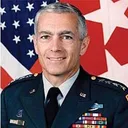
Why American Leadership Remains Essential to Global Stability
General Wesley Clark Former NATO Supreme Allied Commander
How Will the Russia-Ukraine War Be Resolved?
General Wesley Clark Former NATO Supreme Allied Commander
The budget will decide the Trump Presidency
General Wesley Clark Former NATO Supreme Allied Commander
General Wesley Clark Speaks at the CATS Roundtable Radio Show
General Wesley Clark Former NATO Supreme Allied Commander
