


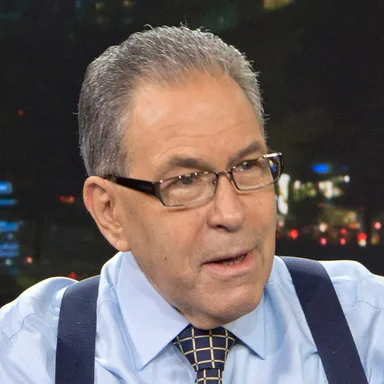
Michael Stoler Real Estate Expert
Interviews Anthony Jasenski Jr, SVP, National Film Studio Practice Leader at CBRE
Transcript
Automated transcript · uncorrectedGood morning. This is Mike Stola for the Stolely Real Estate Report on the CATS Roundtable. The film business is growing by leaps and bounds. Streaming media, new studios, new post production, past production, pre production studios are taking place all over. So to discuss that subject, I’m fortunate to have the senior Vice President Anthony Jasinski, who is also
the film studio practice leader for America’s for CBRE. So pleasure to have you today.
Happy to be here on the other side of the microphone for the first time.
So let’s talk about what’s happening today. There’ve been some incentives certain states are really big and incentives are they going to I think there was an article written saying that they’re not going to put the word bayone on top of the mouth and it’s like they had in California.
Yes, I saw that article recently as well. The states are definitely starting to bolster their tax credit incentives to incentivize some of these productions to coming to their state and the industry itself.
So let’s talk about what are these incentives, and how do they get the incentives and what are they being used for.
So there’s three different types of tax incentives there’s a grant, which is just a straight refund of eligible expenses that are spent in the state for a production. There’s refundable tax credits and non refundable tax credits. So the most desirable and the way productions get their money back the quickest is through a grant, which is an immediate payment
of those expenses. The second most desirable would be a refundable tax credit where a production can receive those credits and sell them to a third party and syndicate them quicker. And then the last one would be a non transferable credit where they have to the next year file tax return and get the money through the state.
How many new studios have been built over the last couple of years and what are projected.
So purpose build facilities here in the New York and New Jersey tri state region. There has been about I would say ten to fifteen Sound states is delivered over the past year and a half, but it’s been met with a lot of adversity through economic conditions. The cost of construction has gone up, financing costs have gone up,
so there’s more in the pipeline than there has been delivered. But we’re anticipating about a million square feet of sound stage space being delivered over the near term.
Now where is the new space being delivered?
So historically in the New York market, in New York Metro market, it has been really focused and concentrated in the New York City boroughs. But over the past five years we’re seeing expansion much further over the Hudson into New Jersey in the Hudson Valley, more like the Yonkers facility that was recently constructed with Lionsgate, and also more
development in the Burroughs itself like Bronx.
And Queens Staten Island, also in Staten Island as well. Yes, Now, what is Wildflower? It’s a new studio correct, yep.
Wildflower just recently completed construction and they’re looking to get their first productions in there. That’s on the north side of Queens. Really interesting design, you know, and we’re excited to see how that one pans out.
Now. Well, in addition to Wildflower, what about the expansion of Steinis Studios in kaupman Astoria Studios.
Yep, So Steiner announced a few years ago their intentions to expand into Sunset Park, looking at about ten stages. Don’t hold me to that number, but you know, a moderately sized expansion from their existing facilities in the Navy Yard.
You also have Peer ninety four, which is huts and Pacific Bornado and Blackstone building really the first modern purpose built facility in Manhattan.
Now, how much will they get incentives or tax credits to that project?
So it’s not in New York, it’s not allocated by project. It’s allocated to the productions themselves. So when somebody comes to shoot their TV or movie there, they’ll apply for the credits themselves. So it’s not allocated directly the real estate.
But that project specifically is government owned land, so there might be some real estate tax incentives for there.
You may not I Peer in ninety four yes, correct, Okay, who’s the developer of Peer ninety four? Noticed Fornado was one of them.
Yep, it’s a JV between Bornado and then the partnership of Hudson Pacific Properties and Blackstone.
Are there any new players besides Hackman coming into the market from California with.
Yeah, there’s a few new parties coming in, you know, new to New York as East End Capital and their new construction project in Sunnyside, Queens. There’s also the Lionsgate Studios in Yonkers, which I previously mentioned, which is Great Points Studios. And then you also have planned construction further up the Hudson for Electric Owl Studios, which is a
group out of Atlanta.
Now, do we have the talent to do all this business?
Absolutely? I think so. You know, looking at what’s happened historically with New York the streaming war starting in twenty eighteen nineteen, stages were absolutely booked during that time, except for COVID when there was a minor interruption. You move forward into twenty twenty one and twenty two, the stages have been fully occupied. During that time. Rental rates were
drastically increasing, and it was only during the strikes that we saw, you know, a minor interruption of that kind of trend.
Now, with regard to these facilities, there’s a discussion on height. Levels are very important, correct.
Yeah, absolutely so. Comparatively to other major markets like Los Angeles in Atlanta, New York has the smallest sound stages with the lowest clear heights. And you know that’s because a lot of the space in the market is representative of retrofitted warehouses and not purpose built facilities. So you know, this new construction I think is gonna be really well
received because it’s going to deliver a quality product that just hasn’t been noted in the market since.
Now there are what sixty film studios in the region today.
As far as you mean sound stages, right, yeah, there’s about that many sound stages. We track it in square feats. There’s about three million square feet three point one million square feet of sound stage space in the New York metro.
Now there’s a discussion of the real estate life cycle for film. What are they production, post production, pre production?
Yes, yeah, So that’s a good point to bring up because that’s where we are talking about where we are today in the market. And because the strikes and the threat of future strikes from IATZI and Teamsters have paused that production schedule. It takes some time for those productions to go from writing to greenlit to setting production schedules.
So the teamsters negotiated their new contract at the end of July, and now we’re in the part of the cycle where they’re starting to set production schedules and green lighting shows. So we would we suspect at CBRE that by the end of the year we should get a better sense of what normal operations look like.
Now, do we have a strong lobbyist for this type of many?
Many? All, all of the real estate owners who own production facilities all lobby with their respective states for incentives and you know, pushing the industry forward. And then on top of that, you have all the labor unions too, which are big, big advocates for the industry as a whole.
What about Fort Mammoth and the other military locations being used for studios.
For Mammoth would be a really good, you know, production facility, and it would be a huge boost to the New Jersey you know, kind of clawing back and getting their production industry back into full run. It’s outside of the studio zone and Netflix kind of operates their own facilities, but it would bring a lot of support industries out
to New Jersey and really create you know, a more a larger ecosystem, if you will.
So, I was reading that the New York state film production tax credit has been renewed to twenty thirty four. Were you surprised by that renewal to twenty thirty four?
No, not at all. You know, the every most states have a horizon period on their tax and center programs. So investors and lenders alike in this industry are very aware of that and they make those decisions based on that governmental change. So moving that forward is not a surprise to me, and it’s good for the industry.
Now, you were saying that many of the old students were retrofitted. Today they’re being built up from ground up.
Mm hmm yep. So most of the yeah, most of the new facilities are ground up construction, offering you know, thirty foot plus clear heights, columnless space, top of the line, acoustical installation, the appropriate amount of electricity to be able to host you know, new high end productions.
So how do you get the credit? Where as it is a tax rite off?
What is so after It varies by state, of course, but after a production is done, they’ll submit their budget to the state. During the production, they’ll get audited by the state to make sure that the eligible costs that they have of the reporting are indeed reimbursible. And then it gets a little bit more detailed. You have above
the line expenses like executive producers and director costs, which some states allow others don’t, like New York and I believe New Jersey doesn’t either. And then you have below the line, which is going to be your labor for off screen talent like your grip, your gaffers, everyone else.
Now, what happens in California with which was considered the film’s country of the the film business today.
So California, just for a larger context, was actually one of the last states of the bigger ones to introduce a tax incentive legislation because previously the whole industry was there, they didn’t need to incentivize productions to come in. Further, they since introduced the three hundred and I believe thirty million dollars tax credit that they currently have, But relative
to the amount of space they have, which is a roughly seven point one million square feet of sound stage, more than double New York, they are starting to track more productions leave in California going to other states for those incentives.
Now, how do these companies compete to get the studios?
So there’s really three things that drive sound stage demand nationally, because you have to look at the film studio industry as a national market, not just localized, because these productions will go if there’s no incentive. So the three things that they’re looking for. Financial incentives, which you definitely covered, the crew, the offscreen talent and support industries to make
sure that they can actually film there. And then also lastly the infrastructure. And then there’s a layer of personal preference. You know X y Z actors in New York were only making it in New York for that, or you know, this producer likes to be in Hawaii, so we’re filming in Hawaii. You know. So there’s a little bit of
that in the industry. But the three other items I mentioned are the top priority.
Now what happens with Canada and Vancouver.
So Canada is really competitive. I’m going to go back to the incentives just a little bit. They actually have a federal tax program in Canada along with the provincial tax credits, so you know, in certain provinces of Canada you can actually get up to a fifty percent tax credit on eligible spend. Now it has to be Canadian spend.
You can’t be you know, submitting expenses of US domestic spend, like if you do your post production, for example, in US, it may not be eligible in Canada. But those really strong incentives, you know, I would say, are you know globally, Canada is probably number two to the UK and then the US being third because it’s state ran not federal.
A lot of productions go to Vancouver and they go to Toronto for that reason.
So how do you what do you project in the next six months next year with regard to the film production business in the metropolitan the region.
I mean, it’s definitely gonna go up. We’ve been hampered throughout the year. You know, if if typical operating is at a ninety percent utilization, we’ve been probably closer to seventy percent sixty percent throughout this year. So it’s going to go up from here. But the bigger question everyone’s asking is where’s it going to land once we get
back to full stabilized operations. And my my gut is that you know, the quality stages are going to be full, they’re going to have the production schedules set for twelve months, and you know, the smaller ones are going to have to be competitive on rates or they’re going to you know, have a little bit higher vacancy maybe eighty five percent
throughout the year.
What about AI.
Answer this question a lot and a lot of different venues. AI. I don’t see as an immediate threat overall to the production industry today. It certainly is a factor to be considered, and I think it will change the way that films are made and not replace the way that films are made.
It could replace administrative jobs or post production jobs, but at the end of the day, the film industry is so strongly protected by unions that I think, a it’s going to take time for the technology to get there.
You know, we’re looking at maybe three to five years until they can actually make a feature film with it, and then another probably three to five years after that until they can break the unions and actually replace people in filming. So I don’t see it as an immediate threat, but it is something to definitely be considered.
So i’d like to thank you for being here. You’ve provided a very informative discussion which hasn’t been discussed on the Stoll the Real Estate Report, and hopefully we’ll have you back in the future. See everybody next week.
Sunday, October 20, 2024
Electric vehicles are not as popular without subsidies.
TD Cowen Managing Director Gabe Daoud, Jr.
NYPD needs to get a hold of migrant crime.
Ray Kelly Former New York City Police Commissioner
This election will be a turning point for America.
Peter King Former U.S. Representative from New York
Suing energy companies not good for America.
Paul Zuber Executive Vice President, The Business Council of New York State

Comedy festival, 200 comics. November 8-17, NYC.
Carolines Comedy Club founder Caroline Hirsch

Ukraine will not surrender. Putin threatens nuclear war.
General Wesley Clark Former NATO Supreme Allied Commander


NYC crime is much higher today than in 2019.
Nicole Gelinas Manhattan Institute Senior Fellow and Columnist
Israel has killed HAMAS. Terrorist Sinwar.
Former DOE Senior Advisor Victoria Coates

The Harvest Moon this week. Moon closest to Earth.
Steve Kates Space and astronomy broadcaster (Dr. Sky)

Michael Stoler
The Stoler Report with Michael Stoler: David Schechtman
Michael Stoler Real Estate Expert
The Stoler Report with Michael Stoler: Eli Weiss and Andrew Albstein
Michael Stoler Real Estate Expert
The Stoler Report with Michael Stoler: Eli Weiss and Andrew Albstein
Michael Stoler Real Estate Expert
