


Transcript
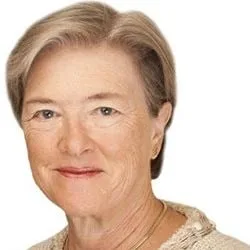
Automated transcript · uncorrectedWhat is today is Kathy Wild. Kathy is the president and CEO of the New York City Partnership, one of the most powerful organizations in New York City, representing hundreds of the most powerful corporations and companies in New York. Well, Kathy Wild, here we are. It’s twenty twenty four. What the heck is going on? And things getting better in
New York or give us give all New Yorkers an update.
Absolutely, things are getting better in New York. We are the second largest urban economy in the world, second only to Tokyo, and we have made a great recovery from the impact of the pandemic on many fronts, including creating many more jobs. So the business community is hard at work supporting the city and its growth, paying their taxes
and things are going well. We’ve also seen a real positive movement in the trend of coming back to the office. The numbers are slow moving up, but probably we’re seventy two percent of where we were pre pandemic in terms of the number of people who are in the office every day, So that’s a positive as well.
And I understand the tax money coming in is better than they expected. And tell us about the budget in the state, the budget in the city, and how the money is being spent. Are you comfortable? Is your people comfortable?
So the budget in the city. Unfortunately, in the last decade or so, at both the city and state, the tendency among many of the politicians has been that more government spending is the solution to every problem, and we’re going to reach the end of that game. We haven’t not yet. I mean right now where our budgets that
the governor and the mayor have put out are balanced because we’ve still got strong revenues. As I said, the economy is strong. Jobs are being created, so the revenues are coming in. But as long as spending keeps going up on the part of city and state government, there’s an end insight. The tax base will not expand infinitely
to support that. In the last decade, mostly under Mayor Deblasio, city spending what of fifty two percent taxes cannot keep up with that.
And I’ve seen that. I remember when I ran for mayor in when was it twenty thirteen that the budget was acted in the high forties, and all of a sudden, it’s over one hundred, well.
Over one hundred. Yes, indeed, and it’s still not satisfying everyone. There are still big holes in the budget. There are proposals that the city government should somehow make up the rent payments for anybody who can’t pay their rent, which the Mayor’s office estimates that’ll cost seventeen billion dollars over the next few years. And they’re telling the City Council, no,
we can’t afford that. And there’s a and the city Council overrode the mayor’s veto and passed it. Anyhow, they’re now in court. So these are the kind of things that are going on. And so while today we have a balanced budget because the mayor has worked hard to hold the line on spending, if we aren’t careful, we’re
going to end up in the same kind of hole that we had in the nineteen seventies, and then the city will have no resources to do anything.
Agreed. And I had Kathy Hokel on my Sunday radio show a couple of weeks ago, and we learned that she moved to the Upper east Side. I guess maybe during the week or something, and I said, I’m glad to hear it because then she gets first view about how people feel walking around the city at night. What
do you think I mean. What I said is people are scared to work the midnight. You know, stores used to be open at midnight, and people are scared to walk around at night after dark to go to restaurants.
Do you give me your thoughts.
Well, I’m not scared to walk around the city. I’m comfortable doing it. But I understand the problem. And certainly the violent incidents on the subways are really really a big concern. Now they’re now installing cameras. They’ve been able to catch people quickly because they’ve got cameras even in the subway cars, and that’s a big improvement. And Governor
Hokeal has been very supportive of providing more resources to the city for police in the subways and for trying to get the laws amended so that we make sure that people who are really dangerous and bad actors are either in mental hospitals or in jail.
Now. The other thing is a lot of people there’s been talked, a lot of people have been moving. The number was like five hundred and twenty five thousand over since twenty nineteen. You think that’s slowing up or you think it’s going to reverse itself. Can we get people back.
Well, we’re going to see the latest numbers in March for last year. But over between twenty twenty and twenty twenty two, yes, we had more than half a million people moved out of the city. We had like seventy thousand move in, and we have some birth so the net loss in population was about four hundred and sixty
eight thousand. That’s a lot of people to lose because we need to continue to attract talents to this city. So that’s a concerning thing, and it’s happening in two ways. One people who can’t afford to be in the city anymore.
The average rent in the city is thirty four hundred dollars a month now for an apartment. And who can afford that, especially young people, the young talent we’re trying to get here. Who can afford thirty four hundred dollars a month, It’s tough. The other people who are moving out are our big tax payers. So we’ve seen we’ve
had four times the number of high earners millionaire plus move out of the city. And the folks who earn over a million dollars are responsible for twenty for excuse me for forty two percent of our income tax payments.
So we’ve got to stop that hemorrhage of people on the low end who can’t afford to live here and on the high end who don’t want to carry the highest tax burden in the country, which is what New York City is today.
Well, the other big item is when people hit seventy five. I don’t want to say I’m hitting it, but when people hit seventy five, place like Florida doesn’t have a.
State tax, you’re going to go to a state tax, right.
A state tax, yes, exactly.
No, that is a big issue, and we want rich people to stay here to support our museums and our hospitals and our other forms of philanthropy, to pay taxes here we have right now. The numbers from twenty twenty two are that half the people who make more than a million dollars that earn their living in New York
are actually non residents. So they’re paying on their earned income that the paycheck they get from New York, but all their other wealth we’re not taxing because they live in another state. We got to do something about that.
You mean, if if somebody moves one hundred and eighty one days, one hundred and eighty three days. Whatever the number is the Florida then.
I guess it doesn’t mean we lose we lose much any they’re taxing ability.
Any update on congestion pricing and any update on the MTA raising fares, uh.
The so far as I know, the there’s no immediate plan to raise fares. That’s there’s there’s this long term program where fairs are gradually waste over time, so d MTA adopted, but they just went up a bit and that will continue. But I don’t think we’re going to see any any surprises on the fair box side, which
is important for the affordability of our city. On the congestion pricing, the MTA is having final hearings over the next couple days next week, and after those hearings, the MTA board will be voting on a plan that has one charge a day that during during the daytime hours cars that come into the city. We’ll have a toll
of fifteen dollars. Hopefully that is going to both reduce traffic substantially and get more people onto mass transit, and the proceeds are going to be used to improve exclusively used to improve our transportation services. So this is yes, it’s another tax, but right now the people who drive into the city are only caring about thirteen percent of
the revenues going to pay the cost of the transportation system, and they’re by and large the people in an best position to support it. Most of the costs are paid by fair payers and by business through the payroll tax, so we’re all contributing, and this way the drivers to drive into the city will be contributing their fair share.
Assuming the MTA is able to act on this and that the congestion pricing gets through the lawsuits that have been filed, which I think it will because this has been many years in the process. There have been lots of federal approvals we had to go to, so we don’t think there’s a legal basis to contest congestion pricing.
Nobody likes it before it happens. But if you can quickly move around the city after it’s in place, and if you can save on over time for deliveries, et cetera, I think people will be will turn around and say, why didn’t we do this a long time ago?
We got less than a minute left. Anything else you want to update the New Yorkers.
N Well, I would just say that I think we’re glad spring is coming, that New York is ready for warm weather.
Well, warm weather is always good. Kathy Wilde, thank you so much for coming on, Thank you for the update, and we’ll catch up with you again real soon.
Thank you, John, you’re the best. Take cav
Sunday, March 3, 2024

Still believes Biden will be replaced in the 2024 election.
Dick Morris Political Strategist and Author

This week's guest: Debra Tantleff Founding Principal Tantum Real Estate
Michael Stoler Real Estate Expert

Kathy Wylde

Tourists are back, not so many office workers.
Kathy Wylde Former CEO, Partnership for New York City
Mayor Adam's call to stay home. Wrong call for the City.
Kathy Wylde Former CEO, Partnership for New York City
The evolution of New York City post pandemic.
Kathy Wylde Former CEO, Partnership for New York City
Is the City coming back to life post-pandemic?
Kathy Wylde Former CEO, Partnership for New York City
Manhattan DA redraws theft guidelines.
Kathy Wylde Former CEO, Partnership for New York City
New Yorkers are returning to offices slowly… very slowly.
Kathy Wylde Former CEO, Partnership for New York City
