


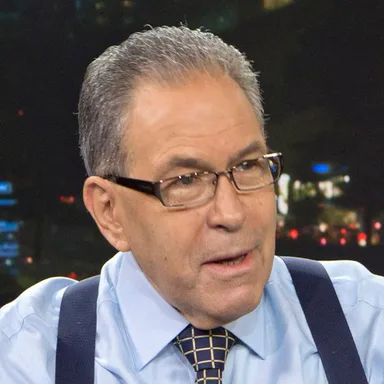
Michael Stoler Real Estate Expert
Interviews Sean Kelly, Partner Ariel Property Advisors
Transcript
Automated transcript · uncorrectedGood morning.
This is Michael Stola for the Stolar Report on the Cat’s Roundtable this morning. I have Sean Kelly, a partner at Aerial Property Advisors, also a reformed attorney who became a real estate broker. Thanks for coming.
Here, Thanks for having me, Michael.
Okay, So you specialize.
If you look at your website and you go over the internet, you special You specialize on downtown Brooklyn, specifically the entire borough. But Downtown Brooklyn is your specialty, of course. So what’s happening in downtown Brooklyn?
So when I came into the market in two thousand and nine, there were busted condo rental development sites all over downtown Brooklyn and the surrounding neighborhoods. We’ve now added fifteen thousand new units. When I first came into the market, rents were forty dollars a foot. Deals are being underwritten at eighty dollars a foot. Rental hit ninety ninety a
foot in the next eighteen to twenty four months. We also have a new office tower in downtown Brooklyn, a couple of them, one of which we had sold the land under to jemb owned by the bal Bally and Jerome Family spectacular office building overlooking assumed to be complete park Willoughby Square Park. Also noticed Abolitionist Park, and that
building’s actually performing pretty well. There’s not a lot of spec office building the Ottle Borrows that has performed well despite the challenges that COVID posed for a lot of asset classes. That building sixty percent least and rents are north of sixty bucks a foot.
What about the properties that were converted from industrial to office.
I mean, they’re not doing too well.
So this is a broader problem in the outer Borrows, and it spends from Sunset Park in Brooklyn to Williamsburg and Brooklyn to the Long Island City market. In fact, I think I heard Andrew him Will talk about a project that they had some challenges with in.
The Long Island. In Long Island City.
The challenges we had a lot of these great loft like industrial, multi story industrial buildings, and there came a point in time where everybody looked at this and said, you know, we can really create or bring tammy tenants into Brooklyn. And they came, but they came to particular locations.
They went to Dumbo, they went to pockets of Williamsburg.
We never got.
Them to come to the buildings in Sunset Park, and not enough of them to the Navy Yard. Part of the challenges You’re faced with fifteen million square feet of essentially in tent of which is owned by the government, right between Industry City.
And the Naval Yard.
Naval Industry City, the Naval Industry Cities privately owned the Naval Yard and then the Brooklyn Terminal. Right, so you hit a lot of that space that was really inexpensive.
It’s hard for it’s hard to compete with.
Those rents and the incentives that those assets provide.
So those assets aren’t really doing well in this market. I know you’re interested. When we discussed the office market, you talked about the micro units.
Let’s talk a little bit about that.
Yeah, and I want to be specific about the micro units. I’m not talking about reworkspace or shared workspace, talking about small suites, something like the room we’re sitting in now, where somebody you know is a private practitioner, a lawyer, and they need one hundred or two hundred square feet and they don’t want to go to even Lower Manhattan
to go to that space. People who live in the neighborhood, you know, I walked the building recently, ten thousand square feet, thirty tenants. The average unit size was three hundred square feet. I guesked what the tenant mix was and it went lawyer, writer for the Financial Times, psychotherapist, architect, world renowned street artists, and that was just a handful of them. And what’s
nice about that people walk or bike to these buildings. They get out of their house. They don’t have to work in their house, and it cost them eight hundred bucks a month. And they’re not thinking about the price per square foot. They know that close to home, without a long commute, it cost to eight hundred bucks a
month to have their own office. And I can remember ten years ago speaking to a developer who bought a site in Brooklyn in like the Coney Island market, right where residential rents were fine, but the commercial rents were the same thing.
And I looked at it.
I went onto a dB and I looked at the plans. I said, you’re building retail and office. He said, Sean, why would I build residential here? The office rents are the same, more stability, less costly of a build out, no regulatory environment. So those local office buildings that you have the insurance company, the law firm, the chiropractice.
They performed pretty well.
And you also you don’t have a loss factor in the office buildings. You’re going to get a grocery with pactor. Let’s talk about the Guanas.
Yeah, what’s happening in the Guanas.
So the Guanas has been nothing short of remarkable, inarguably the most comprehensive, well thought out rezoning that the city’s gone through. And like anything else, I think the city learns from mistakes from other rezonings. So some important things here, obviously affordable housing, keeping the creative maker space in some of these projects, providing incentives for developers to build that schools,
new school coming to the Guanas. But what it really does is it bridges the gap between some of the best Brownstone Brooklyn neighborhoods in Brooklyn, right from Carroll Gardens to Park Slope.
It really bridges that gap.
I think it will be the most dynamic neighborhood in the outer Borrows once we’ve seen that. You know the eight thousand units and there’s probably four thousand of them under construction today, And what’s really been impressive is the caliber of developers that were there. So some of them started off building fifty thousand feet and seventy five and
one hundred, and those guys are now building a half a million feet. And then also you have the family office developers like Brod Skiing right, who traditionally up until I think it’s ten years ago, they did their first deal in Brooklyn, which was an affordable housing deal in downtown, but then they did a site over at the Barclays
and they just picked up a site in the Guanas right, So I think it speaks to the caliber of capital and investment that’s coming into the market there.
I mean we briefly spoke, but I’d like to talk a little bit more about Coney Island because they’re trying to convert the movie theater to a hotel. I believe there are a couple of major developments, including John Cassi Metita’s Ocean View over there, and he might build two more buildings. So what do you see going on there?
And then the possibility of the casino. You know, mister Sid would like have a casino in Coney Island.
But frankly, I think everybody would like to have a casino in Coney Islands.
I love going to Coney Island.
I spend a couple of days there every summer, going taking my girls to the boardwalk, going to a ballgame.
I enjoy it.
What I love about Coney Island is what you just talked on, which is John Katzimatidis, right, talk about long term ownership. Right, He’s been investing in New York City real estate market or New York City in general for fifty plus years now. There are not a lot of people that will go out and take out a construction
loan to build a half a million feet in Coney Island. It’s a testament to having a vision and believing in the city of New York period. But listen, there’s also demand there, right, So there’s some smaller, younger developers that are doing a lot of work there. I mean, Sergey Ryback has done remarkable down there. He’s probably built I’m
an adventure to say he’s built fifteen hundred units in that market, and he was the only game in town.
Right, And he’s building a major development right now with Ruby schrom.
And so think about that partnership, right.
So it speaks to the quality of work that Ryeback’s doing and his knowledge of that marketplace that he has a partner like Ruby Schrom to work with.
Let’s talk about industrial what’s going on.
So the industrial market has the UPS property and so on in Red Hook.
So interestingly enough, we haven’t heard anything about the UPS property. They paid three hundred million dollars for a site along the Red Hook waterfront and it’s been inactive for three years. They took down the buildings that were there. We haven’t heard much about it, but there’s been obviously an incredible amount of private development of the industrial space along the
Brooklyn Waterfront, red Hook Sunset Park. We’ve also seen it further into like the Canarsi Flatlands market. We eliminated tens of millions of square of industrial space when there really wasn’t There wasn’t demand for that space, and we created a lot of housing out of it. And then we had the Amazon effect right where everybody needs something instantaneously,
So my wife needs cat food and it’s at my doorstep the next morning.
Because of the distribution hubs.
We had an abundance of institutional capital, historically not in the New York market, who had tenant demands to be as close to Manhattan as possible and to as close to the higher density neighborhoods impossible and came out like gangbusters.
And a lot of that is fueled by the stability of the tenants and the capital that comes with it. A lot of the capital that’s funding those acquisitions or institutional capital, so pension fund money, long term investment horizons can buy it very aggressive yields if they’re buying a class A asset with a credit worthy tenant.
Well, with like thirty seconds left, let’s talk about your burrowstat In Island.
Let’s do it.
What do you think?
So I’m excited. I’m excited about the Madison Realty project that they’re building down by the Staten Island Ferry. Unfortunately, in Staten Island, we all grew up with white picket fences and patches of grass and nobody grew up living vertically, and that includes the politicians. So they haven’t seen and I don’t know that they’ve spent enough time going to
other neighborhoods in Brooklyn, Queens and the Bronx to see what are rezoning and creating good quality, affordable housing and rental housing can do to a neighborhood. We had one great project that was done on the waterfront by Petraka. No, Petraka did a terrific project. This was Irby that was built by Iron Me.
So i’d like to thank Sean Kelly for being here today and I’ll see you next week on the Stolar Real Estate Report.
Thanks for having me, Michael, thank you.
Sunday, July 23, 2023
New York is at a crossroads in business and population.
Peter King Former U.S. Representative from New York

Sunday 4:00 PM Lexington Counter Clocks at Staten Island Ferry Hawks
Eric Shuffler Founding Partner, River Crossing Strategy Group

San Francisco is a lost cause of homelessness and crime.
John Chachas Investment Banker, Founder of Methuselah Advisors
Have full faith New York will spring back to life.
David Paterson Former Governor of New York


Flirting with Presidential Run 3rd Party, "No Labels"
Joe Manchin Former U.S. Senator from West Virginia

Strange facts about the moon and Apollo 11.
Steve Kates Space and astronomy broadcaster (Dr. Sky)

New improved blood testing for cholesterol and heart attack prediction.
Dr. Peter Michalos WABC Medical Expert
Michael Stoler

The Stoler Report with Michael Stoler: Eli Weiss and Andrew Albstein
Michael Stoler Real Estate Expert
The Stoler Report with Michael Stoler: Robin Schneiderman
Michael Stoler Real Estate Expert
The Stoler Report with Michael Stoler: Winston Schromm
Michael Stoler Real Estate Expert
