


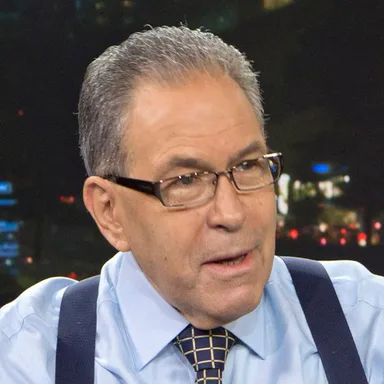
Michael Stoler Real Estate Expert
This week's guest: Bruce Mosler, Chairman of Global Brokerage & the Veterans Initiative Program at Cushman & Wakefield
Transcript
Automated transcript · uncorrectedGood morning. This is Mike Stolar for the Stolar Real Estate Report on the Cats Roundtable. This morning. I have my favorite interviewee, somebody who I’ve been interviewing for the past twenty one years and he always provides me insight for the upcoming year. I have Bruce Moslu who’s the chairman of Global brokerage at Kushman and Wakefield and at
one time was the President CEO of Cushman and Wakefield. Kink keeps a job for a long time and he does a great job. Thanks for being here, Michael.
It’s great to be with you. You are, in fact, the Dean of interviewers, and it is really an honor to be with you today.
So what’s really happening in the office market. It was a good year in the fourth quarter, I heard.
Yes, so look no question that year over year we were down. The total square footage least in twenty three was eighteen million feet, but the call it the green shoot was Q four. Q four we were over five million feet for the quarter. Had one of the biggest decembers frankly in the last two years twenty four months
two point six million square foot square feet least, and we saw the financial service sector and the legal sector move in that last quarter to make some significant commitments.
But in reality, these leases were out there for about nine months. Okay, let’s take the reality of this. Okay. They started these deals perhaps at the last January, and they closed in October and November.
Which one can attribute to the fact that big tenants were concerned about the overall economy. They were watching interest rate movement rise rapidly, and in so doing, they wanted to take their time and see as much as they could about where the economy was moving. And in fact, some people push deals and that’s why I think twenty
four is going to be an even better year than twenty three. But yes, deals take long now to close. Tenants are in the driver’s seat in some regard. But I’m going to tell you that’s going to change because in the flight to quality and the bifurcation of the market, which is severe to run out a good product that’s
been reinvested in.
Right, I mean, there’s like only nine percent of availability on Park Avenue these days.
Park Avenue had net positive absorption for the year. That’s a pretty big statement. And when you look at a large vacancy rate that we’re dealing with overall.
Now, what about the one hundred dollars plus leases and the two hundred dollars leases. We’ve had a larger number.
In the fourth cloth we did, we had one of our best Q fours ever when it comes to at the end of the day, one hundred dollars leases or more, and that is reflective of this bifurcation flight to quality not able to get when you when you’re really looking for over one hundred thousand and fift for a tenant,
you can’t get two hands worth of alternatives in the marketplace that are what you want to see.
Okay. With regard to that, what’s happening in the Hudson Yards and the far west side.
New Yord has had an extraordinary amount of success. When you look at the migration west to what we call the new Midtown West between Relays and Brickfield, there has just been I think a dearth of quality product. They filled that void and hence you’ve seen the migration of tennants, both legal, counting law and otherwise.
What about the Penn Station area. With regard to Penn.
I think that Penn Station is now the new gateway to Midtown West, and I think the investment that Bornado has made has been profound. The amenities that and the curation of the retail that they’re doing in the closure of thirty Thirdtree is going to be phenomenal. It’s the next sort of I think we’re going to see the
market take off.
What about midtown Okay, the Grand Central area. Ever since the Long Island Railroad started coming into Grand Central, I think people have been very happy and the market is strong.
No question. Grand Centrally located properties, one stop properties with access to transportation, sitting on transportation hubs, near transportation hubs. These assets are really moving very very quickly.
With regard to what tenants are getting in concession and work lead is how much is is it rating.
I think you’re going to continue to see significant TI contributions, tenant improvements, and you’re going to continue to see a month a year for free rent. That’s pretty much the normally days. But what you’re going to see is assets hit their performer or outperform based on this dearth of what we’ll call Class A trophy reinvested in properties.
Okay, but we’ve had Class A. This is a reposition and many of these properties were Class B okay, and the landlords have put in money because they want to make them even better.
I’m not sure if there are Class B or A monus, but the point of the fact is that when you have a well located asset that has light on four sides, that has been reinvested in, it’s going to be of interest to tenants in this particular marketplace.
What about the conversion of certain of these office buildings into residential. That’s a tough thing to convert.
When you convert, you pretty much automatically lose twenty five percent for plate. I’m not an expert residential, so I want to be clear on that. But the cost when you perform it out, I think the numbers are hard I think to reach. If you want to see affordable housing, which is a critical issue for New York’s future, in
my opinion, we’re going to have to help subsidize it, and we’re going to have to have the city legislature get on board to support this. We do need affordable housing to keep the workforce in this city. The talent is what differentiates New York from other gateway cities.
There is a quote recently in the press. It was talking about the doom Loop professor saying that the world is getting better. In two thousand and two, he said, the world is terrible. So do you think the world is coming to much better times? I think the world is.
With regard to the office market, listen.
Office market has been in the past out of favor. At the moment, I think it is going to regain momentum. Look at the following things. There are key metrics to look at. Interest rates stabilization. I think we’re seeing that if interest rates decline fifty or seventy five BIPs as is predicted, I think that’s going to be a major
driver in seeing interest move again in the office sector demand. When people today make the choice to grow their business. You can talk about Miami, you can talk about other cities. You can talk about San Antonio, you can talk about marketplaces of interest. But to grow a business of size and scale, New York is the place to be. And
that’s because of the workforce, the educational system. All those things make New York unique.
What’s happening with the amenitizing your propertiesant.
It’s going to continue. It’s a critical We could talk about it at the end of the day, but it is a major driver in a tenant’s choice. They want a first and foremost to have amenities to make their space more efficient. They want to have a place to have a major gathering for their workforce to launch a
product that could be upwards of one hundred to two hundred people. Amenitization and amenity areas make that possible. They want collaboration space in F and B, so what you do with your amenities. They want a facility to work out bike rooms so that people can bike to work.
These things now matter and the investment is almost I want to say, a requirement if you want to reach top tier rents.
Many people specifically in all of the reports only talk about Manhattan. Let’s talk about the Burrows for office market. What’s happening in Brooklyn today especially, you know, there was new product created in the Williamsbroke section.
There has been new product created, and I think that the better end of that new product that’s close to transportation. As Manhattan begins to tighten, which it will, there will be a barth of new product built, which means at the end of the day, we’re going to see that vacancy shrink, especially in this bifurcation of the market that
I talked about the flight to quality. As that occurs, I think that the better end product in the Boroughs will begin to see more and more activity. That product also has to reinvest much of it has, so I’m optimistic about it. But let’s be clear. Just like Midtown, South and Downtown are reliant about a healthy, robust Midtown,
the Boroughs are relying upon a healthy and robust Manhattan.
What about Lower Manhattan.
Well, I think Lower Manhattan you have to again bifur kate between East and West. At the end of the day, I think West’s pretty healthy. You’re seeing I think you’re going to see some major commitments made in the coming year.
There’s some significant leases that are being negotiated. At this point in time, I’m not concerned about Downtown. But again we have to be clear, there is some obsolescence in the product. We’ve seen this before, some product that has windows on two sides. Maybe conversion to residential makes sense with subsidiations I talked about, but at the end of
the day, we are going to have to talk about obsolescence.
What about return to office? How many people have really returned to the office and the space requirements?
This is a. This is a positive conversation, Michael, for two reasons. First, people forget the benchmark was never one hundred percent. No building was ever one hundred percent occupied occupied. It was seventy to seventy five percent. At the peak, people travel, people work out of other clients’ offices, and at the people get sick. So seventy s percent was
the bar. Today we’re at fifty two percent. That’s up about three or four percent over last year. We’re continuing to see tenants land tenants. I should say corporations ask for their their clientele, for their employees, forgive me to return to work. Why they need mentorship? Young people want to be around other people. To innovate and to create,
you have to be in the office.
What about the sublease market, I think.
The sublease market has been largely flat. The better subleases that are turnkey, that makes some sense. I think they will see some interest. But at the end of the day, I think people are looking to long term now, and I think that we’ll see we’ll see the sublease market gradually.
Gradually as the market office market titans proper, we’ll see the sublease marketing game.
Now, who’s going to take over the space that we work gave up and who’s going to come into their steps to be the next world office work share.
That’s a long conversation because it’s there are a number of players in that space. We’ll see what happens to We were going to long run this. The final, if you will, story has not been written. But look, they dominated the workplace at one point in terms of space absorption.
At the moment they’re they’re certainly retrenching. I think you’re going to see tenants that have been in short term spaces look to turn some of those to longer term commitments in some of the same we workspace.
Let’s talk about medical and lab space.
Look, I think life sciences is right now retrenching a bit, but the universities and I think are great source of growth. We’re going to continue to see Life sciences I think, at the end of the day be a significant part of this marketplace. But that’s a TBD. We’ll have to see what the depth of that marketplace will be.
Hey, thank you so much for returning. Bruce Mosler, my eternal guest who’s always with me, and I’ll see you next week. Bye bye, great privilege. Thank you. Michael
Sunday, February 4, 2024
State imposes further burdens on small businesses with security costs.
Paul Zuber SVP, NY Business Council
The City Council fails to back cops. Migrants beat down cops.
David Paterson Former Governor of New York
Huge illegal gun in Queens. Ghost guns and elected officials hit list.
Melinda Katz Queens County District Attorney



Update on Ukraine and the Middle East. Update on conflicts.
Dr. William J. Parker III Retired U.S. Navy Captain; National Security Analyst

China's economy on shaky ground. Cybersecurity threat.
Gordon Chang China Analyst & Author
The Senate needs to stop the Southern border.
Tommy Tuberville U.S. Senator from Alabama; nominee for Governor

The President needs to retaliate for American deaths. Hit Iran.
Tom Cotton U.S. Senator from Arkansas


Michael Stoler
The Stoler Report with Michael Stoler: Eli Weiss and Andrew Albstein
Michael Stoler Real Estate Expert
The Stoler Report with Michael Stoler: Robin Schneiderman
Michael Stoler Real Estate Expert
The Stoler Report with Michael Stoler: Winston Schromm
Michael Stoler Real Estate Expert
