



Avi Loeb Professor of Science at Harvard University
Found fragments of alien technology.
Transcript
Automated transcript · uncorrectedWhat us today is a Professor Rve Loebe, a Harvard professor and director of the Galileo Project at Harvard University, and Professor, you came out with some new revelations a few months ago, a couple of weeks ago, that you possibly have found some alien technology. Can you tell all the American people because everybody’s listening to find out what
you found.
Yeah, so I wouldn’t necessarily claim to have found the alien technology. What we found of the the first interstellar this is the first object that was identified to have come to have originated from outside the Solar System. And every then is based on government data which detected the fireball from an object that collided with Earth back in
twenty fourteen, almost a decade ago, and it was moving really fast, much faster than the escape speed from the Solar System. So the conclusion is that it came from outside the Solar System. And it also exhibited material strength tougher than even iron meteorites than all the space rocks that NASA cataloged over the past decade, two hundred and
seventy two of them, So that rsed the possibility that it may be technological in origin. We do not know but it could also originated from some unusual environment very different from the Solar system. So to find out, we decided to go to the Pacific Ocean where this fireball was observed and collect any materials left over from that explosion,
and we found it. We found the sphere. These are molten droplets that came off the surface of the object when the explosion took place. It released The explosion released a few percent of the Hiroshima atomic bomb energy, so it was very powerful. And then these droplets had the size of roughly half a millimeter the head of a
pin or if you want to think about a grain of sand. And the location of this meteor explosion was known to within ten kilometers. That’s what the US government provided in terms of localization. So just think about it.
Finding a millimeter size spheres small metallic marbles that each of them weighs a milligram, finding them at the depth of two kilometers in the Pacific Ocean across the region that is ten kilometers in size. That sounds like an impossible task, but we did it. We use the sled with magnets on both sides and collected them. About the
fifty of these serrows these the circle uh, tiny objects that when you look at them through a microscope they look like metallic marbles that with that are colored gold, the red, blue, brown, and some black uh. And then we are now studying them in the laboratory at Harvard.
Understood, So I mean it came outside the solar system? Are these materials different than what we find in our solar system?
That’s an excellent question. That’s exactly what we are trying to find out. I just got the materials from the expedition delivered to my home by FedEx yesterday, and so I brought it to other university and we are starting now the analysis to answer your question. The first thing we would like to know is whether the elements or
the isotopes that make up this object are different from materialsts that you find in the solar system in rocks within the solar system. And the second question is if the answer is yes, it looks like it came from outside the solar system based on the composition, then the next question is could we say whether it’s artificial, whether
it’s technological in origin and in principle. The second question can be answered also by finding a bigger pieces of the object on the ocean floor. Now we know where to go for pots, and we are planning the next condition and then we will use very different equipment for that.
To find the big piece, what you need is the imaging of the the bottom of the ocean of the floor, and we will do that with a sonar and that would be a more expensive mission. But the first thing to find out is you know whether the material is different from Solar System material. And then if we decide
to go on the expedition to find the bigger piece, and we find a bigger piece, we could easily tell if that is a piece of a rock or of a technological gadget, a probe, you know, just like Voyager that we sent out to interstellar space. And you can imagine Voyager colliding with a distant planet and burning up
in the atmosphere of that planet like a meteor.
Understood well, Professor I, hope you keep us informed of what’s going on. Thank you for coming on and we’ll catch up with you again in near future.
Thank you so much for having me
Sunday, July 9, 2023

4 PM Today Charleston Dirty Birds at Staten Island FerryHawks
Eric Shuffler Founding Partner, River Crossing Strategy Group

Full roster of candidates for every office.
Benjamin Proto Chairman, Connecticut Republican Party

Assembly was up this year. Law & Order on the agenda
Bob Hugin Former Chairman, New Jersey Republican Party




The government is censoring social media.
Dick Morris Political Strategist and Author

US sends cluster bombs to Ukraine.
Admiral James Stavridis Former NATO Supreme Allied Commander Europe


Interviews Ofer Cohen, Founder, President & CEO of TerraCRG
Michael Stoler Real Estate Expert
Hottest day on earth since 1979.
Steve Kates Space and astronomy broadcaster (Dr. Sky)

Avi Loeb
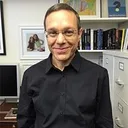
Extraterrestrial: The First Sign of Intelligent Life Beyond Earth
Avi Loeb Professor of Science at Harvard University
Huge asteroid explosion over Russia
Avi Loeb Professor of Science at Harvard University
Oumuamua like nothing seen before
Avi Loeb Professor of Science at Harvard University
Avi Loeb on the CATS Roundtable Radio Show
Avi Loeb Professor of Science at Harvard University
