


Transcript
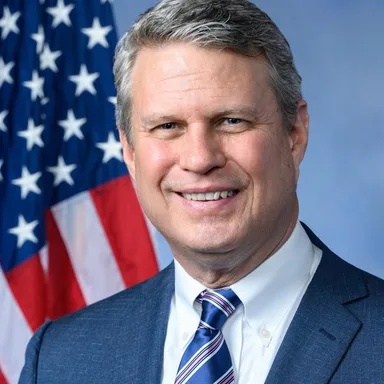
Automated transcript · uncorrectedWith us today is Representative Bill Heizenga, and he is from Middle America, and i’d like to get I always like to talk to people from Middle America to find out what the heck is going on in their opinions.
He’s on many committees. He’s on capital markets, he’s on financial services, oversights and investigations. Well, good morning, Bill Heizenga. Thanks John.
How about Bill? And John? That’s a lot of right than our congressman. Congressman Bill, Okay, you’ve been a congressman now for what twelve years? Fourteen years? Yeah? Things getting any better in Washington? I mean, I just I’m scratching my head. I’m getting a hold in my head from scratching.
Yeah. Well, I would argue that they’re a little bit better with the Republicans in charge of the House of Representatives. And I think the leadership that Speaker McCarthy has put forward in Steve Scalice and people like that has been helpful to put the necessary speed bumps in front of this administration. I would like to go far, you know,
much further, much faster, uh than than what we’re probably going to be able to do when it comes to things like spending and some of the other common sense issues that that we ought to be tackling. But the most important thing is is we have had an administration that has been running a monk in the last two years.
We’ve got a problem.
We have a huge problem, uh in you.
Know, look, I try to be the middle of the road person, and but the problem is what Washington and and the administration has been doing. Everything they’ve been doing is hurting the American people. And I’ve said this publicly that the American poor is getting poorer and the middle the middle class is getting poorer because of what they
did with fossil fuels. And we’re cutting down on energy and and and they’re trying to push electric cause my god, I mean, look, if people want electric causes should be voluntary. They’re trying to force it down our throats.
And not to mention the out of control spending that has brought us massive inflation. Right so at your grocery stores, people are seeing it.
That’s it. Well, that’s all caused. Yes, that’s all caused. Goes back to the price of oil. The price of oil went from fifty five to one and twenty and went back down. But the Saudis and the Russians say, don’t lower it. Yeah, they cut production so they can get it back up again. And that’s what caused food
to go up.
And price increases are always stickier than those price decreases, right, So it’s wages, you know. And I had one economist in front of in front of our committee at one point talking about an expectation of falling wages. I said, wehlla, well hold on, you are insane if you think that me as a small business employer. My family’s in construction
back in back in Michigan. We do a little bit of real estate development. I own a sand and gravel operation that goes into ready mix.
So you’re a working guy, you got it.
And there is no way that I can look at Henry or Cody or some of these other guys that work for us and say, hey, you know, I know I had to give you a seventy five cent raise per hour, but we’re going to peel that back. How about you give me a quarter of that back and
so it’s only really a fifty cent raise now that you’re going to live with. They look at you like you’re crazy, and you can’t do that. You can’t do that to your employees. So they just have a warped understanding of how the business world works, and frankly, how I think the greater world works.
Now you come from the great state of Minnesota in Michigan, Michigan, Yes, all right, a great state of Michigan. That’s where they your governor is a little bit I mean, they want.
To use your words on this, But she’s a little bit a lot of.
I mean, she wants to shut down the pipelines. I mean, what is her mindset?
Quite honestly, I think whether it’s the Line five, which is what you’re referencing, which links the Upper Peninsula and Canadian energy coming down through the through Michigan. It’s called the Straits of Mackinaw that that link the Upper Peninsula and the Lower Peninsula, which is vital for energy getting down into Ohio and into refineries and and and and
as well natural gas going back and forth. It’s those are pipelines that go both directions. She’s playing to the environmental left, the hard left, and she has done that time and time again, and it’s gotten worse. Frankly, John, because she I think she’s she’s trying to set herself up up for future runs.
Well, i’d like to get the opinion of Middle America. Like I said before, Michigan. Now, you guys make a few cars, don’t you.
There’s a few. Yeah, there’s a few that can.
You have Ford there? You have a General Motors now Ford and I know the Ford family, and I’m sure they didn’t improve it. I don’t know who did. They said that they want to change all their cars in twenty twenty four, whether they’re gas or electric, and not have any AM radios or FM radios. I mean, what’s
the sense of that.
Yeah, my guess is it’s revenue streams, right, and they’re trying to be techie. You know. The problem is is whether it’s going to a full EV fleet, which is impossible. By the way, evs represent about six percent of their overall sales, so they’re kind of ignoring the other ninety four percent. But if you’ve watched any of the commercials on television, every single one
of them is for electric vehicles. Not there not their mainstay, the gas fired. But I think they’ve just tried to get too gimmicky. They’ve been playing to playing to a lot of corporate pressure. That’s one of the things that we deal with from the Financial Services Committee is looking at shareholder proposals and the proposals that come into publicly
traded companies not from people who are investing for the future, they’re really investing for societal change. And they will sometimes they’re religious groups, sometimes they’re just activist groups, and they’ll come in, they’ll buy a minimum number of stocks and then they will they will then use that to then try to get these socially minded proposals in place and
try to name and shame that.
And Ford has announced by the way that data list they separated out the difference between all the cars they produced that data lost three billion dollars on electric vehicles. But they’ll fix it in the next few years.
Long paw for doubt to seep in. You know this is uh, that’s that’s part of the problem is you’ve got business fundamentals being ignored and hopes and dreams being inserted in those plays in its place, and uh and at the end of the day, and you know this, whether it’s in your grocery business and your your media
business and all the other businesses. You know, my little sand and gravel and real estate development business. It’s math, right, It’s math, and you can’t. You can’t make the math defy reality.
Well, and I said that the same thing about UH. I don’t mind electric vehicles, but it’s got to be voluntary. Why force them down people’s throats? I mean, I don’t understand.
The interesting thing is the incentives haven’t worked enough, so now they’re going to start limiting options and start, as you say, jamming it down onto people and UH, and then you’re supposed to feel good about this somehow. I mean, it doesn’t make any sense.
Congressman, we have a minute left. Tell us what you’re feeling and what what what? What you’re most afraid of? Of? What you want to happen in a in America the next twelve months?
Wow? Where to where to begin? What I would like to do is make sure that government is UH is within its lanes, its constitutional and legal lanes. And we’ve seen this this effort out of this administration, especially to push it beyond that. And whether it’s with Gary Ginsler at the Securities and Exchange Commission, whether it’s at the
e p A or or the Department of Energy or you know the alphabet soup of any of these governmental agencies. This this administration has has pretty clearly instructed them to push beyond, to take on extra territorial and and and extra authoritative powers. We see it in the southern border. Right.
We were talking earlier a little bit about fentanyl and and the and the impact there.
Well, doctor Siegel says more people are guying a fatanyl now than they’re are from COVID.
Yeah. Well it’s and again you’ve got a Customs and Border Patrol and a Department of Homeland Security under Secretary of my orcis that are ignoring what they should be doing legally and trying to do things that traditionally, and I would argue legally have never not only never been done, shouldn’t be allowed. And so answering question, putting constraints back
into government so it has a proper role in place has got to be a primary goal.
Well, thank you so much for coming on. And you know, let’s pray for America because we all love America and God.
Bless Yeah, and I want to just welcome everybody and invite everybody to come out to Michigan, the nation’s third coast, great sunsets on Lake Michigan, and especially recommend June, July, and August where it’s nice and warm, but well, come on out to mission again.
Thank you so much.
All right, good to be with you.
Sunday, April 23, 2023

Market and banking indicators portend problems.
Larry Kudlow Fox Business Host and Former NEC Director

The Southern border was under control during Trump.
Mike Pompeo Former U.S. Secretary of State

Still no budget in Albany. Bail reform is still an obstacle.
Zach Williams Transportation Reporter, Bloomberg Government

The FBI has some serious questions to answer.
Dr. Sebastian Gorka Senior Director for Counterterrorism, National Security Council
Mike Stoler interviews: Bruce Mosler, Cushman Wakefield.
Michael Stoler Real Estate Expert

Elon Musk's missile blows up 4 minutes into the flight.
Steve Kates Space and astronomy broadcaster (Dr. Sky)

Special concerns about electric vehicles in the collapsed garage.
Dr. Peter Michalos WABC Medical Expert
