


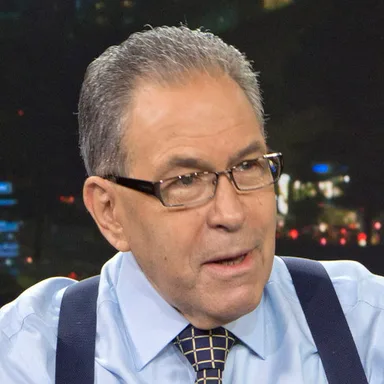
Michael Stoler Real Estate Expert
Mike Stoler interviews: Bruce Mosler, Cushman Wakefield.
Transcript
Automated transcript · uncorrectedGood morning. This is Michael Stola for the Stolar Report on the Cat’s round Table this morning. I have the honor of having Bruce Most, the chairman of global brokerage at Cushman and Wakefield, also at one time the president and CEO of the company. So, Bruce, I really want the truth. The other day you were quoted we should
not take the granted that the city will simply recover, because we have always in the past. This is a moment in time when we should not take for granted that New York will just be fine. It will be fine, but provided we take the necessary action. What do you mean by that and what’s the necessary action?
Yeah, Michael, I said that with intent. New York City is still the financial capital where we’ll still the tech capital, where when you compare the challenges we face to other cities, other tech shall we say hubs, we look pretty good.
But the challenges that we face are significant. We have ninety million square feet vacant, we have a capital markets liquidity crisis that’s in pending, or here take your pick. At the end of the day, we have a city that faces challenges with regards to crime. Now, I think the mayor and the governor are working hard at it.
We should give them props, we should give them time, and we should support them. But let’s understand that this city has obstacles to overcome, including the budget that the city is going to debate over and hopefully resolve expeditiously.
What’s going on. I know you specialized at one time in Brookfield West and Manhattan West and the Hudson Yards area. What’s happening over there? I see the rents are over one hundred dollars and foot over there, but people don’t have taken the consideration the concessions, which really reduce the rents significantly.
Well, so I’m going to come back to this severe bifurcation in the marketplace.
We’ve seen this flight to quality. It’s real. It’s not just something that people are talking about.
People are going to buildings that have light and air amenities, that are part of a twenty four to seven live work place.
So Manhattan West has the benefit of being all those things.
Properties that have those assets, twenty three thousand feet of retail that’s been curated for the tendencies there. At the end of the day, those assets are performing, They’re outperforming. So yeah, there’re concessions, but their market concessions, they’re truly outperforming on the performer based on the flight to quality.
You know, we’re here on Third Avenue, eight hundred and third Avenue at the studios of WABC. Yes, what’s happening on the third Avenue market?
So it’s almost building by building, case by case. And this is the point that I want to make. Where assets are or can be reinvested in. Let’s just understand what the rise of interest rates certain assets when you look at the cost to renovate, the cost to either convert or in this case, to bring them up to
par where they need to be to be a viable office building. Sometimes investors can and sometimes they can’t. Where they can and where they invest asset by asset, block by block, some are performing and some are not. And most of that is based upon the ability to reinvest.
What about the B and C and the D office buildings which are all around, which happens to be part of the signature bank portfolio and some other bank portfolio at a certain level.
Yeah, well, look, I can’t comment on a specific portfolio. I can simply say that that C and D assets, That’s what I’m really talking about so C and D assets have a harder road to hoe. At the end of the day, the investment has got to be more substantial.
You have to look at whether it’s whether the product is obsolete because of the design element, because of what tendencies are requiring.
Look, businesses today go.
Where they can recruit and retain their workforce of the future.
It is that is the number one driver behind where they go and how they go.
They’re also becoming more efficient, right we are dealing with a hybrid workforce today. In a workplace. The notion that people will come back to work one or two days I think is off the table.
I think we’ve sort of seen.
The reality it’s probably three or four days a week. How much does that affect the footprint? Not dramatically, but the drive towards more efficiencies, which was their pre pandemic, continues. So we’re seeing smaller footprints. We’re seeing people that want to go to places where it’s all about their workforce.
And their workforce today want amenities.
They want light and air, they want the ability to go out and have shopping and retail and eateries at their fingertips. These are all drivers behind what’s happening in our marketplace.
What about the conversion of offices to residential.
Look, I think we have to be realistic. Some of our product is now approaching one hundred years old. Some of that product is not going.
To be converted.
The cost is prohibited at the end of the day. But also the asset itself just doesn’t lend itself.
So we have to be realistic. We have to look at our marketplace. It’s four un and.
Thirty million feet today and say what will it be tomorrow. What’s truly obsolete afortional but will be obsolete at the end of the day.
Whether that means our marketplace is four hundred or three ninety has yet to be determined.
In the same way that you were talking about crime over there, and certain things have to be taken care of in order to convert an office building. I believe that the government has to come in like the four to twenty one g’s of Lower Manhattan. I haven’t heard of any special tax advantages yet.
I agree with you.
I think, Michael, we have to look at this holistically. We have to work in consort with government to determine what kind of master plan can be put in place for various different parts of our city, and what incentives should we provide based on where the demand is going to come from. Everything right now is about to demand.
Right we had pent up demand post the pandemic in twenty twenty two, so we saw significant take up. Now we’re seeing demand moderate this year because mostly people are looking at relocating when it’s least driven or they have reason to consolidate and at the end of the day shrink their footprint.
What about the suburban the other boroughs, okay, as opposed to Manhattan the office market? How do you see that?
Very much as I do Manhattan. Where you’re seeing the gravitational pull is towards transportational hubs. So when you’re looking at suburbia, I think you have to look at where are their excellent transportation hubs. Where have those hubs been invested in. That’s where I think you’ll see investment work and I think you’ll.
See at the end of the day demand take off.
So which neighborhoods are you specifically talk.
Listen, I look, I want to be careful to say this because this is an evolving conversation, but I would tell you that, yes, we can’t look midtown Grand Central area that is seeing significant investment and significant demand.
The same thing for the West Side.
That’s where you could put the where you could build the most significant properties at the end of the day, with transportation as an asset, with the rest of the amenities that are necessary.
So I think those things continue.
What about coworking.
Coworking has a place, Michael, I think it’s it’s a function of how big did the footprint can for some of these coworkers and what was realistic end today. I think that there’s a certain percentage of corporate portfolios with a flexibility to be in space short term from an enterprise perspective, works from a B to B perspective, I
also think that there’s a place for it. So I think it’s about right sizing for that industry. But I think there’s a place.
And what about the office market in Low Island City, It seems to be a significant vacancy.
There is and I think here again you’re going to see the gravitational pull to the better assets that have been reinvested in, those assets that haven’t been invested in, those assets that are on the periphery that don’t have proximity transportation, They will be the most challenge.
And how do you basically see the year. We’re here in April now question.
So, look, I think this year compared to last year. Last was a year was a year in which we saw significant anchor tenancy commitments.
I think this year is little bit different.
We’re not seeing the big tenancies, the million square foot or the eight hundred pounds.
I mean, look, Facebook gave back certain properties.
Yeah, look, some of that is there’s growth, there’s contraction. There’ll be growth again in the tech sector. We remain the tech hub in the United States, no question about that. This year is a year in which I think we’re going to see mid size commitments, the one hundred to two hundred thousand square foot deals that are primarily least
driven or as I said before, we will see relocation based on the ability to shrink the footprint and invest capital and make it work economically. Businesses this year are focused.
On their run rate and capital preservation. That’s the fact.
The reality is, I think we’ll grow again in twenty three or twenty four, I should say, but this is a year where I think we’re going to see a different type of commitment.
Okay, I think New York city is very resilient, and I believe that Bruce Mosler is a big advocate of the city as so as I and I’d like to thank you for being here today.
It has an honor to be with you.
Sunday, April 23, 2023

Market and banking indicators portend problems.
Larry Kudlow Fox Business Host and Former NEC Director

The Southern border was under control during Trump.
Mike Pompeo Former U.S. Secretary of State

Still no budget in Albany. Bail reform is still an obstacle.
Zach Williams Transportation Reporter, Bloomberg Government

The FBI has some serious questions to answer.
Dr. Sebastian Gorka Senior Director for Counterterrorism, National Security Council

Elon Musk's missile blows up 4 minutes into the flight.
Steve Kates Space and astronomy broadcaster (Dr. Sky)

Special concerns about electric vehicles in the collapsed garage.
Dr. Peter Michalos WABC Medical Expert
Michael Stoler
The Stoler Report with Michael Stoler: Eli Weiss and Andrew Albstein
Michael Stoler Real Estate Expert
The Stoler Report with Michael Stoler: Robin Schneiderman
Michael Stoler Real Estate Expert
The Stoler Report with Michael Stoler: Winston Schromm
Michael Stoler Real Estate Expert
