


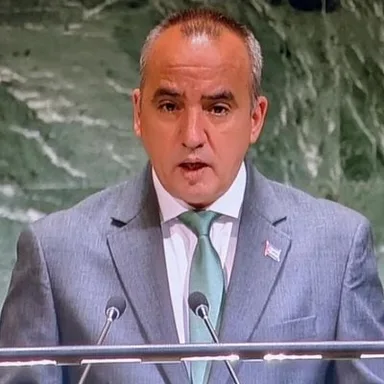
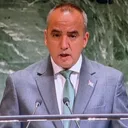
Ernesto Soberón Guzmán Cuban Ambassador to the United Nations
The Impact of U.S. Sanctions on Cuba
Transcript
Automated transcript · uncorrectedSunday morning. Well, with us today is Ambassador Ernesto Guzman from the island of Cuba. And, Ambassador, you’re the permanent representative of Cuba in the United States. And you, well, we all love Cuba. I mean, I’ve been to Cuba many times, and Cuba is a great place. and I know that there are differences between you and our Secretary
of State right now and the State Department. Tell us, I mean, give us your feelings. I know you have family in Havana. Tell us, what is it going to take to get our two countries closer together?
Well, John, thank you very much for having us. for the second time in your program. It is a pleasure. And I think that, first of all, I just want to insist that Cuba is ready to have a bilateral dialogue with the U.S. government based on the reciprocity, based on the mutual respect, based on not interfering in the
internal affair. But it is not possible, John, to move forward in a bilateral dialogue when Cuban people are suffering right now a collective punishment just because the sanctions that the U.S. government has already imposed to my people. I will give you just two personal examples. I was telling you that I was born in a small town near Havana, 25,
26 miles around that, and my brother had to ride a bike for hours 42 miles just to buy bread in Havana because we have not power in our small town. Cuban people are suffering now blackouts of around 22, 23 hours daily because the oil blockade that was imposed by the U.S. government. 100,000 people are now in a waiting
list for a surgery. just because of a lack of power. 12,000 of them children. I had a niece that it took her around two weeks to have an appointment for a CT scan just because of the lack of power, and she needs that because she needs a surgery. So the humanitarian impact of these sanctions are terrible. But at the
same time, Cuba has been changing a lot. Cuba has implemented more than 170 economic measures in order to increase the role of the private sector in Cuba. So at the same time that the U.S. government imposed new sanctions, the Cuban government opens new opportunities for the American companies, American citizens. to have a very profitable business in Cuba. So,
first of all, I think that we need to sit, we need to both go and to establish a bilateral agenda and to define very clear the areas where we can cooperate and the areas that we have difference but we can talk peacefully, you know?
Ambassador Guzman, I mean, I’m just a humble, I guess... Radio operator, we own WABC, and you requested time, and I love Cuba, and I love the Cuban people. But I don’t understand the big differences going on between the two government negotiators, whoever’s negotiating on Cuba’s point of view from Havana and the people negotiating from the United States’
point of view. I don’t understand the differences, and can you explain the differences?
We have political difference, you know. We have a social system in Cuba, but there is no, from my point of view, there is no reason for this situation that we are facing right now. I think that we have the opportunity right now to have a different bilateral relations between Cuba and the US. There are a lot of
opportunities for the American company, for the American people to have business with Cuba. There are a lot of opportunities in terms of foreign investment and foreign trade between Cuba and the US. So we have those opportunities and we have also some difference. But, you know, the U.S. government has a very good relation with some other countries that
they have difference. And this is not the reason to implement a policy like this. But, you know, it is ironic that the U.S. government said that they are doing this to help the Cuban people. They are doing this to help the private sector. Right now, for example, John, we have more than 7,000 containers in Caribbean ports, some
of them imported by the private sector in Cuba that no shipping company wants to transport to Cuba because they are afraid to be sanctioned by the U.S.
Government. If there’s one item that you say is the major stumbling block right now, what would you say that item is?
Well, you know, we have these statements made by the Secretary of State and some other politicians in the U.S. that they want a regime change in Cuba, which is not in the negotiating table right now. But, as I told you, I think that this is not the main reason.
I think that the Secretary of State, he has an unhealthy reception with Cuba that is preventing American companies and American citizens to have a better relation with the Cuban people.
Understood. Ambassador Guzman, thank you so much for stopping by WABC today, and God bless you and God bless your families, and I hope everything works out.
Thank you very much for the opportunity, and I hope to. Thank you. Thank you.
Sunday, August 30, 2026
Breaking With the Far Left on AI, Energy and Israel
John Fetterman U.S. Senator from Pennsylvania
Keeping Florida Free, Affordable and Conservative
Byron Donalds U.S. Representative from Florida; nominee for Governor
New York Needs More Natural Gas and Nuclear Power
Mike Lawler U.S. Representative from New York
Putting American Security at the Center of U.S. Foreign Policy
Tommy Pigott State Department Spokesperson
Remembering 9/11 and New York's Remarkable Resilience
George Pataki Former Governor of New York
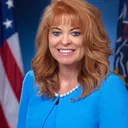
Challenging Josh Shapiro for Pennsylvania Governor
Stacy Garrity Pennsylvania Treasurer; nominee for Governor
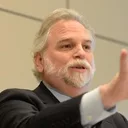
Challenging the Mamdani Administration's Housing Policies
Randy Mastro Partner, Dechert LLP; Former NYC First Deputy Mayor
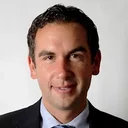
New York City's Economic Future Depends on Business
Steve Fulop President & CEO, Partnership for NYC
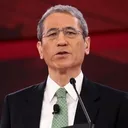
The Growing Alliance Between China, Russia, North Korea and Iran
Gordon Chang China Analyst & Author
How the Battle of Brooklyn Saved the American Revolution
Patrick O'Donnell Military Historian & Bestselling Author
Educating the Next Generation About the Failures of Communism
Dr. Eric Patterson President & CEO, Victims of Communism Memorial Foundation
The Safer Skies Act and the Fight Against Drone Threats
James Gagliano Retired FBI Supervisory Special Agent; Fox News Contributor
Spain's Rising Crime and Immigration Challenges
Jose Santamaria Chief Investment Officer, Fundamental Investment Services
The Stoler Report with Michael Stoler: Winston Schromm
Michael Stoler Real Estate Expert
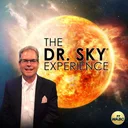
Earth's Extreme Forces and the Fight Over Pluto
Steve Kates Space and astronomy broadcaster (Dr. Sky)
The Growing Danger of Cannabis Hyperemesis Syndrome
Lynn Shaw Founder of Lynn's Warriors
Ernesto Soberón Guzmán
A Call for Renewed U.S.-Cuba Dialogue and Cooperation
Ernesto Soberón Guzmán Cuban Ambassador to the United Nations
