


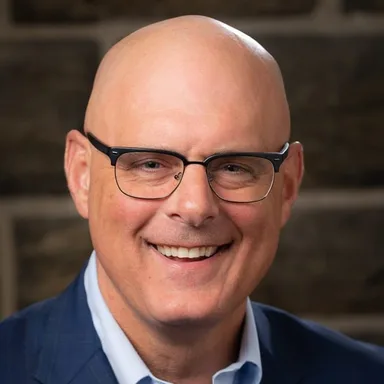
James Gagliano Retired FBI Supervisory Special Agent; Fox News Contributor
The Safer Skies Act and the Fight Against Drone Threats
Transcript
Automated transcript · uncorrectedSunday morning. Well, what the heck is going on with us today is James Gagliano. He’s a former FBI hostage rescue team, counterterrorist operator and special agent. And well, he he’s got his ears close to the ground and knows what the heck is going on. Well, James, give us an update. I know there are people concerned on the
new drones that stadiums are in danger. Football is coming up. That’s in danger. Tennis is coming up. That’s in danger. What is the game plan to make people feel safe?
Well, John, first of all, great to join you as always. And, yeah, that is– That’s a great question right now. And we’re already into, what is it, day three for the U.S. Open out in Queens. And this is an annual tennis event.
I think it draws like over a million people every year in a city with 8.4 million people. So we always know in New York City that we are a major terrorist target. And recently Congress passed something called the Safer Skies Act. And, John, I got to say this.
Rones have been available for civilian purchase for about 15 or 16 years, about a decade and a half. And we’re finally getting around now. We’re always chasing our tail. We’re finally getting around now to coming up with legislation.
And what this legislation allows is basically the locals, state police, tribal police, territorial law enforcement, the ability to detect, track, mitigate, interdict people drones that might be used for nefarious purposes. John, this is a really serious problem right now. And in a city like New York, which, as I said above, is a major target for people wishing to do harm
and conduct terrorist attacks, this is a big concern.
I understand that. And, I mean, the other big concern is with these drones, the underwater drones that could be coming in from the ocean. And the fact is those windmills affect the ability of the radar to pick them up.
Well, John, you raised a great point. We are still, and I know your audience knows this, we are still at war with Iran right now. And one of the big concerns on the military front has been Iran’s capacity to be able to move into territorial waters just outside of, like, L.A., the west coast of the United States, and potentially launch
drones from there. And John, having worked and served in Mexico City for the FBI for two years, that’s also a concern. Could people wishing to do us harm, whether it’s Iran, North Korea, China, Russia— get into Mexico, and then from the southern border launch drone attacks on the U.S.
And look, these aren’t sophisticated drones. They’re not like the drones that the U.S. military has that can travel 12,000 miles and deploy huge payloads of explosives. But, John, a small amount of explosives that are detonated over Yankee Stadium or at the U.S. Open, that’s certainly a concern for all of us and for law enforcement.
What else keeps you, you know, you had a very high ranking at the FBI. What else keeps you up at night that you worry about might be tried?
Yeah, and wow, that’s another good question. You know, the FBI has been around for, what, 118 years, and we’ve seen a little bit of a restructure under the current FBI director, Kash Patel. And one of the things he’s done, which I compliment and applaud, is the fact that they have taken a serious approach to working with the state
and locals and going after violent criminals. And I believe, I saw some numbers the other day, I want to say that violent crime across the United States, by almost every metric, is down by about 8% over last year.
That is an incredible, incredible credit. Now, having said that, as you move and deploy resources to different places, what are the bad guys doing? They’re always looking for those weak spots. They’re always probing. You’re still working about the People’s Republic of China and the communist government there stealing state secrets. You’re worried about Russia and Iran and North Korea,
the same bad state actors trying to do things on the counterintelligence side. So they’re still busy. There are still concerns, and to your point, things that keep the law enforcement officials up late at night. But it is heartening to see that, you know, major crime is down 8%, violent crime. And, John, I’ll leave you with this one. When I joined the
FBI at the end of 1990, New York City had just suffered the worst number of homicides in its history, 2,262. Last year, the five boroughs, and this is still way too many, but suffered 305.
Think about that.
2,262 in 1990, and last year, 20, 25, 305. That is a huge credit to the NYPD and to the Fed’s assisting. It certainly is. It certainly is. Anything else you want to tell the American people on Sunday mornings? Well, I’m sure there might be some folks that are still interested in what’s going on in the Nancy Guthrie case.
I know that’s a case that it’s not just of national interest, but it has gained some international interest and acclaim as well. And yet it’s disheartening at this point in time now, you know, Nancy Guthrie out in Tucson, Arizona, Savannah Guthrie’s mother has been missing and believed to be abducted since January 31st of this year. and still no
leads that we’re aware of. We’ve understood that the kidnappers have apparently made contact with law enforcement. The family believes that a couple of notes might be legitimate, but she has not been located. And, John, you know, if kidnapping cases aren’t solved within the first 24, 48 hours, my experience tells me they generally don’t have a good ending.
Thank you so much, and we’ll talk again real soon.
Sounds good, John. Thanks for having me.
Sunday, August 30, 2026
Breaking With the Far Left on AI, Energy and Israel
John Fetterman U.S. Senator from Pennsylvania
Keeping Florida Free, Affordable and Conservative
Byron Donalds U.S. Representative from Florida; nominee for Governor
New York Needs More Natural Gas and Nuclear Power
Mike Lawler U.S. Representative from New York
Putting American Security at the Center of U.S. Foreign Policy
Tommy Pigott State Department Spokesperson
Remembering 9/11 and New York's Remarkable Resilience
George Pataki Former Governor of New York

Challenging Josh Shapiro for Pennsylvania Governor
Stacy Garrity Pennsylvania Treasurer; nominee for Governor
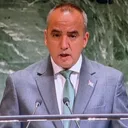
The Impact of U.S. Sanctions on Cuba
Ernesto Soberón Guzmán Cuban Ambassador to the United Nations

Challenging the Mamdani Administration's Housing Policies
Randy Mastro Partner, Dechert LLP; Former NYC First Deputy Mayor
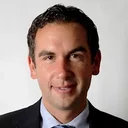
New York City's Economic Future Depends on Business
Steve Fulop President & CEO, Partnership for NYC

The Growing Alliance Between China, Russia, North Korea and Iran
Gordon Chang China Analyst & Author

How the Battle of Brooklyn Saved the American Revolution
Patrick O'Donnell Military Historian & Bestselling Author
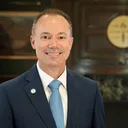
Educating the Next Generation About the Failures of Communism
Dr. Eric Patterson President & CEO, Victims of Communism Memorial Foundation

Spain's Rising Crime and Immigration Challenges
Jose Santamaria Chief Investment Officer, Fundamental Investment Services

The Stoler Report with Michael Stoler: Winston Schromm
Michael Stoler Real Estate Expert


Earth's Extreme Forces and the Fight Over Pluto
Steve Kates Space and astronomy broadcaster (Dr. Sky)

The Growing Danger of Cannabis Hyperemesis Syndrome
Lynn Shaw Founder of Lynn's Warriors

James Gagliano

Has the FBI been weaponized?
James Gagliano Retired FBI Supervisory Special Agent; Fox News Contributor
The United States is on high-security alert.
James Gagliano Retired FBI Supervisory Special Agent; Fox News Contributor
30 racehorses died this year at a race track in California.
James Gagliano Retired FBI Supervisory Special Agent; Fox News Contributor
