


Transcript
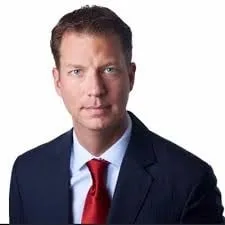
Automated transcript · uncorrectedWell, a good friend of mine, J.T. Fox, a Canadian-American businessman, a real estate investor, but not only Canada, not only United States worldwide, and he’s an entrepreneur, and he has a few things to say. Well, J.T., you were on last week. You wanted to come on again this week.
What’s on your mind?
Well, we talked about the American dream, and then, you know, one of the things that really hit me, and it’s in your book, and you said in speeches about loyalty, you know, you are loyal to New York City, you’re loyal to your audience, you’re loyal to your family, and for you, loyalty is one of the most important qualities.
And so I live in Nashville, and Jelly Roll has been a phenomenal story from being a drug dealer, drug addict, weighs almost 600 pounds, loses, you know, the weight, and then got all this kind of drama. And, you know, he is very well known here. People love him all over.
He’s built a brand. And then he goes on late night TV as an interview and he starts trashing the president. Now, this is not about whether, you know, people like the president or not. It’s the fact that when people support you, like President Trump did, and he was all supportive. And then when people go out there in order to get
the views in the audience and betray their oath, that’s the fundamental problem. And I think loyalty will get you so far. And it’s interesting how people only do things that are only loyal to the opportunity. So they either got something on him. You know, the Democrats did it with Sidwell and they did it with other people and
got him out of the governor’s race. They either got something on him and they told him to do that because there was no way anybody who knows him that he would have done that. And so, John, why do people become disloyal? Because I think a lot of the listeners can say they had people. I’m going to tell
you why.
Because they want to become relevant. People that are irrelevant want to be more relevant. And they think by making headlines that they’ll be more relevant. So to me, it doesn’t mean anything.
But we live in a society, don’t you think? I mean, obviously, common sense is why this radio station does very well. People listen to you for the truth as well. At what point do people do in their lives? Like, for example, I mean, you guys brought back Cohen. He had said some nasty stuff. Is there a way fast where we
give forgiveness and move on for this? Or should people like that just be cut off out of your life? Because I’m thinking if he did that to, let’s say, the president and I want to do business with him.
or build a friendship with him. Is he going to do it to me? And so that’s what I’m thinking. Where’s the line between doing the right thing, loyalty, and forgiveness?
There is always a line there, but it doesn’t happen at the snap of a finger. It depends on people’s moods. It depends. You know, like I said to you before, jokes are not, they’re supposed to be meant as jokes, but when you do it offline... just to gain personal fame, then the other person doesn’t take it that way and
really gets annoyed.
My opinion. How much of your success do you think? I remember you told a story when you saved the convenience store and you saved 5,000 jobs, and I was more proud than anything you have done as well. And do you feel that we live in a world now where people are just loyal to the opportunity and they’ll
jump from another job? Your entire staff have been with you for 30, 40 years. You know, your family, your wife, Margo, has been with you a long time. How much does loyalty play?
Common sense people and people that run their businesses the right way survive and are successful. People that are wise asses don’t succeed and they fail.
What about you when someone talks in a not a good light of you for the wrong reasons to get headlines? Do you forgive them or are they like you cut them off or you, you know, you play the game the other way?
I do what President Trump does. I may forgive, but I never forget.
Well said. Well, you are when I think of loyalty in the dictionary, there should be a picture of you, what you have done not only for New York, but for the for the country and in my life and everybody listening here. It’s truly an honor. And I think it’s a great lesson. And when I think about that,
you know, and I think everyone should pick up your book and those lessons of coming. You know what they are, John? They’re old school values. And I think this is what we need more older people with wisdom, teaching people how they got there and be appreciative for that. And I think there’s not that respect. And I respect wisdom. And
that’s what this show, this is what this station is about. Wisdom and both sides of every story, along with common sense. That’s how you become smarter. But we’re becoming dumber and dumber. And people are fed. They get their news in a five second microbyte. And that’s not common sense. That’s ignorance.
Thank you. Thank you, J.T. Fox. And let’s talk again soon.
Thank you, John.
Sunday, August 30, 2026
Breaking With the Far Left on AI, Energy and Israel
John Fetterman U.S. Senator from Pennsylvania
Keeping Florida Free, Affordable and Conservative
Byron Donalds U.S. Representative from Florida; nominee for Governor

New York Needs More Natural Gas and Nuclear Power
Mike Lawler U.S. Representative from New York

Putting American Security at the Center of U.S. Foreign Policy
Tommy Pigott State Department Spokesperson
Remembering 9/11 and New York's Remarkable Resilience
George Pataki Former Governor of New York

Challenging Josh Shapiro for Pennsylvania Governor
Stacy Garrity Pennsylvania Treasurer; nominee for Governor
The Impact of U.S. Sanctions on Cuba
Ernesto Soberón Guzmán Cuban Ambassador to the United Nations

Challenging the Mamdani Administration's Housing Policies
Randy Mastro Partner, Dechert LLP; Former NYC First Deputy Mayor

New York City's Economic Future Depends on Business
Steve Fulop President & CEO, Partnership for NYC

The Growing Alliance Between China, Russia, North Korea and Iran
Gordon Chang China Analyst & Author

How the Battle of Brooklyn Saved the American Revolution
Patrick O'Donnell Military Historian & Bestselling Author

Educating the Next Generation About the Failures of Communism
Dr. Eric Patterson President & CEO, Victims of Communism Memorial Foundation

The Safer Skies Act and the Fight Against Drone Threats
James Gagliano Retired FBI Supervisory Special Agent; Fox News Contributor

Spain's Rising Crime and Immigration Challenges
Jose Santamaria Chief Investment Officer, Fundamental Investment Services
The Stoler Report with Michael Stoler: Winston Schromm
Michael Stoler Real Estate Expert


Earth's Extreme Forces and the Fight Over Pluto
Steve Kates Space and astronomy broadcaster (Dr. Sky)

The Growing Danger of Cannabis Hyperemesis Syndrome
Lynn Shaw Founder of Lynn's Warriors

JT Foxx

Taxes and Regulation Are Driving Entrepreneurs Out of New York
JT Foxx Entrepreneur & Investor
Examining How Foreign Conflicts Impact the U.S. Economy
JT Foxx Entrepreneur & Investor
