


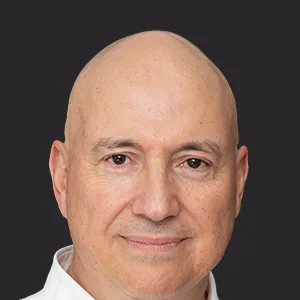
Dr. Peter Michalos WABC Medical Expert
How the Oral Microbiome Can Affect the Body
Transcript
Automated transcript · uncorrectedSunday morning. With us today is Dr. Peter Mihalos. His nickname, Live Long and Prosper. How are we going to live to be 100? Well, Dr. Mihalos, tell us what wisdom you have for us today.
Well, on our road to be 100, we are learning more and more how important it is to take care of our oral health from the time we’re young, taking care of our teeth and taking care of periodontal disease.
Because now we know we have something called sequencing, which is genetic sequencing. You can analyze and actually know exactly what’s in your mouth and what’s in your gut. And the oral microbiome has the second most diverse different types of bacteria. So in our mouth, we have about 700 different types of bacteria. And if you counted the total
number of bacteria, it’s between 50 and 100 billion in one human person’s mouth. And then when you go down further in the gut, there’s 500 to 1,000 different kinds of bacteria and 140,000 variety of different kinds of viruses that live and coexist and hang out in our gut.
Dr. Miller, let me understand this. So you have all those types of viruses. That means you have to eat. a lot of varieties of food to make sure all those viruses and bacteria are not starving to death and you lose.
Them right you have to feed them and you want to eat foods that feed the good bacteria because they also found that the people who let’s say just keep eating sugar all the time and feed a lot of the bad bacteria they have a lower diversity and balance of the different good and bad bacteria and And the
people who had lower diversity had more depression, anxiety, and mental illness. And we have to remember that the gut Basically, when you put something in your mouth, it talks to the gut, to the lymph nodes, to the hormones like insulin.
It starts in the mouth. If you have some sugar, it tells your brain and it tells your pancreas, hey, start making some insulin to bring down the sugar and feed the cells and carry it into the cells. that’s why all these people who are eating all these diet sodas and artificial sweeteners it’s a fake out because your
body senses it in the mouth and the oral microbiome then you shoot out the insulin but then your blood sugar starts to fall but there’s no sugar there to feed energy to the cells and that’s why some of these people who are drinking diet sodas you see them an hour later they’re getting hungry and they want to
eat more so that’s a fake out so.
Bottom line is that If our creator made the product, eat it, whether it’s vegetables, whether it’s fruit. Now, that’s when we have to be even more careful because the fruit and vegetables have fertilizer on them, and that goes into a different direction.
Yeah, that’s a whole other story. And the pesticides on the surface and why it’s so important to clean your fruits, your vegetables. Because when you have some of those bad bacterias, they can get into our bloodstream and into our brain because there’s only one millimeter of bone between your mouth and your sinuses and your brain. And that’s how COVID
got into the brain. And people got brain fog and long COVID because it goes up the olfactory nerve, which is the smelling nerve that we have. And that’s why it affects the brain. And that’s why sometimes when you have flu, you feel like your brain is going to explode because the inflammation actually gets into the brain. So
it’s so important to control periodontal disease. As two great doctors that I always talk to always talk about periodontal disease, Dr. Adam Baer, a great periodontist, and Dr. Siccarelli, a great prosthodontist, always say that When you are brushing your teeth, you need to try to floss. You need to try to get those bacteria out of the mouth. Try to use
a prebiotic toothpaste that feeds the good bacteria because they exist now. And MIT even developed a toothpaste that actually removes like over 200% of the plaque and it reduces. I’ve told a few people about these types of things.
And they found that their gums bleed less than when they went to their periodontist. Their gums actually got better. And that’s why I dedicated an entire chapter in my new book that I co-authored, The Death of Aging on Oral Microbiome and Gut Microbiome, because it’s turning out to be a major thing. They found in Alzheimer’s plaques and
Alzheimer’s disease. a bad bacteria called P. gingivalis. And they found that in heart plaques, they found another common bacteria called Viridan streptococci group. And imagine that they sampled these heart plaques in people who died of heart attacks, and they found bacteria inside those plaques. So that tells you that bacteria can get into the bloodstream from our mouth
and from our gut. So eating, like you said, farm to table, the Mediterranean diet is very important. Avoiding those processed foods, as we’ve talked about, processed foods have things so that bacteria don’t grow. So they have a longer shelf life in the store, but they also kill some of the good bacteria. And there’s another one that’s associated
with ulcers and it eats through the stomach and duodenum called H. pylori. And that’s why when doctors do endoscopy, they always test for H. pylori. And sometimes they even tell you what antibiotic you have to give to kill some of the bad bacteria. And we also are learning now probiotics. Those also help.
Now, see, there’s a probiotic that you said that was developed, a prebiotic.
Prebiotic feeds the good bacteria. They have a prebiotic toothpaste now.
Now, where do you find this? Nobody knows where to find it.
Well, yeah, it’s all you can buy it on the Internet. And that’s why when people read The Death of Aging, they’re going to learn all about prebiotics, postbiotics, and keep listening to WABC. to learn about how to protect their oral health, which turns out to affect your brain, Alzheimer’s, heart disease, because if your mouth is inflamed, your gut
is inflamed, which, guess what? It also brings inflammation into the brain.
One more question. I no longer use the mouthwash with alcohol in it. Right. So I use mouthwash with no alcohol in it. Do you think that helps?
Yes, it does. Let me ask one more question.
I not only use the mouthwash with no alcohol in it, then in addition to that, I wash my mouth out with salt water. So water and salt. Does that help?
Yeah, salt definitely does. That’s how they used to kill bacteria. That’s how they used to preserve steaks and meat. So that’s a.
Good progress when you do the mouthwash with no alcohol in it and you do the water with salt in it and you wash your mouth out, then you’re making progress. Is that correct?
That’s correct. You just can’t overdo it with the salt, especially if you have a high blood pressure. You’ve got to make sure you rinse it out well.
And then I rinse it out with regular water.
Yeah, regular clean water.
So it’s three steps. It’s three steps. Yes. Now, let me ask you. So the only thing I’m missing is the prebiotic.
Yeah, the prebiotic and the good other toothpaste I told you about that basically has a chemical called ETA.
So I’m going to go to Google and Google where do I buy prebiotic toothpaste, and I’ll check it with you, and we’ll talk again real soon.
All right, John. Thanks for always getting the truth out on the Cats Roundtable.
Sunday, August 30, 2026
Breaking With the Far Left on AI, Energy and Israel
John Fetterman U.S. Senator from Pennsylvania
Keeping Florida Free, Affordable and Conservative
Byron Donalds U.S. Representative from Florida; nominee for Governor
New York Needs More Natural Gas and Nuclear Power
Mike Lawler U.S. Representative from New York
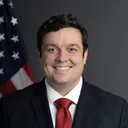
Putting American Security at the Center of U.S. Foreign Policy
Tommy Pigott State Department Spokesperson
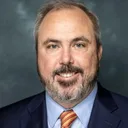

Remembering 9/11 and New York's Remarkable Resilience
George Pataki Former Governor of New York

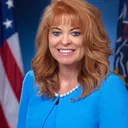
Challenging Josh Shapiro for Pennsylvania Governor
Stacy Garrity Pennsylvania Treasurer; nominee for Governor
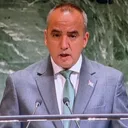
The Impact of U.S. Sanctions on Cuba
Ernesto Soberón Guzmán Cuban Ambassador to the United Nations

Challenging the Mamdani Administration's Housing Policies
Randy Mastro Partner, Dechert LLP; Former NYC First Deputy Mayor
New York City's Economic Future Depends on Business
Steve Fulop President & CEO, Partnership for NYC

The Growing Alliance Between China, Russia, North Korea and Iran
Gordon Chang China Analyst & Author

How the Battle of Brooklyn Saved the American Revolution
Patrick O'Donnell Military Historian & Bestselling Author
Educating the Next Generation About the Failures of Communism
Dr. Eric Patterson President & CEO, Victims of Communism Memorial Foundation
The Safer Skies Act and the Fight Against Drone Threats
James Gagliano Retired FBI Supervisory Special Agent; Fox News Contributor
Spain's Rising Crime and Immigration Challenges
Jose Santamaria Chief Investment Officer, Fundamental Investment Services


The Stoler Report with Michael Stoler: Winston Schromm
Michael Stoler Real Estate Expert
Earth's Extreme Forces and the Fight Over Pluto
Steve Kates Space and astronomy broadcaster (Dr. Sky)
The Growing Danger of Cannabis Hyperemesis Syndrome
Lynn Shaw Founder of Lynn's Warriors

Dr. Peter Michalos

Advances in Lung Cancer Detection and Personalized Treatment
Dr. Peter Michalos WABC Medical Expert
Healthy Eating, Stronger Immunity and the Science of Living Longer
Dr. Peter Michalos WABC Medical Expert
Limiting Sugar and Choosing Whole Foods to Support Healthy Aging
Dr. Peter Michalos WABC Medical Expert
Protect Your Skin From UV Radiation and Reduce the Risk of Skin Cancer
Dr. Peter Michalos WABC Medical Expert
