


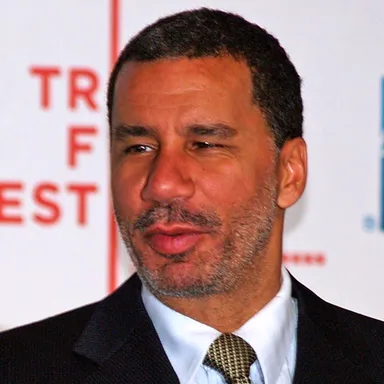
David Paterson Former Governor of New York
Are comparisons between anti-war, 1968 demonstrations and today valid?
Transcript
Automated transcript · uncorrectedWith us this morning is Governor David Pattison, and he makes news every week because he’s got common sense. Governor Patterson, what is your common sense for this week?
Well, for this week, I really want to examine that some of the guests on the five o’clock Show and others have been comparing what went on at Columbia the occupation to what happened in nineteen sixty eight, and these are two very different situations. In nineteen fifty eight, those students were protesting the warren Vietnam, racial relations, segregation issues
and never they had real causes that even people who disagreed with them understood that that was a good debate. And they were much different in this sense that Jerry Nadler, who is now a congressman for that area and many others, he did not support the occupation of Hamilton Hall at that time and he didn’t support it this time. And
in this particular situation, the occupation started out, you know, very nonviolent. The encampment, you know, was obviously a little intimidating, but it wasn’t bothering people. But what happened was we now know that forty to fifty percent of the individuals involved didn’t even attend Columbia and had no relationship with that campus other than to become outside agitators at that point.
When the police came in in nineteen sixty eight, they just were used excessive force. There were a lot of hospitalizations. It was not done well at Hall this time. I can’t believe that the police are getting any criticism because what they did, and this is what you have to do in law enforcement situations. You don’t just walk in
like you three people from law and order and say right, everybody, get out of here. You have to show the intimidating force that is available if needed, and that’s why they sent those tanks in. It scared a lot of people, but the arrests were made, nobody was seriously hurt, and they cleared the campus and that’s the way it should
have gone. And I think Mayor Adams and the members of the police department should be commended for handling that situation as well as they did.
They did a great job, and that’s what a commander, what CEO is supposed to do in the you know, Columbia CEO should have done that sooner.
In my opinion, I think that that’s absolutely right that we talked about this last week, that there’s too much of a hesitation in those types of situations. And the adversary, who in this case were the students and the non students who were involved in the protest. I’m getting the feeling that the issues that they were raising were not
even what was most important to them. Was most important to them, what destabilizing government, destabilizing the educational facility, and turning people against each other while all along their basic goal is to just create disruption and that can’t be allowed anywhere.
I agree with you. And there’s a big controversy around and nobody really knows the real numbers how many of the people protesting were students and how many were outside agitators, and it’s been going on among the WABC crew, and I just like your opinion because.
Well, the chief the record are that about thirty five percent of the Columbia protesters were outside agitators at City College, which is not a campus, you know, it’s just a bunch of buildings. It’s estimated that it was sixty to sixty five percent. So when you balance it out, about fifty percent of the processors at these two institutions, and
probably at NYU as well. Were people who were coming from the outside taking advantage of a situation, and that’s how they got the students to take over Hamilton Hall when a lot of the students didn’t. They liked being at the encampment, but they weren’t there to create violence.
But you know what happens, It’s like a mob mentality. When everybody starts doing something, too many people follow them, and in this particular case, people who have started riots and other places know how to whip up a crowd.
We saw that on January sixth, and we saw it at Columbia. Different points of view. Fame Houdlum, behavior.
Governor Patterson. It looks like it’s over. The governors and the senator are not the senator. The governors and the mayors in the supervisors of various towns have taken the lead and say enough is enough. Do you think it’s over?
I think for the time being it’s over because the school year is closing and it really started really on school campuses. But I think that in the coming months we’ve got to examine what was really going on there because I thought a lot of the protesting was antisemitic and it seems to be pushed to the background with
you know, who is on campus and who shouldn’t be on campus and taking over buildings. But that issue, which I think was the primary issue that evolved out of what happened on October seventh last year, really isn’t being talked about. And this idea we’re for the Palestinians, well, who are the Palestinians. Obviously there are a lot of
people who are poor and are starving, are in bad shape. But the fact is that they didn’t get that way because necessarily of anything that the State of Israel did, but it was the response to people that they know who attacked the State of Israel.
Gavinor Pattison, thank you so much for coming on this Sunday morning, and we’ll see you real sir.
Thank you, John. Take care
Sunday, May 5, 2024
A good portion of protesters were outside agitators
John Chell Former NYPD Chief of Department
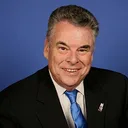
The disruptive demonstrations at Columbia. Need to know the source behind.
Peter King Former U.S. Representative from New York


The James Webb telescope and the origin of stars.
Steve Kates Space and astronomy broadcaster (Dr. Sky)

David Paterson
Outrage Over a Campaign Tactic and the Battle for the Midterms
David Paterson Former Governor of New York
Rips UN Walkout on Netanyahu: “Shocked and Appalled”
David Paterson Former Governor of New York
The Rise of Black Candidates and the Changing Landscape of American Politics
David Paterson Former Governor of New York
NYC Students Face Alarming Decline in Literacy Rates
David Paterson Former Governor of New York
