


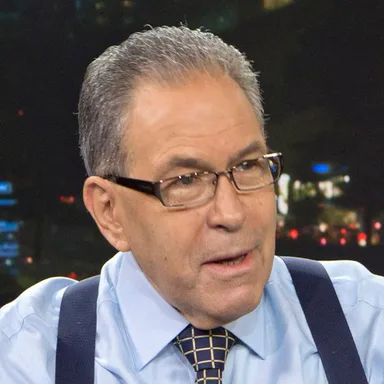
Michael Stoler Real Estate Expert
Interviews Scott Galin, Principal & CEO, Handro Properties
Transcript
Automated transcript · uncorrectedGood morning. This is Michael Stola for the Stoly Real Estate reporting on the Catch round Table this morning. I’ve had the honor of having Scott Gallen, who is the CEO and principle of Handro Properties LLC and ESSH Investments LLC.
So what do you do with these two companies? You are active in the office space business.
Correct, Yeah, And the Handro Properties is principally our core office space in New York City, and the ess Investments is self storage, multifamily, warehousing, etc. Across the entire country. And we are co GP and LP investors in about one hundred projects.
Okay, so let’s talk. You’re also involved. You’re on the executive committee of the Garment Center Alliance, Yes, and also a member of the board right, Yes. Tell me about that because that’s a very active market right near Penn Central.
Well, I’ve been part of the bid for over twenty years. When I was a tenant in the area, I was one of the tenant of board members there’s designees, and now for the last fifteen years I’ve been you know, one of the landlord board members. We are one of the largest bids in New York and it’s a very
vibrant and active area. Last three years have been very challenged, like most parts of CBDs in New York, but the area is terrific. As you know, we’re located in terms of transportation, hubs, they’re all within our district. And we’ve done a great job in the last ten years just reforming the entire district in every possible way. And now
we’re you know, now that COVID’s over, we’ve battled a lot of challenges that everybody’s been battling in New York and we’re on an ascension. Now.
Okay, what’s happening in the retail areas in the bid and how you see it?
I think of retail areas in the BID are Okay, they’re a little challenged because we don’t have residents, and so any place that has people there eight ten hours a day, five days a week is always a difficult retail environment. And now with reduced office occupancy, which is getting better but still reduced, that even makes retail more
difficult in a pure CBD.
What’s happening with the restaurants, I mean part of the restaurants with the fast casual and so on.
The restaurants are pretty good because we have a giant hospitality of space. We have fifty five restaurants in the bid, and I’m sorry, fifty five hotels in the bid with occupancy probably in the eighty ninety percent category, several million visits last year, and so the guests at the hotels absolutely do eat in the restaurants. I have a few
restaurants in our properties that obviously sufferedmadically at the beginning of COVID and today are doing between eighty and ninety percent of their pre COVID annualized business.
Okay, with regard to that, what are happening with the fine dining restaurants? How are they doing in the region?
We have so few left, Mike. I mean, there’s three or four restaurants principally geared towards businesses, and they’re pretty busy when I go there still, but there’s not many left.
Let’s talk about leasing of space for both the retailer and also for the office tenant. What’s the status today?
Listen, you know, the office market in Manhattan is very challenged, but it depends on neighborhood and it depends on size and use. We’re fortunate that our tenants are small to medium sized tenants three thousand to ten thousand. These are entrepreneurial businesses where work from home is really not feasible and it’s not part of the entrepreneurial spirit. So we’re
fortunate enough now to have a physical occupancy of seventy five eighty percent, and we thought that would happen. Obviously, we’ve all experienced some rent deflation everywhere in New York with a very few exceptions, and you know, I still think there’s a there’s time to play out this work from home issue. We’re finding more and more and more
of our tenants back and back in more plentiful ways than they came back originally.
Okay, would you say we have a time today that it’s a good opportunity for an office tendant to rent space. Are they getting great opportunities? What type of concessions? Yes, being offered.
They’re getting rents that are materially less than they were pre COVID, and concessions are a different thing, difficult thing because it’s all one package. They may be getting less work and less free rent, but a dramatic reduction and rent.
So but when you put the package together and you look at net effective rent, they’re getting a very good deal all over the coup.
What you have thought about the conversion from office buildings to residential buildings, especially with this new m CORE program which may go into effect in June.
Listen, in our neighborhood, we feel great about it because we don’t have residential zoning, which we expect to be able to have in twenty twenty four. All the politicians, all the stakeholders are very much for this. We need residential and the city needs housing, so this is a win win. Having set all that, it’s a difficult it’s
a long haul and a difficult lift to take an office building and convert it into a res building, and especially since it requires meaningful tax incentives and assistants from municipal authorities.
Okay, with regard to that, I know that you’ve personally been involved with in your investments in conversion of industrial space to office space, which was in vogue a couple of years ago. What’s happening today with regard to that.
I don’t think anybody’s converting anything into an office today.
Are you seeing the conversion today from the industry from the office back to industrial I haven’t seen that.
I don’t think in the city in Manhattan, you’d see that. I think more this notion of conversion to residential, except it’s it’s it’s a heavy lift, and it’s something that doesn’t happen fast, and you need light and air, and you need a lot of money. And so some buildings are efficient to do it in and others very inefficient.
What about co sharing? You know the we works in the other regions. Is what are you seeing today in that? What’s your thought about that?
I mean, I’m not familiar with that’s going. I read what you read, and so I’m not sure. I mean I don’t most people. Now we have a building that has one hundred in sixty small spaces in a five hundred to one thousand feet it’s one hundred percent least it was through.
COVID, So you’re running your own co sharing.
I don’t think it’s co sharing because everybody during COVID, I came up a little notion called walls and doors, and I thought people they didn’t want to co share. So we ran a big advertising campaign three months into COVID walls and doors, and we said you can have five hundred feet, but it’s yours. You have a door,
you can close it. You have walls and it worked. I mean the building maintained ninety five tendancy through the through COVID.
Many of the office buildings in the Garment Center of Fashion District, the Bid area are older, very old, and they require major replacement. What do you see do you see a number of these buildings being knocked down? Do you see any new new office buildings going into that district? You?
What do you see? In general?
I don’t see. I don’t see a lot of office buildings going into the district right now. There’s enough vacancy where I’m not sure what would motivate somebody to build an office building. And most of our buildings are loft buildings between fifty and one hundred and twenty years old.
We maintain our buildings very well as many of the great owners in our area. You know, we have entrepreneur you know, iconic owners that take care of these buildings.
And so what about the rooftop clubs, the restaurants that are having clubs over there? What’s your thought about that, especially since they their number of them in that district.
We only we have a couple and again and a lot of that is driven by tenant occupancy in the offices. The ones at the hotels in our in our district are doing very well. The couple in the office buildings, I’m not familiar with what the what the occupancy.
Is right now. So do you see people coming to the office more before the end of the year or we are we at a four day of work work we at the office.
From my vantage point, we should be a five day of work week. And I built and ran a business that wasn’t in the real estate business, and I believe that to run a successful business you need physicality and you need you know, at hoc ideas. So but what I believe in what’s going to happen in two different things.
I’d like to believe we’re going to get up to seventy five percent, and I think we’re going to be looking hopefully at most people working a four day in office work week and one day remotely.
So, as I would say on my TV show, here’s my apple. So the crystal apple looks relatively bright for the future. And Scott Gallan, thank you very much for being here today on the Stolar Real Estate Report.
Thanks for having me. Mike
Sunday, June 11, 2023

Albany has adjourned. "Clean slate" bill passed.
Zach Williams Transportation Reporter, Bloomberg Government
Migrants are the biggest problem the city is facing. Solution: close the border.
David Paterson Former Governor of New York
Testified on Capitol Hill. Former Chair Homeland Security.
Peter King Former U.S. Representative from New York

San Francisco nearly shut down. Sad state. Trump will be the nominee.
John Chachas Investment Banker, Founder of Methuselah Advisors

Air quality so bad it shuts down airlines.
Tom Grech President and CEO, Queens Chamber of Commerce
Staten Island ballpark, 1:00 PM today vs. Lancaster Barnstormers
Eric Shuffler Founding Partner, River Crossing Strategy Group

Trump indicted. The weaponization of the DOJ.
Dick Morris Political Strategist and Author

Ukraine begins offensive. High hopes for Russian pushback.
Dr. William J. Parker III Retired U.S. Navy Captain; National Security Analyst


Jobs report bodes well for the economy.
Larry Kudlow Fox Business Host and Former NEC Director

Trump unjustly charged. New radio program Sunday on WABC, 3:00 PM, with guest Trump.
Roger Stone Political Strategist & Consultant
Space Force launches spy satellite.
Steve Kates Space and astronomy broadcaster (Dr. Sky)

Our second brain and main immune system. The human gut.
Dr. Peter Michalos WABC Medical Expert
Michael Stoler
The Stoler Report with Michael Stoler: Eli Weiss and Andrew Albstein
Michael Stoler Real Estate Expert
The Stoler Report with Michael Stoler: Robin Schneiderman
Michael Stoler Real Estate Expert
The Stoler Report with Michael Stoler: Winston Schromm
Michael Stoler Real Estate Expert
