


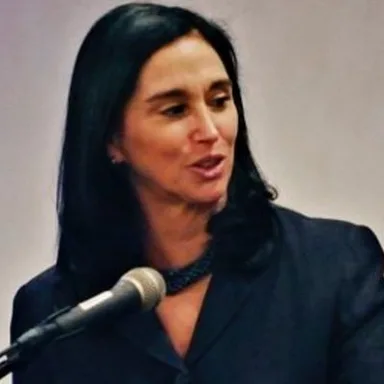
Pamela Falk Foreign Affairs Analyst & U.N. Correspondent
Renegotiating USMCA and the Challenges Facing North America
Transcript
Automated transcript · uncorrectedWell, Sunday morning, fourth of July weekend with us today is Pamela Fok And she’s a veteran news correspondent at the United Nations and a former international law professor and a PhD. Well, you must know a lot about a lot of things going on in the United Nations. One of the big items that are coming up this week
is what do you think of the NAFTA, which is the North American Free Trade agreement that President Trump is having differences with at this point.
Right, Hi, Good morning John. The Trump administration and President Trump just yesterday declined to extend the agreement that he had negotiated, his administration had negotiated in the first term. It’s the US MCA, It’s the US Canada Mexico agreement that you’re talking about now. During that period, the agreement shielded most Canadian and Exican goods from Trump’s tariffs except
for maybe auto steal few other things. But now both countries are the main training partners of the United States. So President Trump wants more, he wants to make it a better agreement even now, and he’s pushing for higher US content and goods. And look if a worker in the United States makes fifty dollars an hour for a
job in a in an auto factory, and it moves south for a worker who’s making five dollars. That’s not good. And some of the unions like it because there have been some compromises. Some don’t. But everyone is pretty much in agreement that higher content is good. The question is how to negotiate. These are friends, So it’s I was
on the hill as staff director of a Western Hemisphere John when the when NAFTA, the original agreement was passed, and I mean it’s it’s the most divisive thing in American government. You think other things are, but this is pretty bad.
I will tell you. You know, I always a Bill Clinton Democrat. I helped run his campaign, and now I’m a Donald Trump. I won’t say, you know he’s Donald Trump. President Trump is a businessman first and a Republican second.
That’s just my opinion, and that he is looking as the United States of America as being a business and he wants a fair deal for the American people because his opinion is that we’ve been getting screwed for so many years.
That’s absolutely true. And you’re a business person as well. You know about food content and I want to said this to Bill Riley on the air a long time ago when he was saying, oh, look, let’s just forget about Mexico, and I said, do you like strawberries and he said yes. The answer is if you like strawberries,
you better start dealing with Mexico because and of course Canada now is also integrated into every single thing. Every car is one pieces in Canada, one piece in the United States, one piece in Mexico. You can’t stop it.
And what you can do is make it better deal. But you’re not going to get You’re not going to get strawberries in the United States if you don’t have some lower paid workers working in the United States for jobs that Americans don’t take. So it all vodes well for a newer, better agreement. The rhetoric propless.
I think the worst thing. I think, yeah, you’re right. I mean, the Canadians are wonderful people. There are brothers and sisters up there, and I love them and respect them, and the same thing with the Mexican people. But what President Trump wants to accomplish is he wants to have something over the Mexicans, especially with all the fetnahs coming
in killing our people. And with Canada. You know, the President jokes around about making the fifty first state, and the Canadian people take it, take it seriously because they don’t know President Trump like some of US Americans known.
Uh and yeah, maybe, but what President Trump wants to do with Canada is is sit, in my opinion is sit at the same at one round table or one square table or whatever table it is, and work out a good deal for both countries.
Yeah. I think that’s true, and I think everyone understands that. And I mean it’s there’s been some insults back and forth, but I think generally speaking, Mexico understands where the United States is coming from. Mexico has these drugs, I mean, the drug the drug lords are terrible. I mean it’s just awful. They kill the prosecutors, they kill anybody who’s
against them. And Mexico doesn’t have that in line. And this won’t change that. But the Mexico understands that the unfiltered migration is not good. People die coming over, you know, the Rio grand They die through all of these passes that are very dangerous, and you know, it.
Has to be thousands of kids missing that nobody knows where they.
Are exactly No, it’s it’s a terrible situation and we should have a better relationship with Mexico. I mean Mexico. Uh. And I think Claudia Seinbeum is pretty good. I mean she’s wanted the US. Now there’s you know, enough history with Mexico. They don’t want US agents on their side of the border. But help with with getting rid of
these gangs and bringing fentanyl, which is not sourced from Mexico. It’s sourced from Asia and China and other places in Indonesia. But I think, you know, but it’s coming through Mexico.
I think the worst thing that we did as Americans is sent over to China, something like our pharmaceuticals to China and India. I mean, you can’t become dependent on any one country for the products that we need. And I think President Trump is a reality realist and he understands that. Uh and UH. In last week, I interviewed
the ambassador from from Cuba and I sent it to the President and UH and basically the Cuban people that exists right now, UH, they want to they want to do everything President Trump wants to do it, but they just want to be maintain their sovereignty, so let them negotiate.
Yeah, the probat I mean, as you know, I swam in these you know, the straits, the Florida Waters for a long time writing on Cuba, working with El Duque, the Yankee Pitcher, working with a dance group that came to the United States, and basically trying to get both sides, I mean people into Cuba that want to get in
and out of Cuba. Before I was doing journalism, and just because the divided family is so heart wrenching, you know, the Cuban Americans that would like their family out or to go in and see what they could get back from their day. And it’s the problem is the Cuban government.
But if they can make some kind of agreement, certainly the Cuban people would like to really same thing.
In Venezuela, were doing the same thing that Iran. We’re living and leaving the present government in place as long as they cooperate and do the right thing by all. Yeah. Absolutely, well, Pamela, I will send you a copy of the of the interview I did with the Cuban government, and uh, and thank you for coming on and let’s
get together again real soon.
Yeah, sometime we’ll talk about the due Cause story and also, you know about what’s going on at the u N. I mean, there’s some pretty good politicians there. I mean, Mike Walsh is trying to.
Mike Wilson is a very very decent person. I know him. Was a congressman.
I mean I think congress I think people who have been Congress in government or in business. Be David Beasley, who was the head of he was the GOP of World Food Program.
We’re out of time, but thank you.
It’s great to be the two hundred and fiftieth take Care
Sunday, July 5, 2026
Strengthening Middle East Alliances While Confronting Iran's Regional Influence
Mike Huckabee U.S. Ambassador to Israel
Calling for Political Moderation and Government Accountability
Joe Manchin Former U.S. Senator from West Virginia
Celebrating Independence Day and Wyoming's American Heritage
Harriet Hageman U.S. Representative from Wyoming; nominee for U.S. Senate
An America First Strategy for Global Security and Foreign Policy
Dylan Johnson Assistant Secretary of State for Global Public Affairs

The White House's Vision for America's Economic Future
Kush Desai Assistant Director of National Intelligence–designate for Strategic Communications; Former White House Senior Deputy Press Secretary
The Democratic Party Needs to Return to the Center
David Paterson Former Governor of New York
Celebrating America's Heritage and Suffolk County's Future
Ed Romaine Suffolk County Executive
New Jersey's America 250 Celebration and Voter Roll Concerns
Christine Hanlon Chair, New Jersey Republican Party
A Common-Sense Democratic Vision for Law and Order
Lou Raptakis Rhode Island State Senator

Geopolitical Challenges in the Middle East and Asia
General Blaine Holt Brigadier General USAF (Ret.)

Chasing the American Dream in New York
Dick Grasso Former Chairman & CEO, New York Stock Exchange
Joining 77 WABC to Discuss News, Politics and the Trump Presidency
Michael Cohen Former Attorney to President Trump & 77 WABC Host
President Trump's Trade Strategy Is Reshaping North America
Steve Moore Economist; Co-Founder, Committee to Unleash Prosperity
NYC's $125 Billion Budget Faces Long-Term Risks
Andrew Rein President, Citizens Budget Commission
NYPD is Facing Staffing Crisis as NYC Refuses to Hire More Officers
Vincent Vallelong President, Sergeants Benevolent Association

Apple's Future Under New Leadership and the iPhone 17
Daniel Shaffer President & CEO, Shaffer Asset Management
The Greek Revolution's Influence on American History
Louis Katsos President, EMBCA & Construction Executive

Expanding Medicare Access to Weight Loss Medications
Dr. Mason Pimsler Geriatrician, Lincoln Medical Center


How to Prevent Heat Stroke and Stay Safe in Extreme Heat
Dr. Peter Michalos WABC Medical Expert

Understanding Solar Storms, GPS Disruptions and Deep Space
Steve Kates Space and astronomy broadcaster (Dr. Sky)

KIDS Act Must Include Protections for Children
Lynn Shaw Founder of Lynn's Warriors
Wall Street Hits Records Amid Economic and Business Shifts
John Terrett WABC Financial Analyst
