


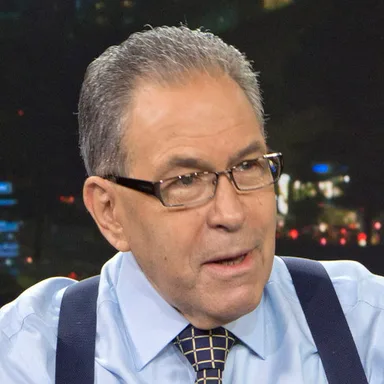
Michael Stoler Real Estate Expert
The Stoler Report with Michael Stoler: Matt Swerdlow
Transcript
Automated transcript · uncorrectedGood morning. This is Mike Stoler for the Stolar Real Estate Report. It looks like there’s a lot of money out there for real estate. There’s a lot of real estate activities taking up place, but there’s a substantial amount of money from a variety of sources for financing. So I’m lucky today to have this thirty three year old
guy who’s been in the business for twelve years. I have Matt Swergliw, who is a senior director at Ario Property Advisors. Thanks for being here, Super excited to be here. So let’s talk about how you got into the financing of real estate first.
Awesome, So if we want to go back in time, I graduated Lehigh University with a real estate finance degree, generally pretty social guy and found myself into brokerage. The question was what vertical leasing investment sales finance and ended up being my calling. I love the aspect of marrying borrowers to lenders. Many folks think that you can walk
into a bank and get pretty decent terms. But when you see the world from my point of view and you realize how many mortgages, all the different shapes, sizes, colors that they may come in, you realize that it really behooves you to be a specialist of the space.
Let’s talk a little bit about banks who have left the marketplace. That’s happened over the years, you know, the situation of signature, First Republic and so on.
Super interesting topic. In since about twenty fifteen, we’ve lost i’d probably say about ten to twenty depository relationship banks in New York City. These are stalwart incumbent participants, especially in the New York City multi family lending space. They’ve either been merged, acquired, or they don’t exist anymore for other reasons, and that consolidation has not been replaced. I
think in the last couple of years there’s only been three Denovo bank charters issued to New York State, which has not replaced the amount of banks that we’ve left that we’ve lost. So it’s a really interesting dynamic to see this imbalance of debt capital that borrowers are now having to wade through, especially as their collateral is certainly
looking different through the regulations that have hit us since twenty nineteen.
Let’s talk about alternative financing. That’s an interesting topic.
Yeah, so we’re really pioneering a new topic called private credit right. You hear about it in the news, the blue hourls of the world. These are essentially private equity debt funds that are raising non recourse They’re raising funds to issue fixed rate, non recourse term loans. Their size on in place cash flow, but their parameters are way
more aggressive than the bank underwriting right now. So in one extreme, we have one debt fund, private credit fund, that is advertising eighty percent loan to value subject to a one to zero interest only DSR for loans above fifteen million. They were in our office looking for national business.
We said, have you guys looked into rent stabilized multifamily this let’s go back to the office and ask about it. They called me again nine am tomorrow the next morning and said, if you have stuff of scale, will absolutely consider rent stabilize housing. Which is an interesting entrance to the market where a lot of banks have retreated, specifically
from rent stabilized lending due to the legacy balance sheet issues that they have from HSTPA, COVID collections and now interest rates.
So what about the insurance companies? Have they become active again?
The insurance companies definitely have a ton of debt capital to issue, but they are looking nationally. They want to be in gateway markets trophy assets, and they generally want to be around sub sixty percent loan of value with a strong DSCR and going in debt yield. Because of the nature of rent stabilized housing, it’s not really something
that is really in vogue with the life co lenders. But if you have a free market trophy elevator building, you’re going to see a lot of appetite. The life insurance companies at some very aggressive spreads. We’re looking one hundred to one fifty over for some long term money.
Okay. With regard to loans on portfolio, it’s banks buying paper.
Our banks buying paper. Yes, I would say they’re probably net sellers of paper. We just saw the closing of ocean First and Flushing, which closed on January June. Second part of that sale or merger, I’m not really sure.
The dynamic was a sale of a one point something billion dollar pool of legacy Flushing Bank loans that clearly Ocean First just did not want as part of the as part of the acquisition. So that I would say banks are generally looking to relieve their bags.
Which banks are aggressive today in doing loans.
There’s really one name, there’s one elephant in the room. It’s Chase Bank. Chase Banks CTL multi family lending platform is hyperactive. I believe nationally they’re looking to put out about five billion dollars of loans.
And they also do it with no fees, correct.
So where the four for free program is very unique. They do no origination fees. They pay for lender legal they don’t. They pay for the appraisal, the phase one and if you use their affiliated title insurance company, they’ll pay for the lenders title premium as well. On a small balance loan, they’re doing loans between about one to
twenty five million. That can be a really dramatic savings on a small balance loan for any one borrower, which they use to their advantage. In addition to just being a very strong platform, we’ve been told they’re very borrower friendly from our clients.
What about finance companies, what do you mean? I mean that you know, when you’re financing somebody’s notes, they’re people are buying your notes.
So note on note financing, Note on node financing also very popular. Banks are trying to figure out how to get exposure to commercial realists without booking those loans directly on their balance sheet, because the regulators want them to weight that risk with a certain amount of deposits. So they’re asking themselves, how do we get this exposure without
the risk waiting. The answer is note on node financing, not a direct loan against real estate. But they’re also investing into funds that are issuing loans themselves, which is really where that private credit concept is coming into vogue because the banks are pumping money into these funds to make underlying loans against real estate. But to the regulator,
that’s not a direct loan against the collateral.
What about Fanny and Freddy.
Oh, Fanny and Freddy have a lot of money to put out this year. They have to put out eighty eight billion dollars each. We’re just outside of the first quarter. We’re seeing that Freddie mac is on track to hit those caps. Fanny mays behind the ball. What we generally see when there is a lot of allocation to put
out in a short amount of time, we start to see specials similar to Costco or Walmart. Many times those can look very different. For one, for example, they have raised the LTV constraint on full term interest only loans for seven to ten year money. So historically it’s been sixty five percent lean of value subject to a one
two five DSCR. They raised it to seventy to try and compel borrowers to come their direction. But I would say Fanny and Freddy need acquisitions to pick up nationally for them to hit those caps. That’s a very interesting part of the market for them to uh for them to be as aggressive as they are, and from our barrowers,
we’re really seeing that Fanny and Freddy are getting very cumbersome with their servicing requirements, not just financial reporting, but ongoing maintenance of their collateral. Fanny or Freddy will tell a borrower, we’re going to show up on this date, please give us a tour of the property, and they’ll itemize immediate repairs mid loan term that have to get cured.
That surprise cap X is something that borrowers are not not really underwriting in their proform and yet it is a consequence of getting government sponsored debt.
Today. What about construction financing.
Construction financing is definitely in vogue right now. Permits across New York City are growing. These are condo projects and affordable projects.
With the less than ninety nine units.
Correct through the forty five X program. It is working, which is nice to see. There are shovels going in the ground. And the banks have definitely entered the space with a significant amount of lending capacity, and the non banks are Actually it’s a different flavor of loan, but we see many borrowers go that direction due to the
intangible benefits that you get by going to a non bank, such as non recourse guarantees, quicker draws, quicker closing, no depository relationships, all these things. They’re non economic, but they still matter to clients, and so there’s no wrong answer.
The banks are in the market, the non banks are in the market.
Who are the new players in.
The construction lending space in general?
In the real estate financing space.
You know what was an interesting entrant that we saw last year. This is a large depository institution. US Bank has entered the New York City multi family lending space, trying to mirror Chases platform with one to twenty million dollars.
They’re typically Chase’s biggest competitor on the West coast. Promote what I understand, and they’re trying to enter New York City or they are they’re actually a I believe the numbers just came out recently. They should be a top ten lender in New York City for the month of April or May, which is an interesting feat. Right, so
that entrance is very well welcomed since we are not creating new banks, and I would say for any bank listening, there is market share to be had in New York City.
There are always some banks listening, and I think they’ve gained a lot of insight from hearing from you. And thanks for being here today anytime
Sunday, July 5, 2026

Strengthening Middle East Alliances While Confronting Iran's Regional Influence
Mike Huckabee U.S. Ambassador to Israel
Calling for Political Moderation and Government Accountability
Joe Manchin Former U.S. Senator from West Virginia
Celebrating Independence Day and Wyoming's American Heritage
Harriet Hageman U.S. Representative from Wyoming; nominee for U.S. Senate
An America First Strategy for Global Security and Foreign Policy
Dylan Johnson Assistant Secretary of State for Global Public Affairs

The White House's Vision for America's Economic Future
Kush Desai Assistant Director of National Intelligence–designate for Strategic Communications; Former White House Senior Deputy Press Secretary
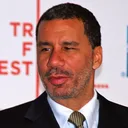
The Democratic Party Needs to Return to the Center
David Paterson Former Governor of New York
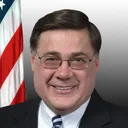
Celebrating America's Heritage and Suffolk County's Future
Ed Romaine Suffolk County Executive

New Jersey's America 250 Celebration and Voter Roll Concerns
Christine Hanlon Chair, New Jersey Republican Party
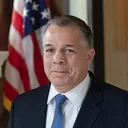
A Common-Sense Democratic Vision for Law and Order
Lou Raptakis Rhode Island State Senator

Geopolitical Challenges in the Middle East and Asia
General Blaine Holt Brigadier General USAF (Ret.)

Chasing the American Dream in New York
Dick Grasso Former Chairman & CEO, New York Stock Exchange

Joining 77 WABC to Discuss News, Politics and the Trump Presidency
Michael Cohen Former Attorney to President Trump & 77 WABC Host
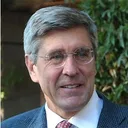
President Trump's Trade Strategy Is Reshaping North America
Steve Moore Economist; Co-Founder, Committee to Unleash Prosperity

Renegotiating USMCA and the Challenges Facing North America
Pamela Falk Foreign Affairs Analyst & U.N. Correspondent
NYC's $125 Billion Budget Faces Long-Term Risks
Andrew Rein President, Citizens Budget Commission
NYPD is Facing Staffing Crisis as NYC Refuses to Hire More Officers
Vincent Vallelong President, Sergeants Benevolent Association

Apple's Future Under New Leadership and the iPhone 17
Daniel Shaffer President & CEO, Shaffer Asset Management

The Greek Revolution's Influence on American History
Louis Katsos President, EMBCA & Construction Executive

Expanding Medicare Access to Weight Loss Medications
Dr. Mason Pimsler Geriatrician, Lincoln Medical Center


How to Prevent Heat Stroke and Stay Safe in Extreme Heat
Dr. Peter Michalos WABC Medical Expert
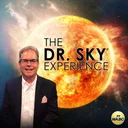
Understanding Solar Storms, GPS Disruptions and Deep Space
Steve Kates Space and astronomy broadcaster (Dr. Sky)

KIDS Act Must Include Protections for Children
Lynn Shaw Founder of Lynn's Warriors
Wall Street Hits Records Amid Economic and Business Shifts
John Terrett WABC Financial Analyst
Michael Stoler
The Stoler Report with Michael Stoler: David Schechtman
Michael Stoler Real Estate Expert
The Stoler Report with Michael Stoler: Eli Weiss and Andrew Albstein
Michael Stoler Real Estate Expert
The Stoler Report with Michael Stoler: Eli Weiss and Andrew Albstein
Michael Stoler Real Estate Expert
