


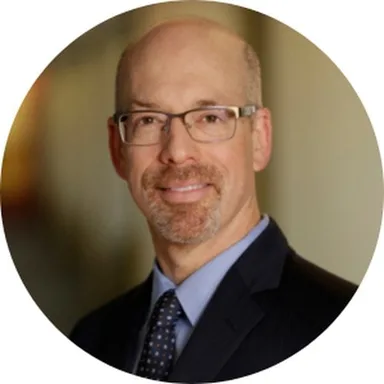
Andrew Rein President, Citizens Budget Commission
NYC's $125 Billion Budget Faces Long-Term Risks
Transcript
Automated transcript · uncorrectedWell, fourth of July weekend, two hundred and fifty years. Let’s go to New York City Andrew Ryan. Andrew Ryan is the president of the citizens Budget Commission. And there’s a rumor that we have a mess in our hands.
But I’m gonna let Andrew Ryan to tell us how the budget is. I get the budget was supposedly signed off and we’re ready to go, but everybody’s yelling at everybody. And well, Andrew Ryan, president of the City Budget Commission, tell us what’s going on.
Okay, So the mayor and the Speaker came to agreement, as they do every year, and they agreed to a balance budget. But let’s kind of peel away what happened. Let’s just spend back to January for a second. The mayor spoke the truth. He told everyone clearly the city has a huge structural budget problem, and then he went
to attack it and closed up budget up and now he did some good things. He appointed these chief Savings Officers that went into each agency and he’s found some savings and that’s the right approach, and frankly needs to do much more of that. But the reality is, we have a huge structural budget problem and the budget agreement.
The one hundred and twenty five billion dollar budget agreement does not solve that budget problem. Next year is balanced, We shouldn’t be under any we shouldn’t leave anybody the wrong impression. Next year is bounced. But the way he closed that budget gap was with five billion dollars in one shots, short term savings and shifting costs his future taxpayers.
And when you use a one shot, that’s just the patch, that’s one time money. It leads the hole to the open next year. So he’s left the city next year himself as mayor with a gaping hole next year of six point four billion and increasing fiscal stress in the years after that budget gap goes up to eight point
five billion. But that’s actually what we see on paper. It doesn’t include the next round of raises for city employees, and it does include his very ambitious agenda. Remember, he wants to fund universal childcare, it’s not in the budget yet.
He wants to fund three buses in the budget yet, so there’s more money that he wants to spend. So we’ve got a problem right as it is, and it grows over time.
Understood, Now, is the problem in any particular spot.
You know, you can look at it in specific places and overall overall and let’s just spend back. We have for the last decade layered on more and more programs into the city. And some of these are good programs, but we haven’t had any of the discipline. And frankly, when revenues are coming in hand over fist and we
get a lot of federal and state aid, you know, during COVID, money is layered on programs are without any serious effort to say, hey, what are we doing that we shouldn’t be doing, what’s actually not helping New Yorkers?
How are we running more efficiently? We haven’t had a serious effort to ask or deal with any of those questions. So we have an overall problem that we’re just spending more than we take in. Then you look at specific choices.
Our school system has you know, shrunk around one hundred and fifty thousand students over the last ten years, and while charter schools have gone up around sixty thousand. But as we’ve reduced as enrollment declines, we’ve been holding individual schools harmless and we give them the same amount of money, which makes no sense. We now have two hundred schools
with under two hundred kids. So we are spending literally four hundred million dollars a year to give schools the same money that they used to get when they had more students. That money is not well spent.
Understood now, is it over? Is the budget closed or is there a system to go back and try to make adjustments.
Well, the way the city budget works, just structurally is every quarter there is an update, so we get to see how things are going, how the revenues are going, how the spending is going, and then the budget is locked and adopted for this year. We might see some adjustments because listen, we got to watch the economy. If
it’s good, we’ll have more money and we need that. Quite frankly, that’s good for everyone. But if there is some slowdown or adjustment, we need to deal with that. But the issue is the effort to save money to increase efficiency can never be over. And for his credit, the mayor said no and the first step and your mayor,
i heard him last night on TV say no, we need to continue with the chief Savings officers identifying savings. The reality is they’ve identified a billion dollars of savings each year in the future. But that should double, that should triple. In two years, that should quadruple, and that effort should not stop because we need an efficient government,
we mean a higher quality government. Part of what the problem in New York. It’s always going to be expensive. But if we’re not getting value for those dollars, that’s where it becomes a real problem for all different New Yorkers.
It’s not whether you’re rich, reports are you getting the value you need to have a city that is worth you staying here, and that effort has to continue.
Andrew Ryan, President of the Citizens Budget Commission, thank you for bringing all New Yorkers up to date because how New York City goes is how the whole region goes. And have a happy for in the happy two hundred and fifty years.
Thank you so much, Thank you so much for having me
Sunday, July 5, 2026
Strengthening Middle East Alliances While Confronting Iran's Regional Influence
Mike Huckabee U.S. Ambassador to Israel
Calling for Political Moderation and Government Accountability
Joe Manchin Former U.S. Senator from West Virginia
Celebrating Independence Day and Wyoming's American Heritage
Harriet Hageman U.S. Representative from Wyoming; nominee for U.S. Senate
An America First Strategy for Global Security and Foreign Policy
Dylan Johnson Assistant Secretary of State for Global Public Affairs
The White House's Vision for America's Economic Future
Kush Desai Assistant Director of National Intelligence–designate for Strategic Communications; Former White House Senior Deputy Press Secretary
The Democratic Party Needs to Return to the Center
David Paterson Former Governor of New York

Celebrating America's Heritage and Suffolk County's Future
Ed Romaine Suffolk County Executive

New Jersey's America 250 Celebration and Voter Roll Concerns
Christine Hanlon Chair, New Jersey Republican Party
A Common-Sense Democratic Vision for Law and Order
Lou Raptakis Rhode Island State Senator

Geopolitical Challenges in the Middle East and Asia
General Blaine Holt Brigadier General USAF (Ret.)

Chasing the American Dream in New York
Dick Grasso Former Chairman & CEO, New York Stock Exchange

Joining 77 WABC to Discuss News, Politics and the Trump Presidency
Michael Cohen Former Attorney to President Trump & 77 WABC Host
President Trump's Trade Strategy Is Reshaping North America
Steve Moore Economist; Co-Founder, Committee to Unleash Prosperity

Renegotiating USMCA and the Challenges Facing North America
Pamela Falk Foreign Affairs Analyst & U.N. Correspondent
NYPD is Facing Staffing Crisis as NYC Refuses to Hire More Officers
Vincent Vallelong President, Sergeants Benevolent Association

Apple's Future Under New Leadership and the iPhone 17
Daniel Shaffer President & CEO, Shaffer Asset Management

The Greek Revolution's Influence on American History
Louis Katsos President, EMBCA & Construction Executive

Expanding Medicare Access to Weight Loss Medications
Dr. Mason Pimsler Geriatrician, Lincoln Medical Center


How to Prevent Heat Stroke and Stay Safe in Extreme Heat
Dr. Peter Michalos WABC Medical Expert

Understanding Solar Storms, GPS Disruptions and Deep Space
Steve Kates Space and astronomy broadcaster (Dr. Sky)

KIDS Act Must Include Protections for Children
Lynn Shaw Founder of Lynn's Warriors

Wall Street Hits Records Amid Economic and Business Shifts
John Terrett WABC Financial Analyst
Andrew Rein

NYC Fiscal Crisis Is Driven by Overspending
Andrew Rein President, Citizens Budget Commission
