


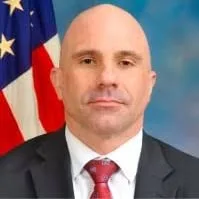
Christopher Raia Deputy Director, FBI
Progress on Combatting Crime, Cartels and National Security Threats
Transcript
Automated transcript · uncorrectedSunday morning, what’s going on in Washington, what’s going on in the FBI? Well with us today is Christopher Rare. And he was in New York for a year. We got to know him real well. He was the assistant director in charge of New York and Director Cash Purtell promoted him. And now he’s in Washington. He’s not a
deputy director of the entire FBI for the whole country. Well, congratulations, Christopher.
Well, thanks Sean. I really appreciate it.
And although this has been this has been an awesome job so far, extremely busy. We’ve been able accomplish a lot of things in the last three or four months.
I’ve been up here.
I miss New York dearly. So it’s a pleasure to be back on your show again. And it takes me back to when I was when I was in New York City with you guys.
Well, I guess President Trump wants to make the FBI great again. And I mean, you guys are the premiere law enforcement agency of the world, and you know and tell us the biggest difference. You had a great experience in New York before that, you were I think Houston before that, and now you have the whole country. Let’s
start with a category about drugs. Can we ever make America drug free?
You know, I think that’s a that’s a pretty lawfully lofty goal, John, to make it drug free, obviously, that’s the ultimate goal, as lofty as it is. But we’ve really done some things between the Homeland Security Council the Administration, we’ve really done some things to really keep us ahead of the game when it comes to that. And I
think the biggest thing that we’ve instituted is what we’re calling our new Homeland Security Task Force. So we started we started that this past summer.
We implement it now.
That’s a task force that’s co led by the FBI and HSI, and that specifically focuses on our drug cartels, are narcotics traffickers not only here in the United States, but also those those narcotics traffickers and those drug cartels overseas and Mexico and elsewhere. And it’s really a whole of government approach. It’s not just the US government law
enforcement agencies. It’s also our intelligence agencies. It’s also assets of the Department of War, where we are going to do everything we can in order to stop the I lista flow of narcotics, narcotics to the United States. I know you’ve seen it on TV. What’s going on overseas outside of the FBI in that fight, what we’re doing
here in that fight, We’ve done a we’ve done a surge recently on all what we call the plazas, which are which are these areas on the on either side of the of the Mexican US border that are controlled by the drug cartels. We’ve really dumped a lot of resources into there. We’re making hundreds of arrests right now
and making our country safer, trying to get to that zero percent drug no drugs in the United States. Obviously, that’s a lofty goal. We’re not there yet, but we’re going to try our hardest to get there.
Well, I mean, that’s my dream, because there’s a few countries out there with that reputation of no drugs. But it’s hot. It’s hot. Tell us what other categories is the FBI? Drugs is a big item. What other categories is the FBI working on?
Yeah, And we talked about this a lot last year, and we didn’t have enough data yet to really talk how effective we’ve been. But really one of the things the Director did the last fifteen months in conjunction with the administration is really put an emphasis on violent crime.
So we have pushed a lot of resources the last fifteen months into that space. It’s one of the Director’s priorities crushing violent crime, and we’ve done surges across the country some of these crime ridden cities, for example, Memphis.
We’re in Saint Louis right now. We’ve done Montgomery, Alabama. We’ve done New Orleans, We’ve done St. Lewis, and we’re really going into those cities. We’re doing big surges against violent crime, working with our state, local and other federal partners in there, and we’ve been very successful, I’m happy to say, in the last fifteen months in lowering the
violent crime rate down twenty percent to include the murder rate. And I think New York It’s been a while since I’ve been there, but I think just Tish would also say the same. I think they’re a microcosm of obviously the country here and Justish would say the same thing.
As far as as far as lowering the violent crime rate, I think last number I remember is right around twenty percent for murder rate in New York. As well, so we’re having a lot of wins in that space. We’re going to continue to crush violent crime, and we’re going to continue to drive that violent crime down, and we’re
going to continue to make Americans safer again.
Now, Washington, d C. What Janine Perro is and what President Trump did there, I mean, crimes come down substantially there. And I believe that they send people to Memphis. How many cit you in right now where President Trump is sending reinforcements to bring down that crime?
Yeah, right now, my count I’ve got Washington that we’re currently and we’re in Washington, d C.
Like you mentioned, and.
Obviously these stats there and the results speak for themselves. That’s going to continue, uh, indefinitely. For now, we’re in Memphis, and we have been in Memphis for really almost the entire the entire time the director’s been in charge here.
We’ve been to New Orleans, we’ve left New Orleans. We’ve been to Montgomery, Alabama. We’ve left Montgomery, Alabama. We are currently in Saint Louis right now, and I think we are also going we have a couple other cities on Tapa.
Just the names are escaping me right now. But We’re going to continue. We’ve seen this model work from city to city and the crime rate and the violent crime rates start to go down. So we’re going to continue to take the model that we’ve done in these cities, apply it to these other cities and continued that violent
crime rate down.
Christopher, how many mayors say thank you? And how many mayors say, why we don’t? You know? I mean, you’re still giving us trouble?
You know, that’s that’s a hard question.
I can tell you every city that we’ve been in so far, the partnerships there have been phenomenal. Everybody has been very grateful, and I don’t know how you could not be grateful, quite honestly, when you’re seeing your violent crime rate, your violent crime.
Rate drop like that understood, we talked about drugs, we talked about violent crimes. Now, by the way, you did have on Friday. On Thursday afternoon, you did have a press conference with Janine Piro on the major case.
Yeah, that’s correct, And this is something that we’ve really started to put a priority on in the last you know, really in the.
Last few months.
There’s so much of the attention this first fifteen months has been on violent crime. Which has been great, and I just talked about those stats. But really what we’re starting to surge now is we’re starting to start some of our some of our fraud UH responsibilities that we have, and so we started what we’re calling a DOJ Scam
Center Strike Force, which basically combines the power, reach, and resources of US Attorney’s Office, Department of Justice, the FBI, and the Secret Service essentially to crack down and disrupt these call centers, these scam centers.
I know you’ve had them. I’ve had them.
You know, the the the text or the phone calls where say, uh, somebody posing as an NYP, the officer says, you know you need to you need to pay this amount of money otherwise you’re going to be arrested. There’s a warrant out for your arrest. And and that those calls nine times out of ten perpetrate from from call centers,
these these massive call centers overseas, overseas UH, and they really target one of our most vulnerable demographic populations, and that’s elderly citizens. And you know, we over last over the last year, we’ve had almost two hundred thousand complaints file by the over sixty eight group reporting losses in over seven point seven billion.
Bow wow. It’s an issue. It’s going to continue to be an issue, and we’re.
Working really hard in order to shut these scam centers down and and help protect our American citizens.
I know I got scammed last year when you were here for about sixty thousand dollars, but I was just being stupid. I’m a lot smarter than now maybe, And.
You know, you know, John, that’s the key, right is education. Yea.
We’re not going to rest our way out as problem. The key is education.
And so we’re going to take these these big, these big, massive takedowns that we do, and we’re going to capitalize them and continue to educate our public, particularly our our vulnerable population like the elderly.
One additional, very important fact is the Iranians. You know, I used that President Trump has terrorized the terrorists now, but the terrorists are saying it. They’ve unleashed their crews in the United States and had a few people nervous.
And I guess that’s the FBI. It’sun New York in jurisdiction, isn’t it.
Yeah, Yeah, that’s crazy.
I mean, look, this isn’t anything new, John, for the Iranians. Look, we have been dealing with lethal plotting. We’ve been dealing with targeting of dissidents for several years, as early as back as twenty ten, two thousand and nine. I think that’s going to continue. We’re going to continue to work that lethal plotting throughout it. I mean, this is this
has been out there in the media, even in New York. This has touched New York as I’m sure you’re tracking. We’ve had we’ve had we worked to disrupt anyone trying to raise to try a way to try to cause violence here. So that’s our job and the Iranians are no exception to that. And so we’ve had two massive takedowns,
really two takedowns in New York City in the last two or three years, targeting the dissident Macia Elena Shad, which was which was orchestrated by by the government government of Iran. And then of course we had another takedown of another group that was going after senior level officials in the United States government that was also orchestrated by
by the government ran. That is going to continue. That was before that happened before the war. That’s going to continue during the war. And I’m sure that’s going to continue after the war. So we continue to remain vigilant on that we continue to get disruptions in that we continue to do what we do best and mitigate those threats.
Understood, Is there anything else you want to tell the American people? Have we missed the category? I mean we have another minute or two left. Uh, I mean we talked about drugs, we talked about major crimes, we talked about the phone scamming that Jennine Piro has worked on with you guys. Uh, what other category have we missed?
Yeah?
I think I think the other thing I might talk about is the other thing which we really get is our cyber efforts. Right. You know, we we do a lot in that cyber space, not only internally in the FBI, but with our other agencies but also the private sector.
And you know, we’re we’re taking the fight to the adversaries who target the digital infrastructure. We’re seeing a little bit a little bit that with Iran right now, but we’re also seeing it with other other other countries that have the tools to paralyze our school systems, police departments, health care facilities, et cetera.
So, you know, the the The tricky.
Thing with the cyber the cyber threat is there’s really no bright line where the cyber criminal activity ends and the nation state activity starts. So you know, we have a unique perspective on that that that few others have.
And so what what our what our cyber a d has started is he started something called Operation winter Shield. And what that does, that’s really an education platform that our Cyber Division pushes out to the private sector where he shared where we share the top ten controls organizations, the top ten controls that organizations can implement, and really
again raising that awareness peace in order to not only protect them for potential cyber crimes, but also but also build that partnership so god forbid a cybercrime does happen, there’s enough trust built between our agency and the private sector in order to in order to limit the damage and help us with our investigation going forward.
Well, Christopher Ray, Deputy Director of the entire FBI, thank you for coming on this Sunday morning, and we’d love to talk to you again in the near future to give us updates because the American people, well, they love the FBI. They want to feel they want to feel safe, and we want the best for our country.
John, I can’t agree with you more. And then I can’t thank you enough for having me on again anytime you need me. I’m happy to talk about the great work and highlight the great work that the f by I does, not only in New York but around the country.
So thank you, well, thank you, have a great rest of the weekend, and thank you for everything you’ve done in your career. And and God bless America. God blessed President Trump for for for for reinforcing you know, safety in America.
Thanks John,
Sunday, April 26, 2026
GOP Agenda is Focused on Inflation, Energy, and Government Efficiency
Steve Scalise House Majority Leader
New Federal Tactics Target Cartels
Frank Tarentino DEA Associate Chief of Operations, Northeast Region
Protests and Rhetoric Could Drive Investment Away From New York
David Paterson Former Governor of New York
Sen. Murphy's Actions and National Loyalty
Benjamin Proto Chairman, Connecticut Republican Party

Transit Planning Failures Ahead of World Cup
Christine Hanlon Chair, New Jersey Republican Party
Tax Hikes Could Drive Away NYC's Top Taxpayers
Steve Fulop President & CEO, Partnership for NYC

Mamdani Faces Veto Fight and Fiscal Strain
Craig McCarthy City Hall Bureau Chief, New York Post
NYC Fiscal Crisis Is Driven by Overspending
Andrew Rein President, Citizens Budget Commission
Explosives Discovery on Long Island Raises Broader Security Concerns
Jake Novak Political & Economic Analyst, CNBC Columnist
Greek Independence Parade Celebrates Shared History With America
Louis Katsos President, EMBCA & Construction Executive

Historic Reenactment to Honor Washington's First Inauguration
Joni Bryan Founder, 917 Society

Artemis IV Targets Astronaut Return to Moon by 2028
Dr. Weiping Yu NASA Physicist & Spacecraft Subsystem Manager
The Stoler Report with Michael Stoler: Chris Bradicich
Michael Stoler Real Estate Expert


Incoming Fireballs, a Super El Niño and the Power of Our Sun
Steve Kates Space and astronomy broadcaster (Dr. Sky)

Demonstrations on Capitol Hill Showcase Demand for Child Safety Legislation
Lynn Shaw Founder of Lynn's Warriors
Wall Street Faces Volatility as AI Investments Reshape Markets
John Terrett WABC Financial Analyst
Christopher Raia
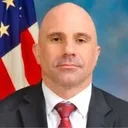
Inside the Bureau's Largest Security Operation Ever
Christopher Raia Deputy Director, FBI
Appointed as Assistant Director in charge of the FBI NY Office.
Christopher Raia Deputy Director, FBI
