


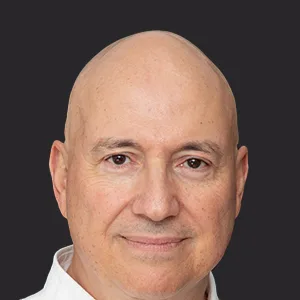
Dr. Peter Michalos WABC Medical Expert
Hidden Dangers of Microplastics and How to Avoid Them
Transcript
Automated transcript · uncorrectedSunday morning with us well live wrong in prosper We got doctor Peter Michalos. Well, what are we doing today, Peter to make us live longer?
Well, today, John, we’re going to talk about a very interesting topic. That’s something brand new introduced into the human species the last hundred years, and that’s microplastics. And you and I have been warning and talking about this for the past few years, but this week the Environmental Protecting Agency has made several announcements and talking about the importance
and the complications and problems with microplastics. And they were actually found in a study at NYU in twenty twenty six, they found that nine out of the ten tumors that they had of prostate cancer had microplastics in them. In addition, they found them in breast and brain tumors as well.
And a lot of different toxins not only get through directly but also indirectly. For example, some toxics like microplastings and microplastics, and even moltoxins like aflotoxins. When animal feed, animals eat their feet, it has it in it and the animal takes it, and then we eat that milk or that cheese and it ends up in our system.
The problem with these micro nanoplastics we’re finding out is that they actually have been found, for example, in kidney disease, that they plug up the filtering process of the kidney and can affect someone’s creatinin and glomerula filtration rate. So it’s like a vacuum cleaner bag, but it’s not easy to clean out a kidney once it gets damaged by microplastics.
The other problem isn’t something I actually I coined a new word and I call it micro and nanosludge found in small capillaries and circulations. That think about it that the bloods we have sixty thousand miles of highway of blood vein arteries and capillaries, but when it goes to the end capillary, they’re tiny, Just one red blood cell
at a time gets through. But some of these microplastics get into these things and they probably cause these micro ischemia or lack of blood that float to certain parts of the body like the legs, the arms, the feet, wherever the smallest vessels are. In addition, everything gets recollected in the lymphatic system, so it’s probably getting into the lymphodes.
And they’ve even found them inside regional lymphanodes. So all this generates inflammation. Inflammation generates hormone disruption and potentially cancer. So it’s it’s a real problem. Now, how do we reduce it? Certain seafood, for example, shrimp has been found to have a lot of microplastic oysters, muscles, clams, and other selfish because there are.
A lot of mycoplastics.
And shrimp, yeah, because they are filter feeders. So they’ve been finding a lot in shrimp, oysters, muscles, clams, and other shellfish, and they filter large volumes of water, so they accumulate plastics in their tissue. Shrimp in particular have been identified with some of the highest counts of my microplastics per servings. And certain fruits and vegetables especially they
found in the root. Vegetables like carrots and some apples absorb microplastics from contaminated soil and irrigation water. And the other one that they found it in measurably was rice. So of course we talked about bottled water, you know that’s sitting out in the heat. It’s better to have a bottle water. But they even found that the plastic
rubberized caps on the glass bottles even has some microplastics, so they are there. We need to try to avoid those things, like the styrene cups and the heated plastics. Like those plastics that they get food on, you better have.
It’s better to have the paper packages instead of the plastics ones. Never put them in the microwave because then all the microplastics leach. And also having air purifiers because it can enter through the air. We talked about the carbon filters, changing them in your car twice a year.
In your bedroom, it’s good to have a hepafilter to suck in a lot of these microplastics that get into our lung and even through our shower water. Having a whole house water filter helps and I even recently purchased a tabletop water filter that is actually made out of glass, which I think might be a better way. So I
give even my bottle water, I filter it through into this glass container to take any potential microplastics that might be in the plastic bottles. But this is becoming a problem. Brian Johns after Peter, At.
What point are people going to think.
We’re crazy, Well, we’re not crazy, because they’re finding out and they’re finding it in tumors that generates inflammation. It’s an abnormal thing. It’s like a dirty vacuum cleaner bag. We’re not crazy, Listen, there’s no perfect way, but they found the teaspoon equivalent of plastics in people’s brains. So it’s a real issue and that’s why now we’re hearing
all these announcements. And if you want to learn more about it, I wrote an entire book chapter on microplastics because it’s such an important topic in our new book coming out, The Death of Aging, and more information on it on our at Death of Aging because it’s such an important topic. And continue listening to WABC to hear
more interesting and fascinating things. Because we’re a big bag of chemicals and we’re affected by our environment. We’ve got to protect the earth, keep the earth clean, our water clean, our food clean. And keep listening to WABC for more healthy living tips.
Well, doctor Peter Mirelos, thank you for keeping our listeners live longer. And I just don’t know anymore. There’s so many things that we have to worry about. It looks like our technology has driven us to other problems.
Yes, our technology is ahead of our biology, but thank god we have the cats around table to learn about all these cutting edge facts and science to keep us healthier.
Thank you so much, and we’ll catch up a game real soon.
Thank you, John,
Sunday, April 26, 2026

GOP Agenda is Focused on Inflation, Energy, and Government Efficiency
Steve Scalise House Majority Leader

Progress on Combatting Crime, Cartels and National Security Threats
Christopher Raia Deputy Director, FBI


New Federal Tactics Target Cartels
Frank Tarentino DEA Associate Chief of Operations, Northeast Region

Protests and Rhetoric Could Drive Investment Away From New York
David Paterson Former Governor of New York

Sen. Murphy's Actions and National Loyalty
Benjamin Proto Chairman, Connecticut Republican Party

Transit Planning Failures Ahead of World Cup
Christine Hanlon Chair, New Jersey Republican Party

Tax Hikes Could Drive Away NYC's Top Taxpayers
Steve Fulop President & CEO, Partnership for NYC

Mamdani Faces Veto Fight and Fiscal Strain
Craig McCarthy City Hall Bureau Chief, New York Post

NYC Fiscal Crisis Is Driven by Overspending
Andrew Rein President, Citizens Budget Commission

Explosives Discovery on Long Island Raises Broader Security Concerns
Jake Novak Political & Economic Analyst, CNBC Columnist


Greek Independence Parade Celebrates Shared History With America
Louis Katsos President, EMBCA & Construction Executive

Historic Reenactment to Honor Washington's First Inauguration
Joni Bryan Founder, 917 Society

Artemis IV Targets Astronaut Return to Moon by 2028
Dr. Weiping Yu NASA Physicist & Spacecraft Subsystem Manager

The Stoler Report with Michael Stoler: Chris Bradicich
Michael Stoler Real Estate Expert

Incoming Fireballs, a Super El Niño and the Power of Our Sun
Steve Kates Space and astronomy broadcaster (Dr. Sky)

Demonstrations on Capitol Hill Showcase Demand for Child Safety Legislation
Lynn Shaw Founder of Lynn's Warriors

Wall Street Faces Volatility as AI Investments Reshape Markets
John Terrett WABC Financial Analyst
Dr. Peter Michalos
Advances in Lung Cancer Detection and Personalized Treatment
Dr. Peter Michalos WABC Medical Expert
Healthy Eating, Stronger Immunity and the Science of Living Longer
Dr. Peter Michalos WABC Medical Expert
Limiting Sugar and Choosing Whole Foods to Support Healthy Aging
Dr. Peter Michalos WABC Medical Expert
Protect Your Skin From UV Radiation and Reduce the Risk of Skin Cancer
Dr. Peter Michalos WABC Medical Expert
