


Transcript
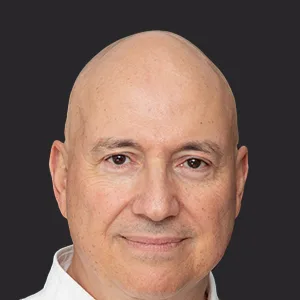
Automated transcript · uncorrectedWhat is today is doctor Peter Mihelos, one of the smartest guys I know, a historian, a medical person, just one smart guy, Doctor Peter. Welcome to Sunday morning. We’ve done so many things to try to help our friends.
What is today’s discussion going to be?
Well. We’re going to start off today by saying Shaanatova, Happy New Year to all our listeners who celebrate New Year’s this weekend. And today we’re going to talk about the number one cause of disability worldwide in eighteen to sixty four year olds. Happens to be back pain, especially lower back pain, and lower back pain has resulted in
many people not being able to work and generate income and take care of their families. And that’s a huge issue for work productivity in the United States and worldwide. And things like inflammatory conditions. You could have a metastatic tumor to the spine during pregnancy, your spine is being pulled forward, you have more back paint. You can have
trauma if you get hit by a car or someone and assault you and you get hit or kicked in the back. Osteoporosis where which means that the bones start getting more brittle and weak. You can have nerve root compression, where basically one of your discs pushes on the nerve endings and you get very bad pain. And as we age,
we get something called degenerative dis disease and we get a little shorter. Used to be six seven, now I’m six five, And that’s what happens does the age. And spinal stenosis is another thing that puts pressure on the spinal cord. And these are all issues that we have to be aware of. Well, what do you do when
you go to the doctor. Usually we get imaging and the doctor will order either X rays or an MRI, which is more like a thirty five millimeter camera showing details of if you have a disc pushing on your spinal cord causing your pain or numbness or weakness in the leg. But when we think of back pain, we
also have to think of other things. For example, some people women, especially get atypical presentations of heart attack. I recently had someone, a lady who had some back pain and some nasee. I told you really should go in and get checked out, and guess what, she was in the middle of a heart attack. So she didn’t have
the typical of front chest pain, So these are some of the things that we have to look at. And also aneurysms. If you have an aneurysm of thoracic aneurysm, that can also cause back pain as well as well as things like kidney stones. For those who’ve had back lower back pain with kidney stones, it’s a horrific pain
and it’s basically like having a piece of glass passing through your urinary system. So these are some of the things to watch out for and the imaging that it’s done. Always ask for a DISC when you go to get any tests, so that the doctor that you will see next will have a copy and that will help facilitate
things to something another way.
Get the disc of the MRI. SI could always get a second opinion, that’s very.
Important, absolutely, or even for the first opinion, sometimes they sent you to another specialist. So if you go to your primary care as the orders an MRI, you have the DISC and your next step is to see an orthopedist or a neurosurgeon or a neurologist. You have your disk in hand and when you go to the er
you also have the right when you leave you can say mad, please have a copy of any testing that was done, so you can physically take those copies with you, which I recommend to our listeners to have that actionable data.
Now, those kidney stones, those kidney stones. Is it the foods that you’re eating.
Yeah, there are foods like spinach, dark chocolate are associated with increased risk of something called calcium oxalate crystals. And when you do have a kidney stone, that’s why they tell you to use the strainer because if you can catch the kidney stone, it could be sent to the laboratory for analysis. And it’s very important to stay hydrated,
drink a lot of water to help avoid it and also to help pass.
Now, in other words, to keep things moving, keep things.
Moving, yep. Keep keep the flow, keep the plumbing moving along. And now there’s high tech technology with ultrasound where you can actually put this pad it’s like a gel pad right up against the kidney and you can shoot this sound wave of ultrasound and it actually breaks up and turns the little pebble kidney stone into little sandy, tiny
little pieces and they just flow out much more readily. And there’s also medicines that called alpha blockers, which can dilate our Eurotwords, which are the plumbing the tubes where these things exit and where you’re an exit, and that also helps facilitate it. But most people end up in the emergency room and need painkillers because it’s described as
like a horrible pain. It feels like you’re being stabbed in your back. So it’s in the differential diagnosis of back pain, and other treatments that are being used around the world are steroid injections to reduce the inflammation. Sometimes you need surgery to actually physically take the disc that’s pushing on your spinal cord away to help the back pain,
and you have to fuse the two bones because basically it’s like a lego set. It’s a stack of legos with a little rubber in between, and that rubber is our disc, and sometimes that actually has to be And then finally, now we’re wearing more out the use and stem cells are.
Back back problems, and you know with stem cells, you know, my wife had horrific back problems for two years and she’s so many doctors and she had stem cells. Finally she’s getting better. I mean, but I can’t believe the amount of people that have back problems. When you sit around at dinner table. Almost everybody has back problems.
Yeah, four million in the United States, which is a severe Imagine that it’s the number one cause of disability, work related disability in ages eighteen to sixty four and people over sixty five. It’s the fourth leading cause of disability.
And a lot of times people file with disability and they take a lot of painkillers. So these insurance companies go around videotaping these people, but what they’re not really seeing the real picture. They’re just masking the pain. They still have the problem, they still can’t any sustained work.
They still have medication side effect because that’s one of the problems. You have to take strong medicines that cause brain fog and memory issues and concentration issues. But they say, oh, you’re fine because they saw are you walking or taking out the garbage. But meanwhile you have to take two narcotics to get to that point. So it’s it’s a
very difficult thing, and these people suffer internally because on the outside they say, oh, you look great, But on the ends, only those people who are suffering from a disability know how much pain they’re in and how much difficulty they’re having. Each day, sitting, walking, standing for any for a long period of time, and they’re really not
capable of any sustained work.
Well, doctor Peter Michelos, thank you so much and God bless you, and thank you for all the people you help, and we’ll catch up again real soon.
Thanks for always getting the truth out on the Cats round Table.
Sunday, September 17, 2023
FerryHawks vs. Lancaster Barnstormers
Eric Shuffler Founding Partner, River Crossing Strategy Group

Money can not solve the migrant problem in New York.
Peter King Former U.S. Representative from New York

Every seat is up for election. A shift to the Right.
Bob Hugin Former Chairman, New Jersey Republican Party

New York will come back. Just give it time.
Bernadette Castro Former NYS Parks Commissioner
ESG banking may be illegal. Republican AG's letter.
Patrick Morrisey Governor of West Virginia

China and Taiwan are inching toward conflict.
Mike Gallagher Former Congressman and Palantir Head of Defense

Is the US Navy up to snuff?
Dr. William J. Parker III Retired U.S. Navy Captain; National Security Analyst


Interviews Brad Honigfeld Founder, Chairman & Co-CEO of The Briad Group
Michael Stoler Real Estate Expert
Dr. Peter Michalos

Limiting Sugar and Choosing Whole Foods to Support Healthy Aging
Dr. Peter Michalos WABC Medical Expert
Protect Your Skin From UV Radiation and Reduce the Risk of Skin Cancer
Dr. Peter Michalos WABC Medical Expert
Processed Foods and Mental Healthcare Failures Threaten Public Health
Dr. Peter Michalos WABC Medical Expert
