


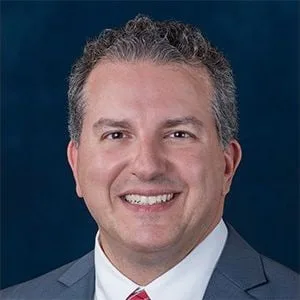
Jimmy Patronis U.S. Representative from Florida
Crackdown on lithium batteries. Fire starters.
Transcript
Automated transcript · uncorrectedWith this today is Jimmy Patroonis and he is the CFO of Florida. What does that mean. Not only the takes care of financial items, the fire department and the insurance department reports to him. And he is very very much concerned with lithium ion batteries. And he’s gonna tell us why. Mister patronis otherwise known as Jimmy, give us
an update of what’s going on with the lithium ion batteries and what’s going on in Florida.
Sure so, mister John, it’s a real concern. It’s a fantastic technology, from our telephones to our iPads to maybe even if we have an e bike at home. But now where you’re seeing it, where there’s a big concern is with the evs. This fantastic technology with a lot of unknown threats. We have seen our first responders have
their hands full trying to deal with fires they can’t put out. So you know, here recently in Florida, we’ve passed legislation and we’re going to force all of those stakeholders, whether you’re in the manufacturer business of recycled business, you know, or in the electronics business, you’re going to come together with us in Florida, and we’re going to push forward
and create the policies to help keep our consumer and our first responders safe.
And where is the most of the problems coming from with the lithium ion? Is it the bicycles? Is it the cars? Where is it?
So let’s take a snapshot of New York City last year alone. Now, granted, I think different markets have different challenges. I mean, you’ve got a city that you know, parkings of premium and you’ve got millions of people. But in twenty twenty three, New York City alone experienced two hundred and sixty eight fires caused by lithium ion batteries, leading
to one hundred and fifty injuries and eighteen fatalities. Again, five years ago, this city’t exists. But now as these things become more and more mainstream, part of market, shared, part of everyday transportation, there are real threats that exist with these devices, with this technology that we just can’t sit by and not address.
Got it? And I understand that Congress had to vote this week this week and it was I heard there was a bipodisan vote.
Yeah, so so in Congress, you’ve got to build It was actually a member of Congress out of New York who’s passed legislation out of the House. And you know, look, we hope the Senate will will start to at least look at it. And if this isn’t the version, camera out a version that works, because at the end of
the day, our first responders and our citizens, you know, they need to be aware of the dangers that exist with lithium ion batteries. You know, we saw we learned something from every single hurricane, and mister John, with Hurricane Ian, we had over twenty fires that were from evs that got submerged. I had a house on Cati Island, big
beautiful mansion on Captiva Island and captive battles cut off because the storm washed out the causeways. So the house survived. The first floor got flooded. But then what happened is a week later, because the EV got submerged with salt water, the EV then started fire all by itself and burned the house down. So again, this isn’t If it’s win,
it’s going to happen again. And if you live on the eastern seaboard, on the Gulf Coast of Florida, this is going to be a threat.
We must address what has to be done to lithium ion batteries to make them safer.
So again, this is exactly where we’re bringing all the stakeholders together. What we learned from Hurricane e En is coastal communities that are subject to saltwater flooding and evs don’t mix. And again, I don’t think the EV industry really realized the magnitude of the density of the population on the coast and a technology that has been incentivized
by the federal government by the tune of seventy five hundred dollars and tax savings. So I mean, you created this this windfall for people to buy an EV and they live on the coast, and the next thing you know, it’s time for a storm to hit and they don’t realize they’ve got something that that’s a ticking time now.
And then what we saw later after Hurricane Idellia. What I did appreciate is this was was a year after hurricane and at least the EV manufacturers sent out push notifications. They told their owners keep them away from the shore, take them the higher ground. Understand that if flooding takes place, you do not need to drive it. So, I mean,
this is a real threat. They realize they got a real threat, and we’re going to collaborate together to come up with some solutions.
I mean, I have told our people about electric cause and my concern about it, and I know you’re concerned about it. You got to stay it away. In other words, you got to keep it away from salt and water.
In the case of hurricane you leave it in. If you leave it in the garage in your home and something happens with salt water or touches the batteries, the whole house is going to burn down.
One hundred percent. And then if it’s in your garage and it gets salt water flooded, so you think about now the car is inoperable, so let’s take it and we’re gonna, you know, tow it out or drag it out. Well, look, those motors are just like generators. They’ve got what’s called regenerative breaking. So as you’re turning those electric motors, now
you’re putting a load back on the battery, which then in a lot of cases starts the chain reaction, the cascade effect that makes the battery catch fire. And mister John’s the batteries do not burn out. They literally have to take the car. You have to put it in a parking lot by itself, and you gotta let it
burn to the ground. This is not acceptable.
That is scary. So you know, I’m thinking that if you put them in the garage in a rush next to a building and there’s torrential rain, but the rain is is not salt water, right, it has to be.
Slid right, Yeah, so you’re yeah, the threats in salt water, you know, I mean true. I mean and this again, this is not a problem for Atlanta. This isn’t a problem for Kansas City or Dallas. But if you’re on the eastern seaboard and you can be subject to saltwater flooding or in the Gulf Coast, it is what it is.
You want to make sure that these vehicles are taken to higher ground. The other thing that I’m trying to press upon people is you know you’ve got Underwriters Laboratories. The little ul that you see on a lot of our electric devices. If you can look in but before you make a purchase, if you can see that Underwriter’s
Laboratory logo on it, that’s a good sign that you’re buying technology that has been fully vetted. You know, more and more as you get these Chinese made batteries that aren’t you know, tested as thoroughly as as some of the United State’s product. If it sounds too good to be true, it is in these cases. The cheaper it is,
the more likely you will have a battery that’s just not it’s gonna be substandard.
Well, Jimmy Patronis, thank you, and Florida is. I’m glad you guys keep your eyes open on things like that and hope to see you soon.
All right, appreciate come on down. We’re ready for you to come and spend full time in Florida.
Thank you so much. And Jimmy petronis the CFO of Florida, and thank you for keeping your eyes out for the consumer and the people of the state of Florida. And we’ll see you soon. Thank you.
Sunday, May 19, 2024
"Consumer and Small Business Protection Act", is not all that good for business.
Paul Zuber Executive Vice President, The Business Council of New York State

A World without leadership puts us all at risk.
Alfonse D'Amato Former U.S. Senator from New York

Biden challenge for Trump debates. Good idea for President Biden?
David Paterson Former Governor of New York
Gaza government post-war, and student unrest.
Ron Johnson U.S. Senator from Wisconsin
Biden has imposed more restrictions on Alaska than Iran.
Dan Sullivan U.S. Senator from Alaska
Holding up arms shipments is not good for Ukraine.
Admiral James Stavridis Former NATO Supreme Allied Commander Europe

Attended Trump trial…comment.
Mike Johnson Speaker of the U.S. House of Representatives

Interview with Andrew Wiener Head of Commercial Office Leasing The Feil Organization
Michael Stoler Real Estate Expert

Watch for the northern aurora.
Steve Kates Space and astronomy broadcaster (Dr. Sky)

Jimmy Patronis
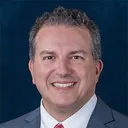
The Trump administration is incredibly responsive to constituent issues.
Jimmy Patronis U.S. Representative from Florida
Wet electric batteries exploding in Florida.
Jimmy Patronis U.S. Representative from Florida
Unprecedented destruction of hurricane Ian.
Jimmy Patronis U.S. Representative from Florida
