



Michael Stoler Real Estate Expert
Interview with Andrew Wiener Head of Commercial Office Leasing The Feil Organization
Transcript
Automated transcript · uncorrectedGood morning. This is Michael Stoler for the Stolar Real Estate Report on the CATS round Table today. I have the head of leasing at the seventy five year old File Organization, the company that owns and operates more than twenty five billion square feet of space, of which at least fifty percent is in the office space business. Andrew,
thank you very much for coming today.
Thank you so much for having me.
So, what’s what’s really happening on as a landlord owner on buildings today? Is it getting better for the landlord or as opposed for the tenant?
So I think the leasing market is slowly getting better. I think brokers and anybody in the real estate business has to be an optimist to be in this business. So we’re always glass half full people.
But after COVID you’re a quarter class exactly.
And I think the last call it really six months. You started to see some volume. In early twenty three. You’re seeing the call it ten to fifty thousand tenant leading this market. You’re still missing the big transactions one hundred thousand feet to five hundred thousand feet. Those are the market movers. But there’s real activity and there’s a pulse.
And if you live in the city or spend your time in the city. You can’t get a reservation at dinner. The streets are full, the hotels are full, and people are now back in the office pretty much full time.
So the activity is getting better, but we’re not out of the woods. But I will say I think the bottom is in pricing wise on the leasing side and getting better slowly. Valuation’s certainly a different issue.
You own some class buildings, you know four eighty eight Madison Avenue, five point fifty one, Fifth Avenue seven pen Let’s talk about what’s happening in those type of buildings, especially what you did at four eighty eight Madison Avenue.
So the FILE portfolio generally class and we’re looking at ways to make them B plus or a minus. And so forty eight Madison was a really unique asset, been with the family for almost fifty years. And when I came to File about almost two years ago, to be July two years we looked at creating a building within
a building opportunity.
Explain to me and my audience what a building with the building?
Sure, so a building within a building concept is creating retail space as a entrance to then the office space above outside of the main lobby entrance, so that a tendant has branding, signage, security really end to end control of the user experience. And we looked at this location as a ten being on fifty first in Madison where
you can’t replicate that proximity to Grant Central, and because File had owned it for such a long period of time with low debt, we could meet the market. And I think that’s really been the key for us over the last year our leasing volume because we can actually lease and transact. And even though there’s a large availability
in the market, there are a handful of buildings that just have a hard time meeting the market. But at forty eight we created this concept of a building within a building from fifty first Street to the second floor and then the block of space was three through seven for about one hundred and fifty three thousand feet. We
put together a marketing deck, a video and circulated it to the market in One of the tenants we targeted was the Archdiocese in New York.
Who’s across the street. It’s great neighbor to have at St.
Pat’s Cathedral, so we reached out to them and Mary and Tye and Lauren Crowley and we were able to secure a tour from the tenant and we get an email about two weeks later from Marianne who said, please let the files know this is for real, And twelve months later we had a thirty year synthetic lease for
one hundred and fifty two thousand feet. The building is now ninety percent least for the foreseeable future.
Now explain why the synthetically is important. In the thirty years, so the.
Tenant effectively gets at tax savings on real estate. So from a gross basis, you would subtract the tax savings. You see hospitals, schools, any nonprofit for the most part take advantage of this and it effectively decreases their rent.
Could you do this in other buildings?
Yes, we have assets five seventy Lexington two fifty seven Park South buildings that we’ve owned for a long time that we can offer this structure on a block of space. It’s unique. You don’t see it often, but you do see nonprofits.
It’s only really for nonprofits.
Yeah, at five to seventy five Lexington Cornell took a block of space as well under the thirty years synthetically good.
Let’s talk about the market in general in Midtown, how do you see it?
I think Midtown is leading the market clearly. The new construction park Avenue that’s leading the headlines, as it should. You’re having a sub six percent vacancy for the new construction and high end product. I think last year twenty percent of deals were done over one hundred dollars a foot, which is really substantial, and tenants want to be in
close proximity to transit.
Right now, I think the Long Island Railroad coming into Grand Central has really improved the market. It’s a game changer.
So we’re seeing that at five five p one fifth, we’re seeing it at four eighty eight Madison at five seventy. You’re seeing it throughout Midtown, which is leading the market. But we’re still waiting for those big tenants. Obviously, the Citadel news earlier this week three point fifty park is a huge confidence.
Seven years from now.
Yes, But what I think a lot of tenants are focusing on, and especially from the ownership leasing side, is getting coverage from larger tenants. Those are the tenants that lead the market. So as an example, if JP Morgan is building their building and now Citadel is building theirs?
How are these other larger users going to compete with them? It makes them focus on longer term decisions. Since COVID, everything has been short term flexibility. I don’t know what’s happening two years from now, three years from now, let alone six months from now. I think there’s a little bit more foresight in what companies are going to look
like five ten years from now, and that helps make decisions.
What about Midtown South?
So Midtown South, we have a handful of assets there, two fifty seven Park Avenue South fifty two fifty one, We have eight forty one and eight to fifty through Broadway, along with two sixty one Fifth and also a building in West Chelsea. We’ve been very active sub thirty thousand feet.
I think the larger users one hundred thousand feet and above just a little foreign few between in that market. But we’re seeing rents anywhere from sixties to nineties. We just signed a lease on West twenty fifth Street in the low eighties to start, which is a fabulous rent.
We’re doing deals at eight forty one Broadway in the low seventies and on parks now sixties to nineties, depending on the floor.
And what about five five to one fifth?
Haven’t so five fint to one great lobby amazing the French Building, it’s a little bit more a commodity asset, you know, columns, lower ceilings, but the locations at ten. So we’re seeing deals there anywhere from low fifties to low seventies. We’ve been doing a big pre built program there with some terraces. We just signed a lease at
sixty five dollars a foot on the seventeenth floor. So there is a lot of activity. We’re seeing law firms, financial firms, mostly people who who want to come into Grand Central and then not have to take another subway.
So the activity has been increasing there a lot. We least just over one hundred thousand feet there last year.
Okay, question, what do you think of Lower Manhattan an area that the File organization has not really been involved with. It’s pretty amazing.
Files seventy five years old, twenty five million square feet nationally, and they don’t own a single asset downtown. I think they were right to avoid downtown all.
What’s happening in your views and your discussions with people.
So I spent a bit of my career downtown at one and two to two when I was at L and L and obviously two to two just traded will be commercial to residential conversion. It’s really tough. I think that you’ve got a thirty percent vacancy Water Street, which is hell and gone from somebody coming in from Penn
Station and Grand Central to then take the train down there and walk. You’re just going to see more residential conversion happening there. And I think there’s a unique opportunity because the office base from evaluation perspective, is fairly cheap, that you’re going to see a lot more conversion happening there.
There’s great product by Fulton Street transit Hub with one NI five Broadway, which was at and T’s Worlds headquarters. Fabulous building, the trade center in Brookfield Place. But the south of those markets is very challenged.
Let’s talk about the Garment Center, the buildings, you know between eighth and ninth Avenue from you know, thirtieth Street to forty first.
So obviously you had Hudson Yards that changed the market landscape for the better, you know, the foresight of Bloomberg and obviously related to do what they did there was extraordinary. Then it went to Manhattan West and you’re seeing all the new residential build up from there. And now Brenado is taking the lead on their port and you’re seeing
activity at rents probably unimaginable in Penn Plaza five years ago. You know, one Pen, I think is signing leases anywhere from eighties, nineties to triple digits. So that’s certainly extraordinary. And the garment center clearly needs to be rezoned. These mid block buildings that are six stories or fifty thousand feet, nobody’s going to lease them.
No, and they don’t work as a conversion. No, the city has to rezone.
You’re going to have to combine sites, knock them down and build more residential, which the city desperately needs. Hospitality, hotels, maybe some office component, but that certainly will be the next frontier. And we’ve positioned seven Pen to have a tailwind from everything Bornado is doing to Brookfield to then Hudson Yards. You’re seeing more tenants focus on that neighborhood
as the retail starts to come into play. And you know, I would say two years ago, three years ago, with the crime with COVID, it was a little bit of an issue on the streetscape because of the retails there.
You know, a lot of that issue is going away.
I’d like to thank Andrew Wina for being here today and I’ll see you next week.
Sunday, May 19, 2024
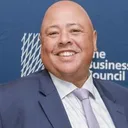
"Consumer and Small Business Protection Act", is not all that good for business.
Paul Zuber Executive Vice President, The Business Council of New York State

A World without leadership puts us all at risk.
Alfonse D'Amato Former U.S. Senator from New York
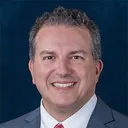
Crackdown on lithium batteries. Fire starters.
Jimmy Patronis U.S. Representative from Florida
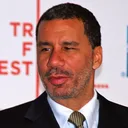
Biden challenge for Trump debates. Good idea for President Biden?
David Paterson Former Governor of New York
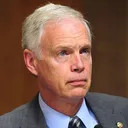
Gaza government post-war, and student unrest.
Ron Johnson U.S. Senator from Wisconsin

Biden has imposed more restrictions on Alaska than Iran.
Dan Sullivan U.S. Senator from Alaska

Holding up arms shipments is not good for Ukraine.
Admiral James Stavridis Former NATO Supreme Allied Commander Europe

Attended Trump trial…comment.
Mike Johnson Speaker of the U.S. House of Representatives

Watch for the northern aurora.
Steve Kates Space and astronomy broadcaster (Dr. Sky)

Michael Stoler

The Stoler Report with Michael Stoler: David Schechtman
Michael Stoler Real Estate Expert
The Stoler Report with Michael Stoler: Eli Weiss and Andrew Albstein
Michael Stoler Real Estate Expert
The Stoler Report with Michael Stoler: Eli Weiss and Andrew Albstein
Michael Stoler Real Estate Expert
