



Michael Stoler Real Estate Expert
Interviews Will Silverman, Managing Director, Eastdil Secured
Transcript
Automated transcript · uncorrectedGood morning. This is Mike Stola for the Stolar Real Estate Report on the CATS round Table today. I have an individual who’s very active in the market, very positive on the market. We’ll still say managing director at he’s still secure. Thanks for being here, Thanks for having me much so. As I was saying, is it happy days
again for real estate investment sales?
Well, it’s happier for some than for others, I’d say.
In terms who’s it happier for.
It’s happier for people who are buying right now, who are looking at what might be a generational opportunity to buy. It’s happier certainly for people in the transactional world because there are finally transactions happening at a much greater rate than they had been in the last couple of years, and so I think that’s where it’s happiest. I think
for existing owners and lenders who got caught in a combination of factors including rising base rates and interest rates, as well as other challenges due to post COVID world, it’s been less happy. But for everyone, we’re certainly in a better place now than we will or a year ago or two years ago.
Why do you believe that.
I think it’s a few things. I think the first thing that happened is, you know, I like to say that there’s no history book called Pendulums that swung just right. And so I think a lot of the negativity was taking babies out with the bathwater. And so let’s take the office market. For example. A lot of people said
I’m out on office completely, but then all of a sudden they started to look around and they started to say, hold on one second, I’m on the corner of forty second Street and sixth Avenue, and it’s three pm on Wednesday, and there’s thousands and thousands of people around who appear to have exited an office just now. So maybe what
I’m reading about the demise of the office market doesn’t impact every building equally, and so what’s returned to the market is a little bit more of a constructive attitude. Not around every office building, because for sure there are many that are going to have an enduring challenge, but the idea that there is such a thing as an
investable office market, the idea that the area around Grand Central is going to continue to perform well, the idea that certain locations in what we call Midtown South, which would be sort of the area of the city from about Chambers Street to about thirty fourth Street, that the prime corridors in that area are starting to perform, the
idea that those things can perform well, while at the same time there might be assets in markets that are underperforming. That nuance is something that has finally returned to the investor mentality and enabled transactions to start to happen.
Now, who’s investing. You were saying before we’ve met that the families are investing.
Yeah, we’re definitely seeing more private investment activity than we’ve seen probably in my career. And I think the reason for that is that whatever is the most compelling rationale for investing at a particular moment kind of drives the market.
So when the market is accelerating and rents are rising, a lot of institution buy because it’s very easy in those moments to make a financial model with projections that are all going high into the right because everything’s going well.
It’s the word projections.
Exactly, the projections, Whereas right now you’re certainly not going to have a financial model that’s going to show all the projections doing well. But your cost basis the simple price that you’re paying for the asset, the relative discount you’re getting versus peak value. When you start talking about those things, you’re speaking the language of families.
So what is the discount? How much of a discount are we seeing on office buildings today?
Oh, there are some. There are some that might only be down twenty or thirty percent because they’re in prime locations and are releasing very very well. And then there are others that are in less prime locations that are having a more challenge time that are down as much as seventy percent.
What about Lower Manhattan?
Lower Manhattan, You’re going to have a lot more in the latter category than the former category. You’ve got a lot of demand challenges there. And we’ve yet to see if can versions, which is kind of everyone’s favorite topic in Lower Manhattan, are going to be the sort of panacea for the market that people are hoping they will be.
But when we did the conversions many years ago, they had the four to twenty one geese, they had these other incentives, and they had prices that were under one hundred dollars a foot.
What wouldn’t shock me if the pricing isn’t that far off from there? Right? Now there are buildings that are under contract downtown for under one hundred and fifty dollars a foot, so we’re not especially inflation adjusted. We’re probably not that far from where we were in terms of cost basis versus the nineties. The rents are a lot
higher than they were because the good news for a conversion is that Lower Manhattan’s amenity base is certainly more interesting from a restaurant, nightlife, grocery perspective, all kinds of lifestyle.
And it was twenty years ago, for sure, not even close.
But the challenge is that twenty five years ago, the first time we did this, developers picked a lot of the low hanging fruit, so the buildings that truly lent themselves best for conversion were converted. So by definition, everything that you’re looking at to convert today is something that didn’t get converted the last time. This was kind of
the tough thing.
So do you think these buildings will be converted since they missed out twenty years ago?
I think many of them will. Here’s the issue. The challenge is is that the same things that make something a struggling office building might make it a struggling apartment building, and that’s buildings with large base floors, a lot of columns, low ceilings, and a tremendous distance from the window wall to what we call the core, the interior kind of
guts of the building, because you end up with extremely deep and inefficient apartments. You could end up with an apartment where it’s a one bedroom that’s nine hundred square feet to the market standard is probably closer to five hundred and seventy five square feet. And the worst part is is half of that nine hundred square feet is
just in a really long halway. And so so the challenges is how to adapt these buildings layout wise that they work. But I think the issue is is that you’ve got more than one hundred million square feet in Lower Manhattan. And even if we were to convert a large chunk of it, let’s say we converted fifteen million
square feet, which would be the size of many major American downtowns. Right, if we converted fifteen million square feet, that would be a massive undertaking, but would also barely make a dent in the inventory. That’s challenged. Let’s still a long road to go.
Let’s talk about retail. Hoan is buying property, you know, h and the other retailers what you thought about that.
So we were fortunate enough to work on two transactions with which f Sutton selling property to the retail owners, to Prada and to Caring. I think for the retailers, there’s two very specific reasons you’re seeing that. One is they can borrow against their own credit at a level that is several several percentage points cheaper than where you
could borrow for a mortgage if you had a lease subject to their credit. So they have a tremendous advantage as a buyer right now. And the second thing is related to that is a lot of these luxury goods are performing brilliantly right now right the inelasticity of demand that they enjoy and the way they can move prices.
My favorite facts about this are Chanelle doubled the price of their iconic flatbag in a three year period and the sales went up. And my other favorite one is that Rolls Royce shipped six times as many cars last year as they did fifteen years ago. So the demand for these luxury goods is virtually insatiable. And the reason
they’re buying these stores is they make tremendous capital investment into these stores because they’re effectively running two stores at once. The luxury guys on the grade level, they’re running a business where they’re selling not quite mass market, but they’re selling what i’d call birthday and anniversary resence to an upper middle class shopper. And then upstairs they’re creating these
spectacular amenities, restaurant features, and private viewing rooms, and that’s where they’re taking the million dollar family customer that’s in for overseas. But here’s the trick to it. The trick to it is when those amenity areas are not in use to make million dollar sales, they’re using them as a canvas for the creation of social media content that
is then being used to drive that first floor customer back to the same store. So that model is working, and you’re effectively running two stores side by side. But the issue is is you need a big store to do that because sometimes that upstairs customer doesn’t necessarily want to be rubbing shoulders with the downstairs customer. And you
also need to make a big capital investment to get the level of amenities they’re going to attract that upper floor customer. And if you’re going to be making that massive investment. You’d much rather it be on a property that you own rather than one that you lease, especially with an owner who knows in ten or fifteen years
exactly how much money you spent and how much you’re going to be willing to pay and rent to protect that investment.
One last question, what’s your thoughts about the sale of residential properties.
I’m sorry, I of apartment buildings.
Yes, apartment buildings.
So New York is actually having a moment relative to the rest of the country. For the last few years, a lot of attention was paid to markets like the Sun Belt, where they had a tremendous demand equation. New York continues to have a spectacular demand equation, but now everyone is finally remembering that the things that make New
York a challenging place to be sometimes, which include a somewhat obstinate regulatory framework, also served to constrain supply. And so we’re seeing a return of institutional investors looking at New York City on a relative basis, looking more attractive than a lot of other markets.
And what about families, family investors.
I think they’ve had the moment, but I would expect that they might get crowded out of the market by the institutions fast in the residential world than they will in the office world.
Okay, which investors are coming from foreign lands?
I think you’re going to see European investors probably.
Oh, we’re going to see what we saw before, you know, Japanese at times, German, other types.
I think Europeans are going to be constructive, especially on office earliest, largely because in Europe the return to office has been a lot stronger. So when you talk to Europeans who visit America, they’ll tell you that New York’s level of downtown activity and center city activity is more akin to what they’re seeing in Europe, Whereas when they
go to other major American cities and they see less activity, it’s less akin to what they’re seeing in their cities. So I think we’re going to see European activity here.
So I’m very happy. I have an investment sales executive who’s very positive on the market. And I’ll see you next week. Thank you, Bye bye.
Sunday, July 14, 2024
The general election has a lot of variables with Menendez & Kim.
NJ Sen. Candidate Curtis Bashaw

Biden has no choice but to stay in the race.
Alfonse D'Amato Former U.S. Senator from New York


Take me out to the ball game.
Eric Shuffler Founding Partner, River Crossing Strategy Group
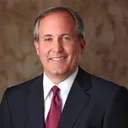
Texas border first in line for illegal migrants.
Ken Paxton Texas Attorney General; nominee for U.S. Senate



Future of Ukraine unclear with Trump.
Admiral James Stavridis Former NATO Supreme Allied Commander Europe

July sky events, next supermoon.
Steve Kates Space and astronomy broadcaster (Dr. Sky)

Michael Stoler

The Stoler Report with Michael Stoler: Eli Weiss and Andrew Albstein
Michael Stoler Real Estate Expert
The Stoler Report with Michael Stoler: Eli Weiss and Andrew Albstein
Michael Stoler Real Estate Expert
The Stoler Report with Michael Stoler: Robin Schneiderman
Michael Stoler Real Estate Expert
