


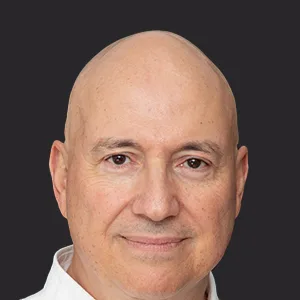
Transcript
Automated transcript · uncorrectedWhat is today is doctor Peter Mihlos, otherwise his motto live long and prosper and doctor Mihllos Sunday morning, what do you have in mind? Why do we going to live longer? In prosper.
Well, Happy Sunday to all our listeners. And today we’re going to talk about a topic that’s very much in the news, and that’s artificial intelligence, longevity and health. And basically, artificial intelligence is mimicking brain function but not replacing it, and it’s about what goes into the system and an artificial intelligence basically the computer program learns from the pile
of data and information that you put in and in healthcare would be your labs, your cat scans, your MRIs, your ultrasounds, and your pathology report and gather all that data and sift through it and then to help predict outcomes because it’ll help reduce some of the administrative burdens that doctors have right now, and it will help, for example,
to find diagnosis quickly, like right now they’re starting to use it in radiology, so if you’re having a cat scan in the er, some things have to be diagnosed quickly, so the machine when it’s taking the scan spots a pattern that’s consistent. For example, with a bleed in your head, which is a subdural hemorrhage, it’ll immediately notify the doctors
that probability says this is a subdural to get them to the operating to get some treatment. Or it’ll find an aneurysm fast that you can get treatment, or there’s one AI algorithm that’s already approved. Or pulmonary embolism that’s a plot that goes to the lungs, that comes up from your legs, So if the machine can pick it
up quickly and send an immediate alert, then you can immediately do inter eventual radiology where you can pull the clot out or give people blood thinners right away. So it is going to help a lot. The other place where it’s going to help in medicine is gene analysis, and I was recently talking one of the leading periodontists
and gum disease specialist, doctor Adam Bayer, and we were talking about how the microbiome in the mouth affects gum disease and even affects your heart disease. So imagine in the future how you will get your mouth swabed and it’ll be an analysis of which microbes are in the mouth, and the AI will analyze them and they’ll make predictions.
And they found that, for example, certain types of bacteria in your mouth increase your risk of gum disease. You might have an increased risk for example, there’s a pattern that you’ll find that’s consistent with pancreatic cancer, even stomach cancer.
And there’s the even AI that’s going to analyze new machines that are doing breath analysis now and they will analyze and predict things like sepsis infection and even possibly COVID in the future. And there even might be machines that will be able to screen for people who are driving with marijuana because right now there’s no test, so
you’ll be able to breathe in machine and the a I will analyze the pattern and give an assessment of what it is. And it’s already being used, like I said, in medical imaging, but in EKGs. When you get an EKG, most of those machines now have machine learning and they tell you is this a true fibrillation, is this a
rapid harpy harpy? So that is being used also drug discovery. It takes fourteen years and up to a billion dollars, and only five percent of medicines make it to the market. And that’s why medicines cost so much in this country because everyone waits for the US to produce it. And AI is going to scour data and predict which medicines
might be able to help certain conditions faster. And it’s already being used by some pharmacies to spot drug interactions. If they see you’re on two or three meds, the AI program scours through your medicine list and will tell you maybe you shouldn’t be taking that medicine because it might interact with another medicine and with cancer treatment. That
is going to be in the future when they do a biopsy of your care answer, it’s going to get analyzed and the AI is going to look at that cancer and then we’ll make predictions on which drugs might be which of the cancer drugs might be better for your particular type of cancer. So these are amazing things
that are happening in medicine and AI. Again, it’s not going to replace doctors because as you said before and we’ve discussed, it’s as good as what you put in. But the ability for example, in the retina. Now they took one point six million images of retina, so you can take a picture of the retina and it can
actually predict fascinating stuff who has macular degeneration, who has wet type, who has dry type, And there’s even an algorithm that they’re working on that certain patterns in the eye are associated with Parkinson’s disease just from looking at the human retina. So this is really amazing stuff and it’s happening as we speak, and hopefully it’ll allow more
face time with doctors and the patients instead of having to scour through records. So imagine you get your blood test and before you even see the doctor, he’ll get a report from the AI and say, based on this inflammatory mark or this hemoglobin a one cee, I think this person you need to look further into this disease
or that disease, or the calcium levels of high check their from parathyroids to make sure they don’t have parathyrot cancer, things like that. And we’re going to start seeing more and more of that, and I think it’s going to be helpful, but it’s not going to replace the human mind or the decision making it’ll just tell you increased
probability that a certain condition exists. So it’s an exciting time.
How long before I mean, you know when you lose a tooth and you have a dentist pull it out and you say, hi, how long before we can authorize the body to grow a new one.
Well, they’re working on that too. They’re actually in planting various cells and trying to regrow teep and also with this Yamanaka OSK gene therapy be that tells cells how to go to a younger stage. They’re working on it now in restoring vision for eyes. They’re going to use it on spinal cords, and I think in the near
future they’re going to be using on other parts of the body and even to regrow teeth and regrow hair. So all disease can be traced back to the molecular level and the genetic level, and we’re going to see more with this Crisper gene therapy.
That’s what I mean. I need and I need new hair, and I need new teeth if we can grow them.
That’s why we keep listening to WABC. We got to stay alive in the next decade because we’re going to see many miraculous things happening in healthcare and medicine so that we can all live better, longer, healthier lives. And as we say on WABC, we want everyone to live long and prosper.
Thank you so much, doctor me hellos, and we’ll catch up again real soon.
Thank you, John to always getting the truth out on the Cats Roundtable.
Sunday, July 14, 2024
The general election has a lot of variables with Menendez & Kim.
NJ Sen. Candidate Curtis Bashaw
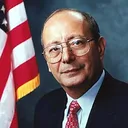
Biden has no choice but to stay in the race.
Alfonse D'Amato Former U.S. Senator from New York
Take me out to the ball game.
Eric Shuffler Founding Partner, River Crossing Strategy Group
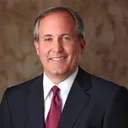
Texas border first in line for illegal migrants.
Ken Paxton Texas Attorney General; nominee for U.S. Senate
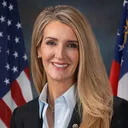


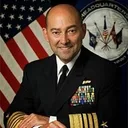
Future of Ukraine unclear with Trump.
Admiral James Stavridis Former NATO Supreme Allied Commander Europe

Interviews Will Silverman, Managing Director, Eastdil Secured
Michael Stoler Real Estate Expert
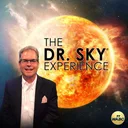
July sky events, next supermoon.
Steve Kates Space and astronomy broadcaster (Dr. Sky)
Dr. Peter Michalos

Healthy Eating, Stronger Immunity and the Science of Living Longer
Dr. Peter Michalos WABC Medical Expert
Limiting Sugar and Choosing Whole Foods to Support Healthy Aging
Dr. Peter Michalos WABC Medical Expert
Protect Your Skin From UV Radiation and Reduce the Risk of Skin Cancer
Dr. Peter Michalos WABC Medical Expert
Processed Foods and Mental Healthcare Failures Threaten Public Health
Dr. Peter Michalos WABC Medical Expert
