


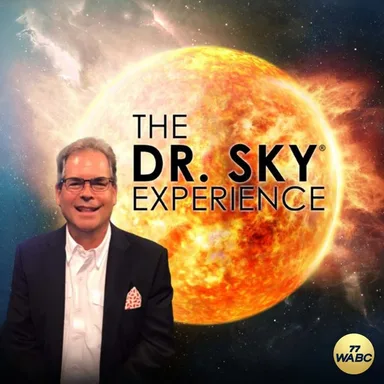
Steve Kates Space and astronomy broadcaster (Dr. Sky)
July sky events, next supermoon.
Transcript
Automated transcript · uncorrectedWell, Sunday morning with us today is Steve Kates, otherwise known as doctor Sky, and he entertains us and he moves online around every Sunday morning. Well, Steve Kates, what’s going on in up in the skies today?
Well, good morning, John, to you and the listeners of the Cats round table. Here we go. You know, there’s many paradoxes in space. We don’t know the answer to so many of them. But in astronomer a long time ago, a German astronomer who discovered comments. His last name was Ober’s came up with something called Ober’s paradox. And what
is this? The question he’s trying to resolve is why is the sky dark? That may seem like a ridiculous question, but think about it, folks, John, this is interesting. Of all the billions of stars that are out in the universe, you would imagine that the sky should be filled with stars, but not true. Reason is the universe is expanding. The
light from many of these stars that are out there in the early universe haven’t even reached us yet. So Olber’s paradox is the strange way of describing the sky and answering why is the sky? Well, why is it dark.
It’s because there’s light travels through space. There’s too many stars, they’re too far away. Isn’t that a most amazing paradox?
It is most amazing. But our minds all the neurons haven’t opened up yet. Our creator hasn’t opened up all our neurons, so we can’t understand that that paradox.
How true is that, John, But here’s one that’s really interesting. When I asked one is the most prevalent color in the universe. Strange as it may seem, the color beige is the number one color in the universe, as opposed to blue stars, red stars. So there’s something we take away with opening our minds. But John, here’s something really interesting.
That solar storm that we had back on made the tent that caused so much disruption of satellites and gave us beautiful auroral displays. It’s now been reported that five thousand sab lights had to be repositioned because when that solar energy hits the upper atmosphere, it drags the satellites down.
So Starlank of SpaceX had to move a lot of these satellites higher. But John, if you want to talk about energy, that big blast from the Sun released two point sixty three terror watts of energy. What does that mean?
It means that a small house that may use five hundred and ten kilowatt hours per month, you could run your house for ten million years off of that amazing amount of power. And there’s another giant sunspot group on the Sun. John, So well, maybe the best is yet to come. What’s you on that?
Well, now, that’s all amazing, amazing, amazing, But you know me, I love to talk about all the rovers around Mars. Anything different with the Chinese on the moon or you just give us a few tidbits?
Well, sure, John, really quick to summarize the Chinese lander we all know returns successfully back from the Moon the far Side as we call it, with some different type of geologic rocks. Now China’s prepared to go back there with another series of robotic landers. They’ve done a great job on that. On Mars, we reported a couple of
weeks ago, no new news there except they found a rock, at least from their camera on the Perseverance Rover that is indeed the strangest one they’ve ever seen. It’s white in color. It may be an extinct meteorite. May be a part of the deeper Martian crust. We really don’t know for sure. But John, we always conclude with the
mystery of the week. And here’s something that people I think would not only appreciate knowing, but seeing. What is a super moon? And the term really comes from astrology, not astronomy, and simply it means this when the moon is ninety percent closest to the Earth, we call it peeragy at that particular time. We see this moon when
it rises, that’s really exceptional. So go we have one on August nineteenth. September seventeenth is probably the most beautiful romantic. It’ll be the super harvest moon October seventeenth and November fifteenth. And John, as we always say, keep our eyes to the skies. There’s some beautiful things coming up as we move through summer and into the fall of twenty twenty four.
Well, I look forward to expanding our minds even more, having more discussions. And thank you, and I know where you are right now in Arizona. It’s one hundred and twenty two degrees and stay cool, Stay
Cool, absolutely, John, and good morning to you and all the listeners of the Cats Round Table.
Sunday, July 14, 2024
The general election has a lot of variables with Menendez & Kim.
NJ Sen. Candidate Curtis Bashaw
Biden has no choice but to stay in the race.
Alfonse D'Amato Former U.S. Senator from New York

Take me out to the ball game.
Eric Shuffler Founding Partner, River Crossing Strategy Group
Texas border first in line for illegal migrants.
Ken Paxton Texas Attorney General; nominee for U.S. Senate


Future of Ukraine unclear with Trump.
Admiral James Stavridis Former NATO Supreme Allied Commander Europe
Interviews Will Silverman, Managing Director, Eastdil Secured
Michael Stoler Real Estate Expert

Steve Kates
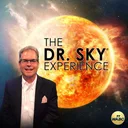
The Mysteries of Mermaids, El Niño and the Antarctic Ice
Steve Kates Space and astronomy broadcaster (Dr. Sky)
Exoplanet Radio Signals, SpaceX’s Heavy Rocket Test and Nuclear Propulsion
Steve Kates Space and astronomy broadcaster (Dr. Sky)
Supersonic Jets, SpaceX’s Next Starship Launch & Trump’s Golden Dome Defense System
Steve Kates Space and astronomy broadcaster (Dr. Sky)
The Science Behind Hurricanes, Cosmic Radiation and the Universe
Steve Kates Space and astronomy broadcaster (Dr. Sky)
Ben Franklin, Mars, and Asteroid Mining
Steve Kates Space and astronomy broadcaster (Dr. Sky)
The Search for Dark Matter and the Mysteries Hidden Beneath Antarctica
Steve Kates Space and astronomy broadcaster (Dr. Sky)
