


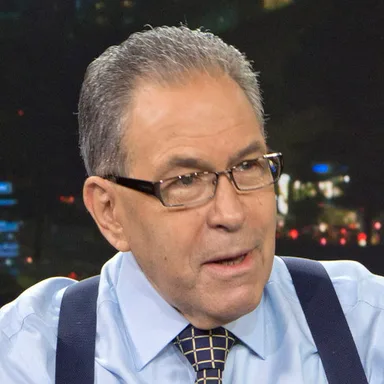
Michael Stoler Real Estate Expert
This week's guest: Alan Dern CEO & Founder of One Stop Property Group
Transcript
Automated transcript · uncorrectedGood morning. This is Michael Stoler for the Stolear Real Estate Reporting the Cats Roundtable. One of the busiest industries today, especially during due to the pandemic is the industrial warehousing business. But there are different types of industrial warehousing businesses that people don’t know about, and one of them is called co warehousing. It’s like the wee works model of a
flexible office space. And one of the innovators in this business, who probably created it in the late nineties is Alan Dern, the CEO and founder of One Stop Property Group. Alan, tell me about the business and how you got into the business originally.
So it was purely an accident. I was in the transportation business and at a long term lease with the MTA at a property in Long Island City that was about twenty acres with garage bays and wash bays and an office building with dispatch offices, crosstock and acres and acres of vacant land. And I sold the company and
I couldn’t get out of the lease. So I was fortunate enough where the MTA allowed me to do what our model is today in that space.
So why was the model then? What is the model today?
It is very similar so we rented out time and space. If you wanted to park one or two buses, or you wanted to rent an acre and you needed a garage bay in the nighttime, we rented you only what you needed and we rented time and space.
And how do you determine what you should charge?
Well, at that time, at that period of time, it was in market. It was what we needed to pay the rent and sustain the property with a fair profit.
So what were the initial tenants in the property?
All in the transportation business.
There were trucking companies, limousine companies, bus companies, distribution companies, bakeries and produce markets, things like that.
And what was the average lease on these type of properties all month to month? So everybody was a month to month.
Every single tenant there was a month to month.
And what about hazardous materials, you know, hazmud, other conditions that were bed on the neighborhood because the property has been you know, a bus stop and other utility space for so many years.
So we operated with the oil companies and refineries and tenants of that nature, but we operated under the enforcement of the DEEC and we did it properly.
But we weren’t afraid of that.
So how do you expand the business? I mean, this is, you know, like the self storage business in many ways, this is what you are. You’re a different format of the self storage business.
It’s exactly the mini storage model in industrial. So what happened is back in twenty eleven, the MTA came to us and like every least the government leased is a caveat in the least, it says if they need it back for their own purpose, they could turn the lease, which they did.
So at that.
Point we went out and we rented many properties.
So you didn’t have other properties at that time, you just had one the major property. It’s true, okay, so you expanded from zero from zero point one to point four because of number of expansions, how do you find the expansions?
So I rented two spaces on Review Avenue and I rented one space in Massbeth and filled.
Them up immediately.
My neighbor on Review Avenue, his name was Greg Braymon Phoenix Beveraged, asked us to rent out his property and do the same thing.
It was a building that was vacant for a.
Long time, and I told him we didn’t have the capital to rent any more space, and he actually threw us the keys and he said, I’ll give you ten percent of the gross rentals.
Manage it for me.
My landlord, his name is Jim Giuliano in Massbeth did the same thing. He had a property in Long Island City. He said that from me, and I said, I’m tapped out. I can’t through many keys, tell me to manage it.
And it just expanded. The management just expanded to the Port Authority in Red Hook and many other properties. And both these gentlemen became my partners in future endeavors. And after we became successful, my CFO Bower became our partners, and before you know it, we’re buying properties all over the place, doing masterleasing and managing more than ever.
So what’s happening today, especially as I was eluding, the coarassing, is a rapidly expanding tread in the business that you have competition before I say you have too much competition.
So it all starts with the wheels.
For us, big plots of land eight nine ten acres is our sweet spot with the largest commercial parker is in the state of New York. And we’ve been getting more of that than ever before. But in our model, you know, it’s one hundred thousand square foot plate in a building, we just have a much bigger pool to
pick from. We’re not looking for one guy to take one hundred thousand square feet. You’re taking what you need. You’re paying for what you need, You’re paying a premium for it. And it’s a flex model. It’s very easy.
You’re still at the one month no minimum leases, right, So we’ll give term, not on a management property because where they have to sustain the property until something better comes along or a bona fide sale or the property gets repositioned, but on the properties.
That we own and master lease, will give term.
Okay. So, as I said to you, this company, Ready Space and warehouse Space have come into this market. Have they reached out to your model? Are they going to your clients who have a different type of clientele?
I think I have a different type of clientele. We do the tough stuff.
Okay. Now, with the world of venture capital, do you think there’ll be other people or the big warehousing companies getting involved with this business? I don’t.
I don’t think so, you know, it would be a long run to catch up to to what we’ve accomplished. You know, our phone rings all day long. If I get a piece of property with a small warehouse and a ton of land, I’ll rent that. If I get a big warehouse with no land, I’ll rent that. We’ve created,
you know, a market for this, and we’re trusted in the industry.
Now, these new companies who are the the young the youngsters, as we would say in the business, they’re going out to venture capital to raise capital and to raise death. Do you see that is in your mantra to grow the business any further?
No?
No, we we work with our own capital. We grow at our own pace, and we like growing with management better than anything in this current climate.
Now, how how do you look at the industrial business today in general? I mean these huge spaces over there that Jack Gutman, Dove hurts, you know, pro Logics and all these other individuals. How do you see this as it kind of continue to grow or is it will this become the extended stay model over there, you know
for the larger spaces and the storage business.
So on, its tremendous upswing between twenty nineteen and twenty twenty one, all these large you know, private equity and reads bought these massive properties, you know, with a very high basis, and they’re looking to rent it out to one and done and it really just doesn’t exist.
You have to be super lucky. So if it sits.
Empty long enough, they’ll come to us to manage it, just to sustain the property create.
So you’re there to manage, but are you there also to help them get customers?
So we bring the tenants, yes, multiple of tenants.
We cut it up. We have the infrastructure to do that. Most of these private equity firms don’t.
So you’re saying the properties in the Bronx and the you know, the multi level of properties are are difficult for them to rent out. They don’t have the infrastructure right now, these companies.
It’s difficult to rent it out to multiple tenants and the single tenant is few and far between.
So where are you expanding? I said, you have gone from the city to Long Island as far out as exits sixty one.
That’s right, we went as far as Central Isoland. So I mean we’re in the super prime areas. We’re from you know, Red Hook through green Point, through the Massbath and Long Island City. We’re in the Bronx now and we have multiple locations in Long Island from Garden City all the way to Central Island.
And what about environmentally problem challenge companies?
Do you do this? We do? We do well.
We manage contaminated properties. I mean we manage all of Larga Vista. Guess To Area was their brand name many years ago, now their Logger Vista Development. We took all their tank farms and we rented them out to multiple tenants and did very well.
So it looks, you know that the co warehousing business or the we I won’t call it that we work type of company because we were expanded too far. I’d say, are there and the opportunities and I think one of the best places where Alan Dern is involved, one stop is the future of the business. Thank you for being
here today.
Thank you so much.
Sunday, December 10, 2023
Christmas extravaganza at the Park.
Eric Shuffler Founding Partner, River Crossing Strategy Group

Terrible antisemitism spreading in the Country.
Andrew Cuomo Former Governor of New York
Mayor Adams in Washington looking for migrant money.
David Paterson Former Governor of New York
Republicans are going to spend a lot of money replacing George Santos.
Peter King Former U.S. Representative from New York

Antisemitism has risen its ugly head across the country.
Vito Fossella Staten Island Borough President
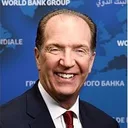
The World Bank trying to stay ahead of the Chinese.
David Malpass Former President, World Bank Group

There will be an expensive primary to replace George Santos.
Ed Cox Chair, NY Republican State Committee
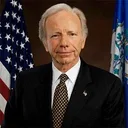
President Biden must continue to back Israel.
Joe Lieberman Former U.S. Senator from Connecticut

The White House is facing problems on several issues.
Judge Jeanine Pirro U.S. Attorney for the District of Columbia


The December skies, what to look for.
Steve Kates Space and astronomy broadcaster (Dr. Sky)
Michael Stoler
The Stoler Report with Michael Stoler: Eli Weiss and Andrew Albstein
Michael Stoler Real Estate Expert
The Stoler Report with Michael Stoler: Robin Schneiderman
Michael Stoler Real Estate Expert
The Stoler Report with Michael Stoler: Winston Schromm
Michael Stoler Real Estate Expert
