


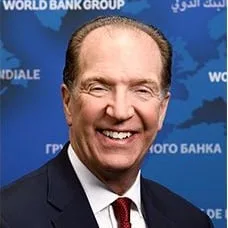
David Malpass Former President, World Bank Group
The World Bank trying to stay ahead of the Chinese.
Transcript
Automated transcript · uncorrectedWhat is today is David Malpass and he was former President of the World Bank and his term ended on April ninth. In David Malpass, you have great insights of what happened in the world during those five years. For a year and tell us what the heck is going on?
Hi, John, Well, there were lots of crises, but there’s also this problem in the world of its waiting for US leadership, and it’s not there. It’s not there in the international institutions, it’s not there in terms of the economic policies for the world. So you end up with these repeated crises coming up, the Afghanistan evacuation, the Ukraine invasion,
now the Hamas catastrophic attack on Israel, and the slowness of world growth is building pressures. The US was behind in raising straits to head off the inflation. So you’ve got a lot of billions literally of people around the world that are feeling the inflation and are left hungry and with no healthcare as a result, and.
There’s a lot of suffering going on around the world, and you feel that it needs US leadership to make a difference.
That’s exactly right, and instead what’s happening is giant US government spending. So there’s a difference between spending trillions of dollars and actually having an impact. So you see that Russia seems to be able to have more impact in Sub Saharan Africa without spending money than the US does with the spending that’s going on. And that’s true really
in many parts of the global system. So I would like to see us, the US be really effective in leadership on every stage. This is particularly apparent in Ukraine’s where there needs to be strong leadership from the commander in cheap on how to make progress on that crisis.
When we see what’s going on in the world, and I see that some of the opic nations have lost the confidence in our White House, is some of those things happen because of that.
The oil producing states are feeling their power, in part because the projections of US oil production haven’t gone up as much as they might have feared. So they go to Russia and say, hey, let’s get together and constrain the production of oil and see how much we can hold the price up. They’re making profit, and importantly Russia
is making properit. But on the oil situation, which is you know, a big negative surprise. During this war in Ukraine, Russia was supposed to feel the economic pain of lost oil sales, but instead they’ve been getting a high price for a lot of barrels from China, from India, and from really world markets. The US policy isn’t working in
that regard in many others.
And I believe that Iran, as all of a sudden in the last few years went up from four hundred thousand bottles to three and a half million bottles, are making two big in dollars a week profit and a lot of that money is going to Hamas and other terrorist organizations.
That’s right, and that shouldn’t be happening. We’ve seen the clients or the relationships between Russia, Iran and even even with some of the Gulf states as that’s become apparent with the Hamas attack on Israel, and how unfortunate is that, how catastrophic for that to have been allowed to occur.
The sanctions were not enforced on Iran, and it was more than that. It’s that the the idea that there can somehow be be progress in Iran by negotiating with them was has been apparent in all of these world world crises. We really need to think and rethink a number of central US policies, the fiscal policies, the monetary policies,
and also the policies about how to project power and strength within the world. Do a better job by the US.
The other item that came across my desk on Friday was that the UN was issuing UH strong criticism of the US on what’s going on with H in the Gaza and insisting that Israel stop UH the war. And I said, I said on my five o’clock show on on on Friday, I said, well why, I mean, I’m
sure the wal could stop if they released all the hostages.
Yeah, And it would be good for international organizations to call for that and also call for an into the idea of hiding terraces under hospitals and within UH, within schools. The the the international organizations were heavily involved in Gaza throughout and they they must have known what was going on and so that that will come out maybe over time.
They were sitting on top of tunnels that were that were built in order to control hostages and to attack from underground. So they should be speaking out in a constructive way that will actually in the hostilities and in the threat, but sometimes you think they just want to declare peace and then allow the threat to fester under
the surface.
Understood, what else you would you like to tell you American people. I mean, we discussed that the US has to take more action with their leadership in the world, especially with the United Nations. The US has to take more action with that to have a world peace.
One thought is that in many of these encounters, China ends up being the beneficiary because they get to buy oil cheap than they otherwise would have. They get to be engaged with countries, developing countries as if they’re the friend UH. And as as you think about the climate issues, it benefits China to have a giantly regulated global trade
system because China won’t won’t follow the rules. They’ll they’ll they’ll participate in the conferences, but then not follow the rules. And so as as we think about it, I think there has to be a full rethinking by the US, as I say, of fiscal and monetary policy, but also of UH. It’s engagement UH and we need to be
projecting peace through strength. That’s part of it, but also international organizations where US leadership defends US national interests rather than tries to build an ever more powerful global regulatory understood.
Last question, Uh, David and Uh Uh any danger at all of the dollar losing its uh, its priority. And I’ve publicly said I would only want to own a dollar. I don’t want to own euros. I don’t want to own yen. Uh. What say you? You’re the World Bank president?
You were the World Bank president?
Uh? Yeah, And I was in many of the international meetings, you know. I think the dollar is clearly is pre eminent in the world. People are worried and worried about it over the decades, and traders make a lot of money just watching it go up and down. Uh. I think it’s easily defended by the US. But it’s timely
for the US to do that and say that we care about the dollar, we expect it to be the mainstay of the global economy for decades and decades. You see the rise in bitcoin, that’s a that’s a direct upfront to the dollar. Uh. And China wanted to push its own currency as a substitute for the dollar. So
right now, I think the US is in a pretty good opportunity. The FED has an opportunity with bond, Deild’s coming down and with inflation having peaked to really set the stage for constructive rate cuts that defend the dollar and make it very clear that the dollar is the world currency.
Thank you, David Malpash, former World Bank President. Thank you so much for your your comments and I agree with ninety nine point nine percent of them. Thank you so much. Thanks John
Sunday, December 10, 2023
Christmas extravaganza at the Park.
Eric Shuffler Founding Partner, River Crossing Strategy Group

Terrible antisemitism spreading in the Country.
Andrew Cuomo Former Governor of New York
Mayor Adams in Washington looking for migrant money.
David Paterson Former Governor of New York
Republicans are going to spend a lot of money replacing George Santos.
Peter King Former U.S. Representative from New York
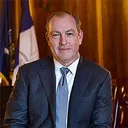
Antisemitism has risen its ugly head across the country.
Vito Fossella Staten Island Borough President
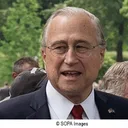
There will be an expensive primary to replace George Santos.
Ed Cox Chair, NY Republican State Committee
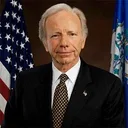
President Biden must continue to back Israel.
Joe Lieberman Former U.S. Senator from Connecticut
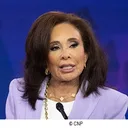
The White House is facing problems on several issues.
Judge Jeanine Pirro U.S. Attorney for the District of Columbia
This week's guest: Alan Dern CEO & Founder of One Stop Property Group
Michael Stoler Real Estate Expert


The December skies, what to look for.
Steve Kates Space and astronomy broadcaster (Dr. Sky)
David Malpass
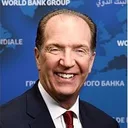
The Economic Strategy to Counter China
David Malpass Former President, World Bank Group
U.S. Strength Lies in Innovation and Energy Independence
David Malpass Former President, World Bank Group
Small businesses are key to economic growth.
David Malpass Former President, World Bank Group
Will the Fed finally move on to cut interest rates?
David Malpass Former President, World Bank Group
Trump has rearranged the world order of trade.
David Malpass Former President, World Bank Group
World Bank chairman discusses tariffs.
David Malpass Former President, World Bank Group
