


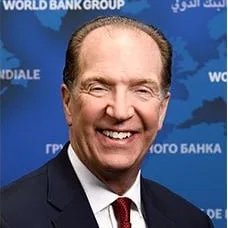
David Malpass Former President, World Bank Group
U.S. Strength Lies in Innovation and Energy Independence
Transcript
Automated transcript · uncorrectedWell, Sunday morning. What is today is a good friend and known for a long time. And David Malpass he was the president of the World Bank, and before that he was in charge of the international portion of the Treasury Department, which handled G seven and G twenty. And well, David Malpass, A happy passover, and I hope you have
a great weekend with the family. But Sunday morning, the world, I mean, everybody talks about various economies, but you have a focus overall world. Give us your interpretation. What do you think is going on?
Hi, John, and very good to talk with you. Well, the world is challenged, of course by this spike and oil prices, and also by the threat of Iran and of terrorism from that part of the world. So you’ve got this very fast pace of change going on in in the geopolitics, but also in technology, and so that’s
permeating the whole world. Everybody’s changing really fast, and it’s kind of scary while it happens. I do have to say quite a bit of the world is not as fortunate as the United States in terms of energy production and also in terms of innovation, the ability to reinvent ourselves very quickly.
Now I mean, you know, the price of gold is going up, it goes down, It goes up, it goes down. Gold always signifies that people are insecure about things going on. And I guess gold is around forty seven, forty eight hundred, forty six hundred. It was as high as fifty five hundred.
What do you think?
Gold reflects people protecting themselves from devaluation of their currency, so it it keeps its value over hundreds of years and over thousands of years, so when there’s crisis and uncertainty, people move into gold. One thing that was pushing it up earlier was in twenty twenty four and twenty five, China was selling treasuries and buying gold. So there was
this commitment by China and people in China and the government to invest in gold. So that changed the price. I don’t know how much of that will be long term. I make the distinction from the nineteen seventies when there was a spike in the oil prices. There was a giant worldwide oil shock, but that came from a devaluation
of the dollar, when the US dollar lost two thirds of its value, So gold shot up and then oil shot up. So I don’t think we’re in that kind of crisis now that really was a deep, deep set of recessions and inflation. What we’re in right now is a war where they have the straight of Horn moves
closed and I think the US will be able to open it and Europe might even help, and that would help in the meantime. For me, it’s good to see gold coming down some because I think it was in a bit of a.
Bubble understood now with the people were telling me that the whole banking system in Iran is to put because the internets have been down and they don’t know where the heck they are. What do you hear about.
That that can happen to a country? You know, we all around the world, people in four countries struggle with getting money and they go back to a barter system where there and I’m sure that’s happening in Iran, where people are desperate to get food so they sell them their their furniture or you know, their services, and so
that’s sad to see. It’s the it’s the effect of the government of Iran, and it’s very hard to run a banking system without internet and also without and you know, I think it may get to this in a lot of Iran without electricity, so you can we can expect shortages across Iran and that will put pressure on the government.
Whether they crack down, We’ll have to see what their response is understood.
Now, what else do you think the American people should know on a Sunday, Morney.
Uh, They should know the that the world has lots of risks in it and we should be grateful that we’re in a country that is uh, that is powerful, that’s free, that has the rule of law, where where things move forward, and of course score technology can be invented and used. So it’s this mixed mixed message of
recognizing it’s hard to make good policies and there were a lot of mistakes made in the past that will take time to clean up. You’re you’re in the middle of one of them, which is the refineries were not being built oil refineries, but also the nuclear power was not being built. And so I think one takeaway for
people in the United States is the importance of permits, of tax incentives and a new investment to make the economy really grow fast. We have this big opportunity for more growth measures to offset this spike in the oil price.
You’re right now. I mean I think the oil prices once the war is over, I think the oil prices go back down to normal. What else would you like to tell you American people, It’s also Easter Sunday today, you’re having Passover. I’m having Easter. What else would you like to say?
Well, that brings us to values. So people’s values and human values and leadership values around the world are vital, and I think there has to be communication of that, why why we are doing what we’re doing, and then what we can do to make it better. Everybody, everybody can look inside themselves and say what can I do
to make the world better and my own my own situation better. You know, I really think individualism is vital within a religious framework that people can can think about how they do it. I want to come back to it because you know, I’m an economist, John, So I want to come back to oil. And you know how
the invention of oil keeps reinventing the energy available to the world. Uh and so I we probably shouldn’t talk about uh uh technology on this, but remember the marvel of the Permian base in Texas being drained and then being people finding new technology and saying we can produce oil for the whole world, uh and have the technology
to refine it. Uh. And that’s moving fast. UH. Let me end it, because I shouldn’t have gone down that, down, that down that digression. But as you think about people around the world, they’re yearning for fertilizer, they’re yearning for energy, for values, for uh, guidance from their from their faith. UH.
And it’s something to remember in a positive way today.
David Malpass enjoyed the rest of the holiday over over the weekend, and we’ll catch up with you again real soon.
Thank you. John
Sunday, April 5, 2026
New York Tax Hikes Will Drive Businesses Out
Steve Fulop President & CEO, Partnership for NYC
Campaigning Against Zoning Mandates and High Taxes
Betsy McCaughey Former Lt. Governor of NY
Backing Trump's Tough Stance on Iran Nuclear Threat
David Paterson Former Governor of New York
Hard Work, Opportunity and the Launch of His New WABC Program
Fernando Mateo President, NY State Federation of Taxi Drivers
New York Needs Lower Taxes and Stronger Leadership
Bruce Blakeman Nassau County Executive; nominee for Governor
We Must Preserve America Amid Global and Domestic Threats
John Kennedy U.S. Senator from Louisiana
American Military Strategy Targets Iran's Weapons, Infrastructure and Proxies
General Jack Keane Retired Four-Star General, U.S. Army
Restoring the American Dream Through Affordability
Brooke Rollins U.S. Secretary of Agriculture

Spiritual Lessons of Easter for Individuals and the Nation
Pastor Lorenzo Sewell Senior Pastor, 180 Church, Detroit
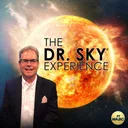
The Secrets of Grand Central and the Ancient Egyptian Pyramids
Steve Kates Space and astronomy broadcaster (Dr. Sky)

Parents Must Stay Vigilant as AI Enters the Classroom
Lynn Shaw Founder of Lynn's Warriors
David Malpass
The Economic Strategy to Counter China
David Malpass Former President, World Bank Group
Small businesses are key to economic growth.
David Malpass Former President, World Bank Group
Will the Fed finally move on to cut interest rates?
David Malpass Former President, World Bank Group
Trump has rearranged the world order of trade.
David Malpass Former President, World Bank Group
World Bank chairman discusses tariffs.
David Malpass Former President, World Bank Group
