


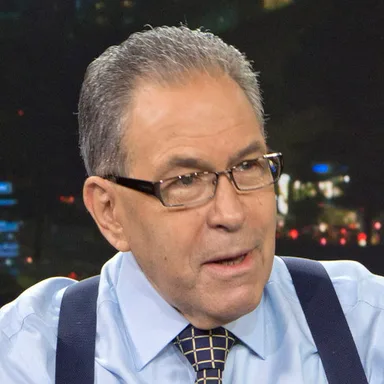
Michael Stoler Real Estate Expert
The Stoler Report with Michael Stoler: Bryan Kelly
Transcript
Automated transcript · uncorrectedGood morning. This is Mike Stolen for the Stolar Real Estate Report. New York City needs housing, especially affordable housing. There’s not that much land around the city, but over the years a company called the Gotham Development Organization has built a variety of market rate and affordable apartments throughout the city, including Long Island City, an urban village not
too far in East New York, and numerous projects to provide housing and retail for the community of New York. Today, I’m lucky to have Brian Kelly, who is the president of Gotham Organization, who’s building a project called Monitor Point. Brian, tell me what’s happening in Greenpoint, Michael.
The opportunity in Greenpoint is once in a lifetime at the nexus of the southern tip of Greenpoint and the north side of Williamsburg, right adjacent to the Bushwick Inlet, we have an opportunity to remove an industrial non conforming use facing the East River where the MTA mobile wash unit and material control storage unit operate today on a
site that zoned for housing dating back to two thousand and five.
So why don’t you tell me a little history. You’ve been involved with this development since twenty nineteen, I believe yeah.
So in twenty nineteen pro bono lan us attorney to a community organization called the Greenpoint Monitor, Museum was interested in replying with a responsible and comprehensive developer on an mtaarfp to redevelop the adjacent property, which is the mobile wash unit, and as stewards of affordable mixed income development throughout the city. We’ve really over the years where have
worked mostly in public private partnership, looked at it as an opportunity to combine the museum’s land in the MTA’s land to address a multitude of goals. One connectivity and creating open space. Two is creating density for housing but with deep affordability. Three is to support public infrastructure to build the MTA a new home off site and an
appropriate industrial location, and to remove truck traffic from a residential neighborhood and put it an appropriate location where necessary highway accesses. And to sustain through ground tenant revenue. We’re not going to be buying the land here to public private partnership supporting the capital plan for the MTA. So we think this isn’t just one singular focus. It has
a multitude of benefits.
Question is why hasn’t anything been done in this property over the years, I mean twenty years ago. Jeff Lavine really created the input in Williamsburg. Why not Greenpoint?
This site has been sitting idle because all those owned for housing, and you would think the attractiveness of the location would have created a momentum. The hardest part of the needle in the haystack finding a location for the MTA that has access to highways, the footprint necessary, the competence of a redeveloper to find that location and build it,
and we did just that. That’s why I think we were the winner. We found the right side and we have the skill sets to work with a government entity to meet their need before we can unlock a site for housing.
In your presentation, you spoke about the Waterfront Redevelopment percent providing for permanently affordable housing through mandatory inclusionary housing. Would you explain what that means, suhere.
Mandatory inclusionary housing means that, in concert with any land use action changing zoning, you would provide affordable housing. And there are various options for it, and we’ve selected an option that provides the deepest level of deeper levels of affordability that have been seen on the waterfront here, and that would be income bands citywide from what we call
forty percent of the airy median income, which is why for a single household it’s anywhere from thirty five to forty five thousand dollars, working upwards to the AAMI band could be multiple learners just north of one hundred thousand dollars.
And so the objective here was to create market rate homes that cross subsidize deep affordability, and deep affordability means homes for working class families and individuals who get the same public equity and access to the waterfront that then those who are are enriched and so creating an integrated community.
Let’s talk about what is mandatory inclusionary housing.
Mandatory inclusionary housing means that the affordability would be permanent forever, and so as long as that building is built, or there’s a new building built one hundred years from now, permanent affordability at those depths of affordability run with the land.
Okay, approximately eleven hundred and fifty proposed units, or forty percent, will be permanently affordable to hassholds earning no more than one hundred percent of the area meeting UNIQUEM to this.
On the North Brooklyn Waterfront and in the surrounding areas, there has been a tremendous amount of housing developed because of the conversion of industrial land to housing. With that said, this is a profound level not only in total affordability, also in depth of affordability. I would say the mark has been twenty to twenty five percent over the last
twenty years, depending on the tax exemption programs used to build housing. Forty percent is a high water mark and the depth of affordability is very strong. You’ve seen a lot of homes built at the middle income level, and this is homes provided for those within the working class, you know, like I said, between forty to one hundred
and ten hundred and twenty thousand dollars.
Oh, let’s talk about the job creation.
So we working backwards upon completion of this building. We work with the Union Trades at thirty two BJ to run, build and maintain our buildings. We work with the Labors Unit at Local seventy nine and really work on local job training and apprenticeships to create workforce, including integrating local residents into that and Importantly, the new home for the
MTA facility will preserve two hundred and forty five plus MTA jobs for three critical functions. One I should mention, although indirect, we’re also part of the new home building the Emergency Response Unit, which unlocks the front door to Box Street Park, which is under construction in North green Point as well.
Let’s talk about the Emergency Response Unit. Where is it currently?
It currently sits on Commercial Street on the north end of facing Commercial and it’s at the north end of Greenpoint. And it is essentially a unit that goes out to deal with emergency situations, whether there was an act of violence or a fire, and it dispatches through to the various highways. So it’s getting relocated to a location that
makes that access better and gives it a brand new turnkey facility, and it removes it from land that was designated as park or to be a park in North Greenpoint, and so we’re removing an obstacle.
What is the Monitored Museum?
The Greenpoint Monitor Museums donated its land in two thousand and three. It’s an organization that’s community roots date back to the eighteen hundreds when the USS Monitorship an ironclad battleship was constructed and launched from the area. Its founders on board really focus on education in the schools and preserving the history of the ship and the Civil War history.
And as part of the master plan, we are going to assist in turnkey developing and constructing a museum adjacent to the housing buildings and integrated with the overall larger open space plan.
What a bad retail development.
Retail in our buildings is intended to be an amenity to the residents, So things of everyday life, whether it’s pharmacy, grocery, daycare, those food and beverage, those are the kind of uses we are focused on. So that our residents in the larger community have a livable and walkable community.
Who’s taking care of the maintenance of the inlet park.
So the open space that we’re creating, which is north of fifty thousand square feet, including the esplanade and the park portal, will be built by us at our cost and expense and maintained. And in addition, because we’re adjacent to the park and we know it’s so precious to the community and the city wide, we’re going to make
annual contributions to the Parks Department to support the ongoing maintenance of Bushwoock Inlet Park as it’s built over time.
Okay, with regard to permanent affordability, would you explain how it remains permanently affordable even if the person makes more money.
So, the purpose of affordable housing is to not only create homes for those of the working class, but also preserve that home so rent stabilized tenants in the income based units are protected over the long term within their home so that they have stable rental increases and can remain within the community for a very long time.
What other projects similar have you and your company recently done.
We like to undertake developments that provide a challenge and the challenge results in mixed income, deep affordability or housing developments that are anchored by civic use. Examples of our work include the innovative Urban Village in East New York, where we’re joint venture partners with Christian Cultural Center and Monodnock Development. We’re halfway there to building upwards of two
thousand affordable housing apartments with a performing arts center, a campus squad, grocery, pharmacy, intergenerational housing, and a tremendous amount of workforce development programming that we’ve been under taking. And in the last few years, we completed the master plan for Covenant House, where we built them a turnkey, brand new home for their shelter and programs, as well as
new office space at the base of our building called the Mayberry, which is a mixed income housing development on the west side of Hudson Yards. And I’d say a last really important example would be in the lower east side the Broome Street development generated through another europe Land use action of Jewish Cultural Heritage Center, the headquarters for
the Chinese American Planning Council, the nation’s largest Asian American social services provider, and five hundred homes of housing, including one hundred and fifteen senior affordable units and more than one hundred permanently affordable workforce units.
I think they have They definitely confirmed you as the developer.
The developer of which one.
Right of the project, the master developer.
Yes, the master developer. For the relationships we’ve created through these not for profit and public private partnerships are really life lasting.
I think you’ve done a great job. The entire Picket family and everyone else should be just welcomed and appreciated of what they’ve done for the city, and I hope to see both projects in near future. Thank you for being here.
Thank you Michael
Sunday, April 5, 2026
New York Tax Hikes Will Drive Businesses Out
Steve Fulop President & CEO, Partnership for NYC

Campaigning Against Zoning Mandates and High Taxes
Betsy McCaughey Former Lt. Governor of NY
Backing Trump's Tough Stance on Iran Nuclear Threat
David Paterson Former Governor of New York

Hard Work, Opportunity and the Launch of His New WABC Program
Fernando Mateo President, NY State Federation of Taxi Drivers
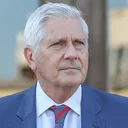
New York Needs Lower Taxes and Stronger Leadership
Bruce Blakeman Nassau County Executive; nominee for Governor
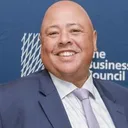
Albany's Costly Regulations Are Hurting the NY Economy
Paul Zuber Executive Vice President, The Business Council of New York State
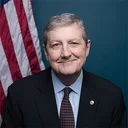
We Must Preserve America Amid Global and Domestic Threats
John Kennedy U.S. Senator from Louisiana
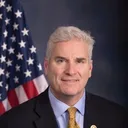

American Military Strategy Targets Iran's Weapons, Infrastructure and Proxies
General Jack Keane Retired Four-Star General, U.S. Army

Restoring the American Dream Through Affordability
Brooke Rollins U.S. Secretary of Agriculture
U.S. Strength Lies in Innovation and Energy Independence
David Malpass Former President, World Bank Group


Spiritual Lessons of Easter for Individuals and the Nation
Pastor Lorenzo Sewell Senior Pastor, 180 Church, Detroit

The Secrets of Grand Central and the Ancient Egyptian Pyramids
Steve Kates Space and astronomy broadcaster (Dr. Sky)


Parents Must Stay Vigilant as AI Enters the Classroom
Lynn Shaw Founder of Lynn's Warriors
Michael Stoler
The Stoler Report with Michael Stoler: David Schechtman
Michael Stoler Real Estate Expert
The Stoler Report with Michael Stoler: Eli Weiss and Andrew Albstein
Michael Stoler Real Estate Expert
The Stoler Report with Michael Stoler: Eli Weiss and Andrew Albstein
Michael Stoler Real Estate Expert
