


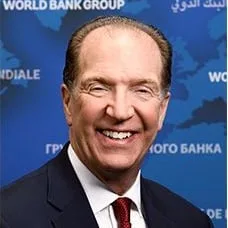
David Malpass Former President, World Bank Group
Trump has rearranged the world order of trade.
Transcript
Automated transcript · uncorrectedSunday morning, where is the economy going? Well? Well? This today is one of the most qualified people to answer that. We have David Malpass, a former under Secretary of Treasury under first Trump administration and later on he was the World Bank President. Well, David Malpass and American people are thinking what’s going on? And I think you’re the perfect person to answer what your pulse is in
a whole situation.
Hi, John’s good to be with you. What I see is major changes going on in the world. They’ll be positive, but as you go through them, each one is actually pretty hard. These are high degree of difficulty kind of issues.
In the Middle East, the President had a great week mending or creating new relationships that can be powerful going forward and can help Israel. They’ve still got to resolve what to do about Iran and nuclear weapons, which is a tall order, but in the meantime you’ve got friendships forming that will last last for a long time. As
we look around, the trade issues are huge with the trade system was really broken. The US was getting the short end of the stick and it was benefiting China. So what you see is these important start starting deals agreements with the UK and with China, and that’s a good way to get moving on a better trading system,
one that can allow more manufacturing and jobs in the US. You know, we’ve got to get our energy regulation on track and that will be a really important part of the US economic strength going forward. And can I mentioned then also the importance of growth and you know better than anyone the connection between taxes, what companies pay, and
how much they’re going to invest. So it’s really important I think for the House and Senate to move forward with the tax bill that gives more certainty less uncertainty to the tax environment going forward. That will help with investment and keep us motoring along.
Understood, now, with all the deficits, have we figured out which way it’s going to go? I mean a lot of people are very confused.
I laughed. You know, this is a giant problem. The budget system in the US is really broken. It’s just as broken as the trade system, maybe not as bad as the immigration system. But you’ve got these giant parts of the world system that don’t work, and one of them is the US budget process. We’re spending like seven
trillion dollars per year. Can you imagine that? Think how many lobbyists it takes to allocate seven trillion dollars. They’re going nuts there in Seventh Heaven in Washington because of the complexity of the tax bill and of the spending changes in the climate credits that are all getting argued over, and so I think we really need a whole new
budget system. But for this year, we’re just doing the same old which is, you know, they wouldn’t raise the debt limit back in December when they should have, so you’re stuck with the debt limit. You’re stuck with the need to extend tax the tax system. Trump did a major reform in twenty seventeen that should be extended and
made permanent. I think they need to do that. In the way they set up this new tax legislation. It should be done under current law, excuse me, current policy rather than current law. But we’ll see what the Senate comes up with on that. Each of these issues is super detailed. It takes a lot of focus, and in
the meantime, everybody pauses on their investments. You’re an expert on the business expensing. You know, when companies pay so much in taxes and if they invest more, it’s helpful if they can expense that new investment, like if they buy a machine, can you deduct it, because otherwise you’re ending up paying income taxes while you’re waiting to get
the benefit of the machine. So this new bill has that in it, but it’s got to get done and moved forward. So the bottom line here is the budget system is deeply broken. There’s not a consensus in the House or the Senate among the Republicans on exact what to do about it. I think the administration needs to
be really clear in the communication of what they want. It’s not unreasonable for President Trump to be out there with policy speeches saying this is the way forward for the country. He can do that and then business would fall in line.
Now, what do you think? And I don’t know if anybody who knows the real number that we were paying out in what’s the nicest way to say it in Vigue? What they say in Las Vegas to the rest of the countries in excess payments that that President Trump is trying to bring down.
Yeah, some big chunk of the interest on the national debt goes to foreigners, and you can you can see some of it in the trade imbalance that we’re running and so the vig the interest is really high. I want to blame part of that, maybe a big chunk on the Biden administration. You know, Janet Secretary of Treasury Yelling,
and the Biden administration did short term financing of the debt. It’s just like you have a floating rate mortgage. Rather than lacking in your rate, you were you know, you were hoping that you could just skate by. And so what that means is a lot of the debt is coming do right now, and so people are around the
world those that are that are lending money to the US government. That’s everybody in the world is lending. Japan is, China is, the UK, is, the Cayman Islands and on down the list. They lend to the US government and they charge an arm and a leg. We need lower interest rates. I think to get there, we as a
country have to show growth and uh stability in the dollar. Those two things. If people are thinking about investing in US treasuries, they want to know that the dollar is going to be a valuable currency five years from now when their maturity comes due. So I think we can do a better job on that.
And if we talk about that since January one, the euro has gone up about ten percent, hasn’t it.
Yeah, and that hurts Americans because it’s really bad for Europe too. I think the best for growth and for especially people at the median income, you know, average workers, is stability because then their companies can invest. And right now we have volatility. You know who loves that. So the two groups that are making out like bandits right
now is Washington, DC, you know, getting really rich on this uncertainty, and then Wall Street, So they love it when currencies go up and down because they make money both ways.
Well, David Malpass, thank you so much for coming on this Monday morning, and let’s let’s see how things developed during the coming week. Thanks John,
Sunday, May 18, 2025

Putin skips peace talks in Ukraine.
General Blaine Holt Brigadier General USAF (Ret.)


Book coming out on President Biden. Trump's Saudi trip.
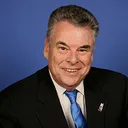
Peter King Former U.S. Representative from New York


Does Putin plan to march across NATO countries?
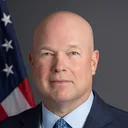
Matthew Whitaker U.S. Ambassador to NATO
Trump's extraordinary trip to the Middle East
Kevin McCarthy 55th Speaker of the House



Your genes and longevity. Fixing broken genes is coming soon.
Dr. Peter Michalos WABC Medical Expert
David Malpass

The Economic Strategy to Counter China
David Malpass Former President, World Bank Group
U.S. Strength Lies in Innovation and Energy Independence
David Malpass Former President, World Bank Group
Small businesses are key to economic growth.
David Malpass Former President, World Bank Group
Will the Fed finally move on to cut interest rates?
David Malpass Former President, World Bank Group
World Bank chairman discusses tariffs.
David Malpass Former President, World Bank Group
