


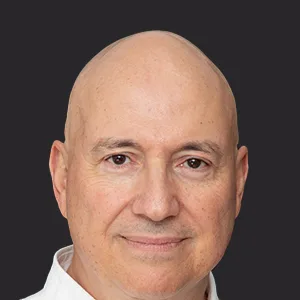
Dr. Peter Michalos WABC Medical Expert
Your genes and longevity. Fixing broken genes is coming soon.
Transcript
Automated transcript · uncorrectedSunday Morning Medicine.
It’s moving at warp speeds with us today’s doctor Peter Milosen and well, doctor Peter, what new things are on horizon for us today?
Well, today, John, we’re going to talk about a question that many people ask, and that’s longevity and our genes. And it turns out that only twenty to thirty percent of our destiny and longevity is related to our genes.
And genes do play a major role as we can have genetic predispositions for certain problems, like we might have a genetic predisposition, for example, to diabetes. But if we knew about it before it even started, and we can make certain lifestyle changes, we could actually change the course or the chance of actually getting it. We can have
a chance of having eye blood pressure, but we can also do something about it. So that’s another another another thing that we can do. It turns out that there are some genes that are actually associated with longevity, and one is called the fox DO three and the other one is the apoe gene. And you can actually now order,
even without a doctor, these tests right on the internet, and you can order it and just find out what you have, and you can actually go through a list and see if you have a risk, for example, like the Brocket gene, if you have a risk for breast cancer or varying cancer or other types of cancer. There’s
even genes associated with schizophrenia, autism, and another one that three million people have in the United States call factor five Lighten, which was a clotting disease, so you’re at higher risk of getting a clot in your legs when you’re, for example, flying on an airplane or having a long sedentary trip on a bus or a train. Even can
tell you if you have the risk for lipid disorders which lead to cardiovascular and stroke, and cardiovascular is the number one killer of people in the United States. So having that information, you could even do it on your own where you can go and get sequenced online. There’s various different services to do that. But what’s really fascinating
is that if we have a problem with our DNA and we can actually Now there’s something called crisper and they can actually go in where the problem is on the gene and splice it out. And there’s a new drug called cascavy and they’ve used it to treat certain cases of sickle cell anemia and data palacemia common in
the Mediterranean region in Greece and Italy, and chickle cell which has plagued the African community throughout the world. It’s more common, but now you can actually go in and splice this gene and it’s going to become more readily available and cure these people who have this intractable pain and sufferring and uh and die much younger. So I
think the future for people with rat nitis pigmentosa and other eye diseases that are genetic, we’re going to be seeing more and more of this amazing new technology. And again that’s why we have to be careful because we talk about pharmaceuticals, but price controls result in shortages, and we definitely need to reimburse the companies so that they
can continue to do this amazing research. Because the minimum, of course to take a new medicine through the FBA is two hundred million dollars and then people ask, for example, water for a disease like multiple miloma wire pillar costs hundreds of dollars. Is because not that many people have it, but they have to spend hundreds of millions to get
it too.
I’ve been listening, and does that mean we have broke to science that we could really change genes? I mean, how many types of genes? It must be a zero in types of genes.
Yeah, there’s thousands. Like some of these available over the counter can test for fifteen thousand rare diseases. So yeah, there’s many different combinations of genes. But there’s about twenty thousands that you can test now readily and find out if you have the risk for those and go in and actually repair them. Because you know, we do have
a repair mechan like you go in the sun. We have DNA repair and we maintain the caps on our chromosomes for longevity coal telomere, so we have an internal repair. But if you’re genetically inherited a bad gene, imagine now that it’s happening where the science has reached a point where we can go in and repair some of those
genes and even maybe repair some of the longevity genes so we have more years of health span and lifespan.
Well, I mean that is mind boggling, and we are moving it whoop speed in medicine. How far away are we from getting from that machine you saw on Star Trek where they put you into the machine and they tell you exactly what’s wrong with you.
Yeah, I think we’re getting pretty close. I think about these new handheld ultrasound machines that they use in the battlefield and emergency rooms, and you can find out a lot of what’s going inside the body. So we are getting closer. The scanners are getting faster, more accurate, and the blood tests are getting amazing, like the gallery test
to find fifty cancers before they start, the colon guard tests to find colon cancer early on. And this is going to save a lot of lives and a lot of disability. And the amazing stuff that the RFK is doing now with changing the food supply is going to save trillions of dollars because people aren’t going to get
sick as much. This is the most important thing, is what we put into our mouth and what we eat of changing the American diet and the food supply is going to help expand longevity and healthchevity in this country dramatically.
Well, doctor Peter Mihlos, thank you for expanding our mind and make us think about the future. So I tell everybody, well, why don’t you take care of yourself so you can live to the point where we can kill you.
Well, we appreciate that you get all this truth out about healthcare on the CATS Roundtable, and we wish our audience to live long in process.
Well, thank you so much, doctor Peter Michelos, and we’ll catch up with you again real soon.
Thank you, John
Sunday, May 18, 2025

Putin skips peace talks in Ukraine.
General Blaine Holt Brigadier General USAF (Ret.)


Book coming out on President Biden. Trump's Saudi trip.
Peter King Former U.S. Representative from New York

Trump has rearranged the world order of trade.
David Malpass Former President, World Bank Group


Does Putin plan to march across NATO countries?
Matthew Whitaker U.S. Ambassador to NATO

Trump's extraordinary trip to the Middle East
Kevin McCarthy 55th Speaker of the House



Dr. Peter Michalos
Advances in Lung Cancer Detection and Personalized Treatment
Dr. Peter Michalos WABC Medical Expert
Healthy Eating, Stronger Immunity and the Science of Living Longer
Dr. Peter Michalos WABC Medical Expert
Limiting Sugar and Choosing Whole Foods to Support Healthy Aging
Dr. Peter Michalos WABC Medical Expert
Protect Your Skin From UV Radiation and Reduce the Risk of Skin Cancer
Dr. Peter Michalos WABC Medical Expert
