


Transcript
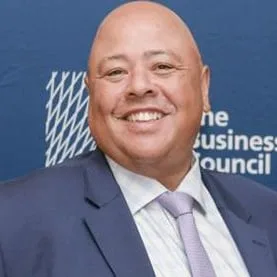
Automated transcript · uncorrectedWhat is this Sunday morning? Is Paul Zuber, and he is the Business Council of New York State, and he knows what the heck is going on in Aubany. Well, Paul, we haven’t caught up in a while. What is the final outcome of all this stuff that’s hurting businesses in New York State.
Well, I mean, I think there’s a lot of things going on right now, John, but I think one of the biggest things that we’re looking at, and a lot of the businesses are looking at, is this climate bill that was passed several years ago that requires New York to take an aggressive approach towards transitioning the energy grid
to green energy. And one of the issues that the Business Council has always said was we’re not opposed to green energy. I think everybody agrees that it’s healthier, it’s better, but we need to know what is going to cost not only consumers, but what it’s cost going to cost businesses.
And you know, I’ve been on your show several times. I’ve made several statements about it. I think it’s been picked up actually by some of the newspapers, and now several weeks ago the State came out and admitted that they’re not going to meet the required goals of the bill, which requires that the state meet a seventy percent renewable
goal by twenty thirty. And this comes on the heels of a report or an audit to just got released by the New York State Controller which says that the state was relying on outdated data and made miscalculations about the state ability to reach these energy mandates. And one of the things that the controllers people point to is
the fact that at no point has anybody really looked at how we’re going to be able to do this and how much is going to cost. I mean, eighty five percent of the electricity supplied to New York City and Long Island is from gas and oil, So how are we going to transition from that, and what’s going
to be the cost. At no point has anybody done a cost estimate as to what’s going to cost businesses and what’s going to cost consumers. Is it going to cost five dollars more on our electricity bill? Is it going to cost thousands of dollars more on our electricity bill?
I think here we know what the answer is. It’s going to be significantly more. But no one’s talking to the community, notice talking to businesses. No one’s talking to people about what this cost will be. Meanwhile, we also want to create these new exciting economic development projects in upstate New York, which includes data centers, which includes bringing
some of the nanotech industry to the Syracuse, Buffalo and Rochester area. Well, guess what, people, That requires electricity, and it requires us to be able to supply the necessary energy to those facilities to make them work. Now, I think one of the go ahead.
Paul I was told that there’s a system going in coming in from Canada on energy created from from I guess the water in Canada, and it’s being moved on. How far away are we not happening?
You know, we’re not that far away from it from it happening. But you know, again, it’s a piece to a puzzle, right, And I think that’s the problem with the with the CLCPA. We need the hydro power from Canada, we need wind power, we need solar power, We need all these little pieces to fit together in order to
make sure that our grid is reliable and we don’t have to worry about brownouts. The problem is we don’t have enough of those little pieces of the renewable puzzle to ensure that we won’t have brown house. I think most people who are listening from New York City remember the last couple of days, what did you do? You
got a message from content saying, oh, please conserve your energy, Please don’t turn on your air conditioner, Please be careful because they’re worried about brown house, which deals with the reliability of the grid. And until we have a comprehensive review which looks at the costs and the reliability, we run the risk of brown house. We run the risk
of having significant problems. I mean, there’s so many areas that are impacted by this energy policy. It’s time that the state sat down, relooked at it, and looked at it in a clear eyed, comprehensive manner to make sure that it benefits every New Yorker and it doesn’t raise our costs. We have people leaving the state. They’re leaving
the state because the cost of living here. We can’t all of a sudden look at people and say, well, we’re going to raise your electricity bill by I don’t know, five hundred dollars a year or one thousand dollars a year, two thousand dollars a year and expect people to stay.
It just doesn’t work. And in time that we look at it and we actually have a document that tells us how much this is going to cost, do.
You have a stay update on Indian Point? Is it completely gone? Yet?
It is completely gone in terms of being able to supply energy to New Yorkers. Obviously they’re decommissioning the site through a company that bought the site from the original owner, Energy Nuclear Power. Unfortunately, that’s another example of where we move too quickly without thinking out the consequences. Indian Point supplied a significant amount of power to New York City
and oh, by the way, guess what it was? Clean energy? The energy that everybody’s talking about that we need in New York Nuclear power or is clean energy. We decided to shut down the biggest supplier of electricity to New York City, and then we didn’t replace it with enough electricity to ensure that we could do it. And again
another example of the state has to stop jumping off the ledge because certain groups and certain special interest groups scream at the top of their lungs that you know, we have to save the world, and we have this herd mentality with the rest of the states. Let’s do it the right way. There’s a way to do this
that we make sure that everybody has reliability and costs or low. But one way not to do it is not understanding what we’re actually getting into. And that’s what’s going on right now.
And Paul, the last question, are we is New York State moving on moving ahead with wind power in the oceans.
We’re moving ahead, but it’s been very it’s been very slow. So the last contract that was let actually was not let or was put out, was not let because the companies that were bidding for it couldn’t comply with what was needed in the RFP. A lot of it has to do with supply chain issues and some of those
other issues. So it’s going incredibly slow now. The thing that people also have to contemplate is that if there is a change of administration on the in the federal government, that there is going to be less of a likely you know, push towards that type of energy in a Trumpsion administration as opposed to a Biden administration. So again
going back to what I said before, this is why New York has to have a comprehensive plan. We have to have well, if this happens, what do we do? We have that backup plans. We really have to look at this and that’s.
I mean, windmills aren’t doing well. Windmills don’t work in my opinion. They killed they killed millions of birds, They killing our rails and it’s creating a bigger environmental problem than it’s solving.
Yeah, well, I think I think again, John, it goes back to what I said before. You know, when we were talking about hydro power. It’s it’s a piece to a puzzle, but it’s not the entire puzzle. Yes, right, So I think I think if you’re looking at win to solve all of New York’s problems, that’s not going
to happen. If you’re looking at when to be an added benefit to the overall grid, then then yes it is. But I think the problem is it’s not something that’s going to solve all our problems. Solar is not going to solve all our problems. Hydro is not going to solve all our problems. It all has to be put
together and put together in a way that works. And I think that’s where we’re kind of losing ourselves in this whole energy plan that New York has is we’re not really sure how to get there and how to get there in a way that’s affordable for New Yorkers, and that’s what we have to really look at.
Understood well, Paul Zubern, New York State Business Council, thank you so much for coming on and thank you for the update.
Well, thank you, John, I appreciate it.
Sunday, July 21, 2024


New Jersey report…Menendez, senate race.
Bob Hugin Former Chairman, New Jersey Republican Party
Biden has to get out; the only path forward.
Alfonse D'Amato Former U.S. Senator from New York


Chased down Secret Service Director, Kimberly A. Cheatle.
Marsha Blackburn U.S. Senator from Tennessee; nominee for Governor

The Chinese are driving to be superior on the seas.
Gordon Chang China Analyst & Author

Trump's assassination attempt has changed America.
Bill O'Reilly Host of No Spin News and Author
Interviews Frank Korzekwinski, Senior EVP of Flushing Bank
Michael Stoler Real Estate Expert

Little-known facts of lighting. July skies.
Steve Kates Space and astronomy broadcaster (Dr. Sky)

Summer safety tips, heat stroke, deadly pancreatic cancer.
Dr. Peter Michalos WABC Medical Expert
Paul Zuber
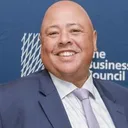
Climate Mandates Are Hurting Working Families
Paul Zuber SVP, NY Business Council
They Need To Fix The Climate Law In Albany, To Make Life More Affordable For New Yorkers
Paul Zuber SVP, NY Business Council
New York will face a $34 billion budget gap over the next 3 years.
Paul Zuber SVP, NY Business Council
