


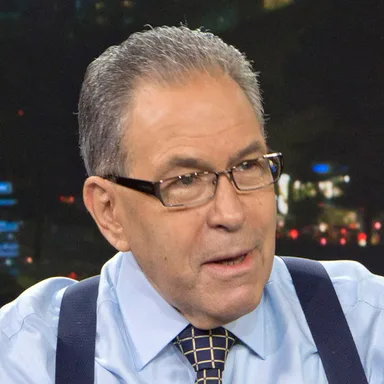
Michael Stoler Real Estate Expert
Interviews Frank Korzekwinski, Senior EVP of Flushing Bank
Transcript
Automated transcript · uncorrectedGood morning. This is Mike Stoler for the Stolar Realists. They report on the Cats Roundtable. Is there money for real estate? That’s a big question, so I don’t really know the answer. So today I brought in my friend Frank Corsakwinski, who is the senior executive vice president, chief of real Estate Learning for Flushing Bank. Thanks for coming.
Here, Thank you, Mike, Thank you for having me.
So is there money? Can people finance projects today? You know, you have the high interest rate environment, you have years great rising deals at different rates over there. What’s really happening today?
So I guess there’s, oh the tough question to answer, because there is money out there.
That’s why I want you. I work in an answer.
You know, it’s very difficult to find the right lender for the right job. Some of it has to do with regulations in the industry, capital requirements of banks, concentrations of credit, the current environment that we’re seeing in projects that we’ve been in instead have required you know, significantly more equity. Most of the jobs that we’ve funded recently
have already had in place various tax incentives. Tax won’t be tax incentives from the light Tex, grants from other agencies. All that money is used to reduce the cost of the funding funding excuse me, and adds equity to the project, and you know, makes it attractive for the banks because they generally lend less money. Typically speaking, the loan to
cost scenario has been coming in somewhere sixty five to seventy percent. That would be from your local bank. I do believe there are probably other forms of capital available at higher pricing, possibly from private investors or Wall Street funds.
They’ll go as high as here eighty eighty five percent, but I haven’t seen any of those deals close recently.
So what happens to the deals that were at three and a half percent and today have to charge seven percent? What’s the dilemma for the bank and what’s the dilemma for the borrower.
So that’s an interesting thing position to be in because there’s two types of scenarios. One is you’ve put a project in place, and you bought a building and it had a steady cash flow and your cost of debt was three and a half percent. You had it in place for five to seven years. That five or seven
year period is coming up, depending on the repricing options that you had in your in your loan or your portfolio. You could see the cost of your loans going from the three and a half to almost seven percent depending on the index that your loan is tied to. So if essentially, if you had a coverage ratio of your
debt to your expensive somewhere around a one twenty five one thirty ratio going in and your cost of debt has doubled, you’re going to have a very difficult time making your payments. Quite often lenders are calling either not renewing loans or calling in for additional capital, and in many cases the bars are able to come up with
capital to meet the calls to reduce the cost of the funding obligations of borrower.
Okay with three ard two. You know, one of the difficult deos is construction. What’s what’s happening with construction loans?
So the construction the industry is tight. As we mentioned earlier, the cost of funding a lot of that is prime based margins are one and a half two percent over prime, so you could see your cost of funds being north of nine percent. So that’s a pretty rough, a pretty rough number to swallow going.
Into a project.
There are a number of projects that went into into the conveloped development phase when prime was below five percent, so they were looking at four and a half five percent, and now they’ve kind of moved up to nine to nine and a half percent. Developers had to come out of probably have come out of pocket in order to
support the debt service as those loans grow, because the balances increase over time. You know, when you start out, you may have a five million dollar loan balance, when you get to the end, you may have a twenty million.
That twenty million could be at nine percent. Borrowers do come in with additional equity to support it, quite often interest reserves in the development deal. Many of those interest deserves are established with certain increases projected into the loan documents.
I don’t know that we ever thought that we’d see prime plus one one and a half percent being back closs to ten percent these days. So some projects are struggling, but most of them that were done at that point in time have gotten through the COVID cycle and are nearing completion. There is money available for the takeouts and
the permanence. A little bit difficult on the office building side, but your local commercial building and or your apartment building. This seems to be sufficient capital to take out the end loan, and those loans are less significantly less than the nine percent number that they’re paying right now.
With regard to the apartment loans, where are the agencies taking you out of the deals today?
Fanny and Freddie, We’re starting to see Fanny come back into the market.
They have the ability to price over treasuries. Banking industry generally does not borrow from the treasury. They alternative funds. Most of it comes from borrowed funds in the marketplace and the depositors. So Fanny Made does have an edge, and they can also offer interest only loans. Interest only was a big drawer, I guess a few years back,
prior to COVID, banks are no longer excited about interest only loans. They like to see their loans pay down. So we are losing loans to Fanny quite often to full time interest only, which means they don’t pay any principle back for at least a seven or ten year period.
We were just talking what banks are interested, so what are you interested in lending on today?
So Flushing as a local community bank about eight and a half billion dollars in assets. We’ve been around since nineteen twenty nine. We service the Greater Metropolitan Area, the Five Bars of New York City, NASA, Suffolk, a little bit of Westchester. We are considered a neighborhood lender, so apartment buildings, whether they’re ring stable as a free market,
are primary target based very stable cash flow.
We also look into.
Commercial real estate, your basically neighborhood real estate to see you see it throughout Bay Ridge, you’ll see it in Flushing Bayside, the story strips of stores, street level activity, some apartments upstairs, maybe some office upstairs. We’ve done some medical professional buildings throughout the five boroughs, pretty much supporting whatever the community needs are.
What’s your thought about the retail world today?
So if you go back to two thousand and eight, the thought that was that retail would be collapsing. The Internet was coming in, nobody would go out shopping, COVID hit, everybody stayed at home. Stores are going to be closed.
Retail is no good. We haven’t seen that level of devastation in the market. From our perspective. In the communities we serve, the retail seems to be doing very strong. People are coming out, They’re shopping, they are going to restaurants and bars, you know, just co mingling and doing things that they we’re doing prior to COVID. And remembering
that many of these people live in neighborhoods where they rent an apartment that’s only eight hundred and nine hundred, maybe twelve hundred square feet. You can’t stand that built that room for you know, seven to ten days straight.
You need to get out, you need to do things.
So pretty much fairly stable in the retail sector.
What about the hospitality sector.
Hospitality has done a nice rebound lately. We have some exposure in the outer borrows, and the travel is back. People are coming back to New York City. Occupancies have improved considerably over where they were during COVID, and the cost of a room has gone up rather nicely. There is some speculation that the number of rooms available due
to the housing of some migrants has reduced the availability of rooms, which could have an effect in increasing or decreasing availability of rooms in local hotels. So from what we see, there’s a nice rebound.
What about the end industrial People still love industrial, but it’s taking longer to get the least to sign.
So we focus on industrial that has stabilized cash flow. There has been a significant development of industrial in the outer portions of New York, particularly in Long Island. So we are seeing a little bit of a slow down in leasing activity, and I think that may be partly due to some uncertainty in the economy.
People are a little.
Bit hesitant to take on new projects and new spaces. My son is a leasing agent on Long Island and he sees a lot of activity. He’s not really seeing lease signings, but he’s definitely out there more often showing space as people seem to be interested.
But signing is a little bit slow right now.
With regard to the office mark in Long Island, what’s your thoughts about.
That, it’s very soft.
Most of the office buildings on Long Island were built between the seventies and eighties, a little bit outdated the footprints. Occupancy is down considerably, much like every other office building throughout the New York area.
Back to Work is probably doing better in Long Island than.
It is in New York City, and probably because many of the people that used to travel into New York City live in Long Island and they’re probably more comfortable going back to the office, still very very soft. Medical seems to be driving the bus in terms of leasing activity in the office space.
With regard to Long Island or just in general.
I would say pretty much. In general.
We’ve done a number of facilities in Brooklyn, We’ve done a few in the Bronx, several in Queens. You know, I’ve seen a few large shopping centers on Long Island that were taken over after a supermarket left and they were converted to outpatient facilities for hospitals.
Have you seen any office buildings being converted to retail.
Not on Long Island.
We I have seen one substantial building that was taken over by a religious group and will be used as their international headquarters, and I think they will be developing some form of housing on a parcel of that land.
No, not so much for retail right now.
What about transit oriented developments, you know, with retail and apartments together near the subways or the i R.
Well, that seems to be a real driver, or had been a real driver for development prior to COVID. I’m not quite sure what’s going on within the Burrows, but you know, the Borrows are fairly well developed.
But I can speak for Long Island.
You look in areas like Farmingdale, you go out east to Patchog and places like that. All around those downtown areas, they’ve changed the zoning. They’re welcome, they’ll welcome, welcoming developers with additional zoning rights, getting five and six story buildings, bringing people back to the downtown areas. Coincidentally, I guess they were on board with the commute to the city,
but I’m not quite sure everybody’s commuting to the city five days a week, but it’s still an attractive an attractive means to get to New York City. You’re also seen people taking Along Island Railroad on the weekends, going from let’s say Rockville CeNAT to Patche or a patchwork to Rockville Center to go to restaurants and go out.
The village of Babylon’s doing very well, have a nice train station, nice downtown area. So many of these downtown areas which were moving along rather slowly prior to COVID, are really starting to bustle up.
So in conclusion, it seems like things are positive coming up there for the future. And I think people will get the money from Flushing Financial Bank and I’d like to thank frank Kozakunsky for being here and I’ll see you next week.
Thank you, Mick
Sunday, July 21, 2024

New Jersey report…Menendez, senate race.
Bob Hugin Former Chairman, New Jersey Republican Party

Biden has to get out; the only path forward.
Alfonse D'Amato Former U.S. Senator from New York


Chased down Secret Service Director, Kimberly A. Cheatle.
Marsha Blackburn U.S. Senator from Tennessee; nominee for Governor

The Chinese are driving to be superior on the seas.
Gordon Chang China Analyst & Author
Trump's assassination attempt has changed America.
Bill O'Reilly Host of No Spin News and Author

Little-known facts of lighting. July skies.
Steve Kates Space and astronomy broadcaster (Dr. Sky)

Summer safety tips, heat stroke, deadly pancreatic cancer.
Dr. Peter Michalos WABC Medical Expert
Michael Stoler
The Stoler Report with Michael Stoler: Eli Weiss and Andrew Albstein
Michael Stoler Real Estate Expert
The Stoler Report with Michael Stoler: Eli Weiss and Andrew Albstein
Michael Stoler Real Estate Expert
The Stoler Report with Michael Stoler: Robin Schneiderman
Michael Stoler Real Estate Expert
