


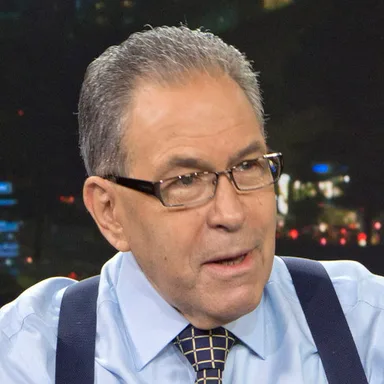
Michael Stoler Real Estate Expert
This week's guest: Adam Altman Managing member KABR Group.
Transcript
Automated transcript · uncorrectedGood morning.
This is Mike Stoler for the Stolely Real Estate Report on the Cats Around Table. What’s really happening in the real estate market. The press always has different stories, people have different ideas. But today I have an individual who’s been involved with the real estate market for the past twenty five years or close to that. I have Adam Altman,
who is a managing member at the Cabro Group. Thank you for being here, Michael.
Thank you so much for having me.
It is great to be here with you and be in your presence, one of the great interviewers of our business.
Thank you for the compliment. So tell me what the Caber Group is and what they’re doing today. I know you’ve been in business since two thousand and eight or so.
Yep, that’s correct. We’ve been in business since around two thousand and eight, and I would say what we’re doing today is not that different in some ways than what we’ve been doing since two thousand and eight, but in some ways it’s entirely different.
So what does that mean?
Real estate is a living, breathing thing and you have to move with the markets, and the markets are constantly changing, and that means certain assets asses become are more in favor or more economical, and some are.
And that or less so.
And right now, the ability to get certain assets financed and the interest rate environment has made it such that, you know, we have been very focused as of late on pursuing retail opportunities, multifamily opportunities, and other real estate assets where there is a miss a balance sheet that’s not properly in order, and there’s some dislocation around that.
Okay. So the other day when we were talking, you were saying that you’re buying mistakes that took place from twenty eighteen to twenty twenty two. Explain to me what type of what are you doing with buying?
Okay, So first I’ll say we’re trying to buy.
It feels like we’re the the beginning of the beginning, not the beginning of the end, if that sounds right. And what that means is a lot of people, even the multifamily space and certainly in the office space, which has been well reported on, bought assets between twenty eighteen in twenty twenty two, and they did not fix their
debt and they had a certain assumption about what it would cost to let’s take a multi family and apartment building, for instance, what would what the income would be, and what would cost to renovate that property and the amount of income that property would then generate.
And they went into that with the underwriting that.
They would be able to get financing at a level consistent with where it had been. And what we all know has happened is that the FED had to aggressively fight inflation and in doing so, had to raise rates very quickly, historically fast.
That made it so that if you.
These people who own this multi family property, and you could apply the same analogy, to example, to any other group went to get financing, they were going to get much less money than they had expected or underwrote, and therefore they had to write a check in order to maintain the leverage level.
So the question is where do they write to check from. Okay, some of these people were undercapitalized, So what happens in that case?
Great, great question, great observation. So the ones who are under capitalized and don’t have access to a strong balance sheet are in trouble, and those are the folks that have to sell. The ones who have strong hands is the expression of the business, and who have deep pockets will will ride.
Out this, this this.
Storm, and so our goal is to find those folks who need to create liquidity for a whole host of various reasons and bring our capital to the table in order to try to consummate a transaction.
Okay, with regard to that, you have to raise capital. You’re a private equity firm, so you’re going to investors to look to raise capital. How difficult is it to raise capital in this environment, especially with projected expected returns.
It’s less about the expected returns, it is it’s difficult to raise capital.
I think it’s always difficult to raise capital.
And anyone who says that, you know, unless you’re the Blackstones of the world, where you know, they hang out a flag and there’s an expression, you know, no one gets fired for investing in a Blackstone fund.
It’s always difficult to raise.
Capital, and it should be because people work really, really hard to make their money and they shouldn’t and they invest it judiciously, and they want to understand who and what they’re investing it for and with, and so people have a right to make giving up their capital difficult.
So I have tremendous respect for people’s capital.
And the reason it’s the other reason I think it’s difficult right now is because when.
The risk free rate of return when treasuries.
When people can go to their bank and effectively get five plus percent five and a half percent for doing nothing and taking effectively no risk, the amount of return you have to offer them and the amount of risk you’re putting on the table needs to offset that.
Now, you were very active in Jersey City. What’s are your thoughts today on Jersey City.
Jersey City is a great city, great location, wonderful environment to live to have access to Manhattan is very still very dependent on Manhattan. The office environment there is I think facing much stiffer headwinds, but the residential environment there is very strong.
The apartment market there is very strong.
You know, the biggest thing that Jersey City will have to contend with is, you know, do they want to make do they want to continue to allow the wonderful developments that have made it such a wonderful place continue to take place, or are they gonna, like a lot of municipalities, are they going to you know, hopefully not
become a victim of their own success.
Okay, with regard to Jersey City, you had a massive project, are you still involved with the development of a couple of projects there.
We’re still very involved in a number of projects in Jersey City. I think you’re referring to one Journal Square, which is probably the most significant Jersey City project taking place right now.
We’re no longer involved there.
Our partners are continuing on with that project, and I think that is going to be an unbelievably transformative and necessary project for Journal Square and will change the the the in a positive way. Journal Square for the next century and longer.
Okay, let’s talk about a couple of projects that you mentioned before that you’re in the midst of working on and buying from other people who’ve owned the property at let’s say, one hundred million dollars and now you’re able to buy it for forty forty five million.
So there are a number of without getting too specific, because but there are a number of properties where people, like I said, bought you know, over the last you know, five or six years, and they had a capitalization structure, you know. And to defend some of these folks, you know, we’ve had two things that you mean, you take a
step back. We had COVID, right, nobody, nobody knew how to deal with COVID, how that it impacted all of our working patterns, our life patterns, you know, where people live, how they commute. And then you come out of COVID, you have this kind of like little bit of a honeymoon and reprieve, and then you head right into interest
rates that are moving higher, faster than people have experienced in decades. I think I think it was the fastest rate. I don’t want to you know, maybe technically, I’m not sure if I’m technically right. I think it’s the fastest rate since the twenties, nineteen twenties, so rate of appreciation of the interest rates. So those two headwinds combined and
created you know what we have now, which is a set of circumstances that is really tough to navigate. And I think the industry should be given credit for being really steering the ship through some rocky waters. And most folks are going to come out of this well and stronger and having learned some lessons that hopefully they’ll be
able to apply in the future. And then and some, as you know, will not. Usually the ones that don’t I find, you know, took too much debt.
Or sometimes it’s just a matter of.
Luck where you took on a bad tenant or you know, and then that and just didn’t it didn’t line up for either.
Right now, let’s talk about repositioning of certain assets. You mentioned you’re you’re doing something maybe in ASTA and stuff accounting.
Sure, Yeah, we’ve been focused on recently buying some retail assets.
We bought a grocery in or shopping center up a new city.
We’re under contract and moving forward to purchase an asset in Nassa County. That’s a large asset, retail asset. You know, I think what COVID laid bare for us was that people are going to get a lot more things at home, but people also still go to stores. But what it showed us is which stores they go to and how
often they go. And once we saw that and the markets saw that, you’re able to then lean into those concepts that have really proliferated, and retail has been for that reason. It’s almost like, you know, the retailers understood what worked and what didn’t and kind of what this new evolution of shopper looks like, and they’ve been able
to respond really intelligently, and you’ve seen some tremendous strength in the retail space.
Let’s talk about industrial.
Yeah, Industrial, Industrial is a strong acid class. It remains strong, I would say.
The on shoring.
And you know, the continued need to be close to rooftops continues to be a wonderful wind at the back of industrial. I do see a little bit of softness second half of twenty three and into twenty four more, but it’s it’s less about a real softness than it is about not having the rapid rent growth that you had.
For the four or five years prior. So it’s not softness. It’s actually more like normalcy is what I probably call it.
Right, so you have you know, you finally have some of the development catching up to the demand. But it’s an unbelievably healthy acid class. There’s strong players in it. It’s going to be it’s going to continue to grow in a very healthy fashion. I think. I think just some rent growth moderation is what we’re seeing in twenty
four and building and high interest rates coupled with higher building quests means that there’s going to be less product delivered. So when you get into twenty five and twenty six, you know that supply demand and balance might begin to take hold.
Again and you know, but I think it.
I’m long the industrial marketing getting longer. Okay.
I’d like to thank Adam Aldman on his outlook, then his thoughts on the market, and I’ll see you next week.
Terrific. Thanks you so much, Michael
Sunday, February 11, 2024
The migrant situation in the City is a perfect storm for crime and gangs.
David Paterson Former Governor of New York

"Migrants are not welcome in Nassau County"
Bruce Blakeman Nassau County Executive; nominee for Governor

Paired with the teachers union to thwart congestion pricing.
Vito Fossella Staten Island Borough President

Questioning whether President Biden can survive the report.
Dick Morris Political Strategist and Author

Democrats need a new candidate for president.
Alfonse D'Amato Former U.S. Senator from New York
No more beautiful place on earth…Greek Isles.
Greek Minister of Tourism Olga Kefaloganni
Biden pulled the rug out from the Israeli offensive.
Former Deputy National Security Director KT. McFarland

Can President Biden survive the special counsel report?
Newt Gingrich 50th Speaker of the House

The saga of the 18,000 earth cycle.
Steve Kates Space and astronomy broadcaster (Dr. Sky)

Viruses have intelligence. Altering them should be illegal.
Dr. Peter Michalos WABC Medical Expert
Michael Stoler
The Stoler Report with Michael Stoler: David Schechtman
Michael Stoler Real Estate Expert
The Stoler Report with Michael Stoler: Eli Weiss and Andrew Albstein
Michael Stoler Real Estate Expert
The Stoler Report with Michael Stoler: Eli Weiss and Andrew Albstein
Michael Stoler Real Estate Expert
