


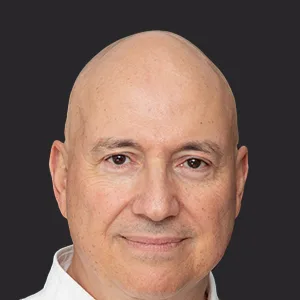
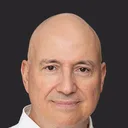
Dr. Peter Michalos WABC Medical Expert
Live long and prosper. Healthy living tips.
Transcript
Automated transcript · uncorrectedWhat is today is doctor Peter Michlos, a resident genius excellent historian and tells you how to live long and prosper. Uh. Doctor Mihllos, what tips you have for our listeners today, Well, the.
First tip is stay away from doctors and operations. But well, kidding aside the importance of the basic things, sometimes we have to start with them the annual physical or the bi annual physicals where it all starts in the health care system and how we interact with our doctor. And it’s so important that you give a detailed history to
your doctor because many times, if you’ve had other members and your family who’ve had certain diseases, it helps the doctor to hone in and try to figure out what’s going on with your particular problem. And in the future, we’re going to be having swaves of our cheeks and DNA testing, and before we even go to the doctor,
they’ll have a whole list of all the DNA tests that will tell the doctor things that your risk for For example, on your own, you can order DNA tests now and you can find out whether you have risks for clotting or thromboembolism or clots in your legs. In veins call factor five liden and that you can find
out on your own. But if your doctor knows about that, he’s going to make certain recommendations about how to change your life, whether you need to be on a baby asprint or drinking more water, or certain supplements to keep your blood thinner, like things like Omega III, invite them an EE and other things that they will discuss with you.
Next thing is that during the physical exam, the doctor will start from head to toe, and one of the first places and the only place in the human body you can directly visualize human blood vessels is the eye.
When your doctor looks in the back of the eye and they see narrowing of the blood vessels, they immediately get suspicious and ask have you high blood pressure? Because when your blood vessel is a narrow it means your body says, oh, wow, the pressure is high. I can’t take it anymore. In the little tiny artery’s get a narrower.
So that’s a tip off. And if you’re a little bit older and you tell the doctor you’ve been having some chest pain once in a while, that narrowing that you see in the back of the eye can also mean that you might have some narrowing in the heart vessels.
And I remember one person who I told the next day they went and they ended up having a stent that week because they sound narrowing in the hard arteries just from the eyes. Even looking at the pupils. If one eye, for example, has a pupil much larger than the other and the person’s having headaches, that can be
a sign of aneurism. I’ll never forget when I was a resident, there was a woman that was pregnant. She had a big headache. One pupil was larger, So not only was she pregnant about to deliver, but she also had an aneurysm in her brain that was about to pop.
Another thing when people look at the eyes is double vision. When someone says they have double vision, you have to worry about strokes, and sometimes side by side double vision is sometimes one of the signs of also diabetes. And if a patient is telling you that they have blurry vision and they’re urinating a lot, guess what. One of
the first people who diagnoses diabetics is ophthalmologists, because people come in with blurry vision because the human lens swells when the blood sugar is up. It’s called osmotic shift and it causes blurring a vision. And because you have to get out all the extra sugar outy of blood, you have to urinate more because you need more water
to carry out all that extra sugar, and that’s why diabetics tend to urinate more. Going on to the physical, examining and listening to the heart or listening sometimes the doctor might even put the stethoscope to your neck. You can hear turbulence in the neck. That’s a sign of a blockage in the neck or something called corotid artery blockage.
And that’s another thing. Listening to the hard valves, hard valves of little valves that blood gets pump forward. One of those valves has a problem, you can actually hear the regurgitation and then you go to the next step.
In addition, during the physical you feel the absmen, you can actually feel for lumps, masses. Doctors can actually feel if you have a tumor sometimes in your belly, and that’s all part of the physical. Then there’s other things like the EKG because the heart is basically an electrical pump muscle, and you can actually see whether there’s something
called the schemia, which is lack of blood flow, and that shows up on the EKG. And then you go on to other parts, including the stool tests, and sometimes people get very uncomfortable. For example, with an equal example in a man, you can feel the prostate if it’s enlarged.
You can also sometimes feel tumors, and sometimes you do the simple test that the doctor does at the end called the Guiac stool test, and if you find blood that’s not visible to the eye, that’s a sign of possible colon cancer.
Is there productive? Is there any things that are happening in the last year or two that have expanded more so than it did five years ago, ten years ago, because walking around talking to friends, so many more people have pancreatic cancer for some reason. Is there a large expansion of that? And so many people have problems with
they’re prostrate? I mean, what do you see in it? I mean it seems like.
Ahead, No, I hear what you’re saying. And definitely a lot of these cancers on the rise, and life expectancy the United States is down, and there’s a lot of serious concerns that we live in a very toxic environment.
A lot of our food has contaminants in it. A lot of microplastics have been found in people’s urine and biopsies, which is absurd. You know, there’s a lot of things when you’re drying. When you know your tires were down, I guess we’re all those microplastics. You’re on the highway driving a lot of that rubber. It’s getting into the air.
That’s why I tell people when you’re driving on the highway, don’t drive with your windows down. And also change your cabin filters. After those hot fires we had in the Northeast, I tell people change their cabin filters, and they were shocked to find the soot on there. I just changed my cabin filters last week and there was all this
black rubberized material, and that’s tire rubber on I we’re breathing all these things in and all these toxins and getting good clean water. Think about how much we pay to try to get good clean water. And also our skin is the largest organ and it absorbs a lot of toxins. A lot of the products we use, a
lot of the soaps that we use, so.
We just have to be extra canfl these days. You got to be extra canfl with with the air we breathe, we got to be extra canful. With the water we drink, we got to be extra canfl Absolutely.
That’s why people who live in places like Ekidia, Greece and Sardinia where they have very clean water, clean food, clean alive or clean fish, those people are living much longer and they don’t have a sophisticated medical care. So it’s going back to the basics clean living, healthy living and listening to WABC for health tips on how to
live longer, and talk to your doctor and the importance of the annual physical. Ask a lot of questions and go to your doctor with a list of questions that you have, and make sure you tell them everything all the medicines you’re on, not just the medicines, but even the vitamins and supplements you take, because they can also
affect your health, especially things like before surgery, whether you’re on vitamin E in gogoloba, fish so oil, those things can also increase bleeding before surgery. So be honest with your doctor and also do some research yourself about drug interactions on some of the medicines you take. And continue listening to our series on Living Longer and how to
Live long and prosper.
Doctor Peter Me Hellos, thank you so much for informing all our listeners and we’ll catch up with you again real soon. Thank you so much.
Thanks for always getting the truth out and giving us the microphone to share information on keeping people healthy.
Sunday, April 7, 2024


Debit cards for migrants and the Albany budget.
Nicole Gelinas Manhattan Institute Senior Fellow and Columnist
Representing New Jersey to stop Congestion Pricing.
Randy Mastro Partner, Dechert LLP; Former NYC First Deputy Mayor
Full schedule at the ballpark. New Jersey political update.
Eric Shuffler Founding Partner, River Crossing Strategy Group
Criminals set free to commit violence again.
Alfonse D'Amato Former U.S. Senator from New York
Will the Federal Reserve lower interest rates?
Steve Moore Economist; Co-Founder, Committee to Unleash Prosperity



This week's guest: Ronald Levine, Senior Managing Director, Meridian Capital Group
Michael Stoler Real Estate Expert
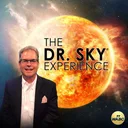
The full eclipse of the sun is April 8, 2024. 3:20 PM in NYC.
Steve Kates Space and astronomy broadcaster (Dr. Sky)
Dr. Peter Michalos
Limiting Sugar and Choosing Whole Foods to Support Healthy Aging
Dr. Peter Michalos WABC Medical Expert
Protect Your Skin From UV Radiation and Reduce the Risk of Skin Cancer
Dr. Peter Michalos WABC Medical Expert
Processed Foods and Mental Healthcare Failures Threaten Public Health
Dr. Peter Michalos WABC Medical Expert
