


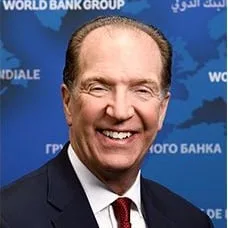
David Malpass Former President, World Bank Group
Chinese investments all over the world rival the US.
Transcript
Automated transcript · uncorrectedWith us today is David Malpass and he is the thirteenth President of the World Bank, one of the biggest banks in the entire world, and he is completing a term on April ninth or April fifth. This April, mister Moultpass, it’s one of the biggest banks in the world, most complicated banks in the world, involves one hundred and seventy
hundred and eighty countries. How does it feel to run an organization that big.
Hi, John, Well, it’s a big challenge. It keeps you busy. But I think what I tried to do was make clear to everyone from the beginning that what I wanted was good outcomes for people of developing countries. It’s a little bit like what you write about in your book where you talk about clients the customer matters, and so
as you think about it, you need good people and you need to keep your eye on the ball, which is the client in this case, people that live in poorer countries, and so that means trying to have programs that make sense for them and then push them through quickly.
So that’s what I’ve tried to do, and we’ve had a lot of success on this. It’s been a very busy four years here at the World Bank, and then prior to that, two years at the Treasury Department as Under Secretary. So I’m looking forward to new challenges, but I’m really happy with the progress that we made.
Now. I know you are traveling in Africa. Is Africa one of the biggest continents that the World Bank is involved with.
As much as half of our assistance goes to Africa. And you know, Africa itself is a gigantic continent. If you fly from one side of Africa to another, you know, tip to tip, east to west, as it’s as big as Russia, which is the biggest country in the world.
And pitt spans lots of people, different ethnicities and different economic problems, and we’re heavily involved in Today. I’m in nejer which is a country that’s surrounded by fragility, and so the big challenge for them is to have enough teachers and enough jobs so that people are peaceful and move forward. Economically, it’s a big challenge in the World
Bank’s very involved here and now there’s a.
Lot of problems in the World Economic Forum. Interest rates have been going up. How does that affect the World Bank? Do they have the safe problems with interest rates rising or how does that work.
We have a big balance sheet, but it is we lend floating rate, not fixed rate, and so that means that as interest rates go up, our net income actually goes up somewhat. And so what we’ve had to do as the country’s face problems over these four years, we’ve had two major surges of assistance by the bank, expanding
our balance sheet in order to help people with COVID and now with the Ukraine war, and the donors have been generous as well. So we’ve had a big increase in the volume of our assistance that we provide, and we are we are we keep a matched book, meaning we don’t have a maturity mismatch the way Silicon Valley
Bank did. So if you think about our liabilities, they are they tend to be long term. We issue bonds into the market and we use that to make floating rate loans, and so that means we’re in it. We’re not under the pressure that some of the banks are in the US right now. Cryptocurrency. Have you had the
World Bank got involved it all in that or are you protected from that? What’s the story on cryptocurrency. Starting point is that we don’t own it as an asset on our balance sheet, so that would be it’s got a lot of volatility cryptocurrency does. One of our challenges.
A different challenge is the countries that we’re working in are under pressure from the higher interest rates, and also they are looking for ways to have new settlement systems and payment systems, and so crypto is tempting for some of the many of the people in developing countries. I think what the world should do is move more quickly
to fast settlement for dollars. You know how empowering it is for people in the US to use payment systems that are instantaneous and be able to get their money out of the bank in an instantaneous way. So I think there can be a lot of progress on that without going into anonymous cryptocurrency mechanisms. We’re very involved in
it from an international regulatory standpoint. The Financial Stability Board, one of the international regulators, is heavily involved in that, and so we approach it from the standpoint of what can we do for people in the port in developing countries, what want is fast payment systems that are really cheap.
They don’t want to pay a dollar per transaction. They can’t afford to do that, So we strongly encourage countries to put in fast, safe payment systems.
Understood, Now, you’ve been in charge, Who’ve been president of the World Bank, which is a phenomenal organization for almost four years now, And when you ask what are you most proud of of complishing in the last four years that you’re proud of and the countries you’ve helped.
People you help, what I guess I’m proudest of is going having moving as the world worked through these two giant crises COVID and now the Ukraine War, the World Bank has been able to respond very quickly. That took work, that people were working round the clock, even from home as COVID struck in countries around the world, and we
made it work. And so it’s not only been an okay performance. I think it’s been a great performance by people at the World Bank, and so I’m proud of that. There’s been you know, there’s normal turnover in an organization.
We’ve gotten stronger and stronger in that. So I like that side of it. The challenge, the frustration is that developing countries are in grave difficulty. I call it grim. It’s a crisis facing development because the resources of the world are concentrating towards the advanced economies. Think of all the money in the world that has to go to
paying the national debt, the US national debt, but also Japan’s and Europe’s national debts. That takes a giant amount of energy by the world just to pay the interest on the debt, and those interest rates are going up.
So if you think of it from the standpoint of a person living in a poorer country, there’s not enough capital, not enough fertilizer, and for many for many of them, they don’t have electricity or water or food. And so that’s a big challenge that I think the world should pay more attention to.
Understood. And the other important thing is is so much strife the politics of going on worldwide with various countries, with China, India, Russia, more Ukraine. How does that affect the relationship the World Bank has with those countries. My vision is you don’t really get involved in that stuff that the Bank is out to help. Countries tell us
your your feelings and what.
Really happens up as a practical matter. When Russia and data Ukraine, we’ve stopped operations in Russia and pulled our people out. We closed the office in Belarus, which has helped Russia at times. We suspended operations, moved quickly, and we have an eye on the safety of our personnel, but also on on on making sure that that our
that that we are supporting people UH in in Ukraine and other parts of the world that are under pressure from from UH from conflict. UH So that is that’s a clear direction. And within our board, Russia participates. China is a major participant. They’re the third largest shareholder of the World Bank. And so with regard to China, as
you ask, we’ve evolved the relationship over these four years toward a smaller lending relationship. We do still lend some to China. I should note that China is a net payer to the World Bank. They contribute to our trust funds and they also are repaying their loans from history, so they’re actually a net positive for the Bank from
a pure cash flow standpoint. And we’ve changed our lending to be almost entirely global public goods. That means things that China does that will benefit people elsewhere in the world, such as marine plastic. They’re a big admitter of marine plastic.
They’re working with us to reduce that. We’re working with them to drastically reduce the amount of plastic that’s put into their rivers. We also work and I should mention the problem of debt for the developing countries. Over the last ten or fifteen years, China has increased greatly. It’s lending to developing countries, and they do it oftentimes in
a way that’s not transparent. Maybe the contract is not disclosable, and that makes it very difficult to restructure when the country, if the country gets into trouble. So we’ve been pushing hard on a better debt restructuring process for developing countries so that when the world slows down or has a COVID crisis or the current crisis of rising interest rates,
that they have a way to get out of it, get back on their feet and move forward. So we need China to be a full participant as well as the private sector lenders, you know, the bond markets lend sometimes to developing countries when they don’t have a good sense of what they’re getting into, and those debts also
need to be restructured we’re working on that.
We got a minute left. What would you like to say to the people of the United States of America. You’re an American, tell us where are we?
The world went through this period, a unique period of zero percent interest rates, So I think we have to be prepared as a country and as a world for a long workout period. That means assets have to get repriced for the higher interest rates that are that are more normal, and it’s going to take time to do that.
So I think there has to be really good quality work by the government of the United States, by the private sector of the United States, and then looking worldwide, the same for other countries. The advanced economies have to do a better job of using their capital so that there’s more left for the whole world, because the population
is going up and the world needs more growth, and there has to be better techniques to do that. Fiscal policy, monetary policy, tax policy, regulatory policy. I think you have to urgently proved.
David Malpass, President of the World Bank. Your term expires April ninth, twenty twenty three. Thank you so much for what you’ve done for America, for the world, and God bless you and thank you so much, thank you John,
Sunday, April 2, 2023
The AG's price gouging will drive business from New York.
Paul Zuber Executive Vice President, The Business Council of New York State

Albany budget stumbles over bail reform.
Zach Williams Transportation Reporter, Bloomberg Government

Unprecedented indictment of the former president.
Dick Morris Political Strategist and Author
It's been a long week for the Governor. The budget is due today.
David Paterson Former Governor of New York
Trump to surrender Tuesday. Call for calm.
Peter King Former U.S. Representative from New York
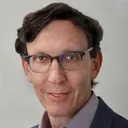
Going to be a great season. Season opener April 28, 2023
Eric Shuffler Founding Partner, River Crossing Strategy Group
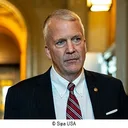
Willow Project, Alaskan oil-approved pipeline.
Dan Sullivan U.S. Senator from Alaska
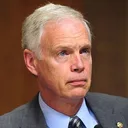
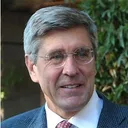
The worst of the banking crisis might be over…for now
Steve Moore Economist; Co-Founder, Committee to Unleash Prosperity

5 planets align in the night sky.
Steve Kates Space and astronomy broadcaster (Dr. Sky)
David Malpass
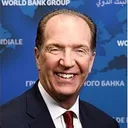
The Economic Strategy to Counter China
David Malpass Former President, World Bank Group
U.S. Strength Lies in Innovation and Energy Independence
David Malpass Former President, World Bank Group
Small businesses are key to economic growth.
David Malpass Former President, World Bank Group
Will the Fed finally move on to cut interest rates?
David Malpass Former President, World Bank Group
Trump has rearranged the world order of trade.
David Malpass Former President, World Bank Group
World Bank chairman discusses tariffs.
David Malpass Former President, World Bank Group
