


Former Governors David Paterson & Andrew Cuomo
Advice for Governor Hochul from two former Governors.
Transcript
Automated transcript · uncorrectedWell, it is a critical time in our city, it’s a critical time in our state, and many people are concerned. Well most of all, two former governors are with us this morning. We have a former governor David Patterson, former Governor Andrew Cuomo on some possible solutions and possible advice depends how everybody wants to take it on what’s going
on our city, our state. And it’s two weeks away from the budget. And I understand from history that during budget time the governor in Aubany has extra bullets in their gun. Well, good morning, governors, and thank you for coming on the Cats round Table this morning. And a Governor Pattison, how are you doing.
I’m doing fine, and we are, as you just pointed out, we are two weeks up against a budget that has to be passed. And this budget, as Governor Clomo has pointed out, is going to be more than just the budget for the state itself. It’s going to have to deal with congestion, pricing, the issue of the migrants, and
the issue of the National Guard in the subway. So this is going to be a lot for the legislature to try to pass April first, and even with the governor prodding them, they might be there a little longer than after April first. Winning your Greek governor.
Governor Clomo, you always said to me and the Governor Patterson that during the budget time, the governor has a little bit a few extra bullets in their gun when they’re dealing with the state Senate and the State Assembly.
Well, John First, good to be with the Governor Patterson, Good to be with you, John. The governor doesn’t have a few extra bullets. The governor has all the bullets in the gun when it comes to the budget. And Governor Patterson and showed that, and I think I showed that, and Governor Patterson is exactly right. These are three the
major major issues congestion, pricing, national Guard, and the situation with the migrants, and they should be dealt with in the budget. And if they are, these are complicated, contentious issues, and there’s going to be a real discussion about them.
I hope that the legislature doesn’t punt and ignore them, because the legislature tends to ignore anything that is politically contentious. And if the governor and the legislature can get away with ignoring a problem, they will, And these issues I think are too consequential to play politics congestion pricing at this time. And I support pricing as a policy. I
passed it as a policy, but the question is is it the right policy and is at the right time for that policy?
And I think Governors, before you go on, I just want to say, right now is a critical time a city. A tremendous amount of people. I’ve heard numbers from anywhere from five hundred to eight hundred thousand dollars people have moved out of the city, and sooner or later, the crap is going to hit the fan unless we get
to the the exodus under control. Both of you, which issue is the most important? First that that that the exodus is continuing.
I think the biggest issue right now is the migrants. It’s over two hundred thousand of them that are here this year that weren’t here last year. There hasn’t been significant federal aid to try to give any support to this current governor, or, to Mayor Adams, who really had this whole thing dumped in his lap, and I still
don’t understand how the whole thing seems to get blamed on him. But I think a state solution or at least endeavor to try to do something about the migrants. That’s where I would start. How about you, Andrew, Well, let me I think David is exactly right, and let’s be We’re two weeks away, so let’s really be honest
about this issue. The migrant issue in New York City is a consequence.
Of what the State of New York does. And not to get in the weeds. But what’s happening is there’s a court action that says called the Callahan Decree, which is from a court case carry Carry, the Coalition for the Homeless Governor Carries, was back in nineteen seventy nine, and it said that New York City must provide for
the home. And what they’re saying is the migrants are basically like the homeless, and therefore New York City should provide housing for the migrants. This is from the state Constitution, Article seventeen that says the state and its subdivisions shall provide for the needing. It was from nineteen thirty eight.
It also has a provision David that says as shall be determined and modified by the state legislature from time to time. So they passed it in nineteen thirty eight. But they recognize that it things are going to change, and the legislature should modify it. All the legislature has to do is say it doesn’t apply to migrants, or
it doesn’t apply to non residents of the state. That’s what they have to do. One line bill, and New York City wouldn’t have to be forced to provide the housing for the migrants. The state won’t do that. The governor hasn’t proposed it, the legislature hasn’t proposed it. And then the state has the added goal of saying, we’re
going to make New York City, how’s the migrants virtually alone nowhere else in the state, and the state isn’t even going to pay. Mayor Adams is exactly right. You want to make this city house all the migrants, then the state should pay. The state’s only talking about paying a third of the cost and saddling New York City
taxpayers with two thirds of the cost. On what theory, I mean, it’s really abusive to the taxpayers of New York City.
What do you think, David, I think that obviously all of the government around the country that are encumbered by this migrant program are starting to react in Chicago, they don’t want it anymore. In Denver, they don’t want it anymore.
And what you just articulated is a feeling that even internally some of the states are not even really too interested in helping their largest city or their largest cities. And that’s not America as I see it. It’s not what we’re supposed to do. And we’re in government.
Now.
The other situation is governors. And we sort of joked about it on the five o’clock showed the other day, But the migrants are getting an average of three hundred and eighty seven dollars a day, seven days a week to house them, feed them, et cetera, et cetera. A poor employee in New York City, New York State, even
if they’re making twenty dollars an hour, eight hours, that’s one hundred and sixty dollars a day before taxes. I mean, I want to cry. Okay, an American has to work one hundred and sixty hours dollars an hour, twenty dollars an hour before taxes, versus the migrants are getting three hundred and eighty seven dollars a day for seven days
a week.
Well, what’s the answer, Well, first is it’s lunacy. It is lunacy. What is happening, and that it is allowed to continue is what is making New Yorkers so frustrated and angry because everybody gets it right. You are people who have been on lit for years to come to this country and apply for the citizenship. Now you have
basically exploded a loophole that says if you come seeking asylum, you get ahead of the list. It’s going to take us seven years to have a hearing as to whether or not you qualify for asylum. And in the meantime, you’re in the United States. The government is paying all your costs. And by the way, good luck finding these
people seven years from now. And again, the state could stop this if they wanted to, but they are afraid of the politics. And if you know when they’re going to pay the price, they’re going to pay the price on election day because New Yorkers aren’t stupid and they get it. And I think they are going to be
more frustrated and more activated than we’ve seen them in a long time.
And I would add to that that I think the federal government is going to pay as well. And some of the people who run it because this is really the epicenter of where this problem is germinating, and it is an incredible way to treat states like New York and others that have that same problem.
I understood bank, Governor.
It’s not just New York City.
That was exactly right.
I mean, the entire state is watching this right now. New York City has been chosen by the state as the only place where migrants are housed, essentially, but the entire state is watching this, and they know the cost, and it is it makes no sense to anyone, John, what you just said. It resonates with everyone. It’s something
like three hundred and eighty dollars per day until they have a yearing and the hearing. By the way, if the federal government says it’s now seven years.
That means it’s ten years.
Right, who knows when it is.
You’ll never find those people again.
No, that’s right.
And then the fact that you have the situation, as the governor described, we have people coming in excuse me, people coming into the state and actually being better off than people who were already there, people who were in shelters, people who were homeless, people who are uh, you know, living in the lowest standard of living and they’re basically
being displaced. Now we’ve had people be displaced by people who had more money than them, this is the first time it’s ever happened with Theoretically they would have less, but they have more, and.
That Mayor Adams what they have done is and this is why I think the state is going to do nothing in the budget because they have been allowed to get away with total anonymity. Nobody knows that it’s really the state that is forcing New York City to do this.
It’s all on Mayor Adams, and he’s taking a political beauty for what’s happening on the migrants. And I think that’s just fine by the state officials and the legislators. And that’s why I think they’re going to do nothing, because it hasn’t been communicated that this is really up to the governor in the state legislature. If it was
ever communicated, you get these assembly people and senators in New York City and you tell their district. By the way, it’s your state legislator who is saying only migrants in New York City, and it’s your state legislator who is saying new York City taxpayers should pay the bill.
They would be ex New York legislators.
Now governors. The other big item why people are moving is the crime in the subways, and it looks like Governor Hockel has come up with a temporary solution. There’s crime in the streets. Every drug store, all the right aids have closed up. Every other drug store has everything locked up. My employees in Gristitis and Gastino used to
work to midnight, or some of them are scared to work to midnight. What do we do to stop the exodus?
I was talking to the to the Transit Police, Michael Kemper, and he’s saying that when the National Guard people come in not operating independently, they’re operating under the aegis of the New York City Police Department. That’s good to hear that, But at the same time, what kind of system do we have now? We have people who had trained for
a long period of time before they become police officers, and there’s no way that you could convert that and put National Guard people in the subways, even if they’re being monitored by the police, and get the same results as if you just had more police officers, which is what Mayor Adams is saying, just give us the overtime
money and we’ll put the police officers in the subways and that will curb the crime.
Well, the other situation and said, I’ve talked to the commissioner. Only police commission is new and old and and current is there’s three three hundred very bad criminals, repeat criminals, like a chief Temper said, I have one guy that I arrested fifty times, so he used to be under the Rockefeller Raw. Three strikes in, you’re out. And I’ve
said to the politicians in Aubany, what do you want? You want five, you want ten, you want twenty strikes in, you’re out. But some of these people don’t belong in the civilized world. What say you guys?
Well, Jen, both David and I were very hard to reform the drug laws which which went too far the other way, and we did successfully reform them. But the pendulum often swings too far the other way. You’re right, you have a small number of people who tend to be the repeat offenders, and the criminal justice system has
to recognize that they can’t. You can’t have immunity for breaking the law, because otherwise you will do it again and again and again. And David’s point about what’s happening in the subway system is exactly a statement of where we are. The people of the city elected Mayor Eric Adams.
They elected a former police officer. When they elect a former police officer, they’re telling you something. They’re telling you public safety is a top issue and they want police. The National Guard. Both David and I worked with them, loved them the great They do a lot of good things.
They’re not police officers for the transit system, which by the way, is one of the most complicated positions for a police officer, even once they’re trained. And the answer is higher, more police. That’s what Mayor Adams is saying.
Give me money for overtime or money to hire more police. That is the answer. And we know that’s the answer. Right. You can go back to the David Dinkins administration. He takes over, there’s a crime problem, they increase the police force fifty percent and crime goes down. Most of the cops came on during Rudy Giuliani and he got the credit,
but it was the Dinkins administration. First black mayor, hire more police. It’s this political far lest attitude that is a hangover from defund the police. We don’t want to hire police, so we’ll send the National Guard, but we don’t want to hire police. It’s political, It makes no sense.
It actually, I believe jeopardizes people because if you’re not trained to do police work in the subway system, you shouldn’t be doing police work in the subway system.
I mean, we have an incident or two every year in the subways where an officer is forced to fire his weapon for her weapon, and there is investigation to see whether or not that was right. Now, this comes from people who are highly trained, and even at that level, it’s very difficult to try to arrest people in that environment,
particularly in the subway. So here you have a situation now where people who it would take I would assume six to nine months to adequately train them and say that they could operate in the system by themselves. So if it’s a temporary maneuver, it’s hard to say that it’s temporary when the people who would perform it wouldn’t
be ready for almost a year.
Governors, what I say is if I was you know, I’m a CEO of my companies, and the governors or the CEO of the state. Now what I say, sometimes when I have a major problem, I throw everything at it until it’s fixed. And to me, if if I’m looking at what Hockel did, Governor Hokel did with the
National Guard, maybe it’s a two much solution to maybe get get the people fixed. But that’s not a solution unless you put them away. And the people that are violent criminals, you put them away and and they don’t live among civilized people.
Well that’s right, John, and this is the first solution Governor Hokee wants to use. Will just hope that it works out and you know, maybe it will reduce the crime and that that will, you know, be a great thing. Uh.
It’s good to see that he’s taking some action where you know, at times we’ve seen leaders in the past fitback and do absolutely nothing.
Understood, But yeah, I just look, having the presence of the National Guard is good. Doing something as opposed to doing nothing is good. But I don’t know why we are trying to reinvent the wheel here when we know the answer. This is not an optical problem. This is not about the problem is not checking people’s bags in
the subways. Right.
We need trained police. What happened was this state funded this city to have over time to have additional transit police. The funding ran out, the number of police in the transit system dropped, and the crime went up. The answer is more police, not optics, not theater. Hire the police.
Now the city council doesn’t like to hire police. That’s why what I go to hangover defund the police. I get it. I went through this with the city twenty nineteen. They didn’t want to hire more police. I hired five hundred police for the MTA because the city didn’t want to use the NYPD transit cops, so we hired more
MTA police. But the answer is hire more police. Period understood.
Now we only have five more minutes left, and maybe you, as former governors, can give some advice to our governor. The bullets at her disposal to help get the Estate Senate in the State Assembly on her side.
To go back to the opening statement you made, the governor has additional bullets, and I said, tongue in cheek. The governor has all the bullets. The governor has total control during the budget process. That has been litigated Silver v. Pataki, that has been demonstrated. Governor David Patterson sat in the Red Room in one of the great scenes in all
and sat there and vetoed, how many thousands of bills.
Did you feed O, David, six thousand seven and nine? Wow, since I lost the use of my right hand in.
A really obvious demonstration of the governor’s power, David Potters instead Aaron VT are the thousand and seven I’m bills saying.
You know, our governor. For the first hour we did it, and finally one of our press people said, you know, if you’re going to sit there and Vita, then we should put a camera in your theatic camera on me for eight and a half hours.
So he made it clear the power of the governor during the budget. And I understand these are politically contentious issues, and let’s be honest, politicians all across the board is scared. People are angry. These are tough issues. But ducking the issue never works. Denying a problem never works. Congestion, pricing, crime in the subways, the migrant problem. You either solve
it now or it’s going to get worse. Each one of them will get worse. More people will leave the city, there will be more crime, more migrants, more costs, I’m afraid they’re going to duck. I’m afraid the legislature is going to duck, and they’re all going to duck, and you’re just going to see these problems wholly unaddressed during
the budget and they will continue to fester. What do you think, David, what’s your bet?
Now? I have a slightly different point of view, Governor. I think that everything you said is likely to occur, except for the fact that this is an election year twenty twenty four. In twenty twenty two, those same legislators were feeling no pain. You know, they were going to win.
They were going to have me, you know, super majorities, the Governor’s going to get re elected easily, and that kind of thing. But there was kind of a little bit of a rebellion by the voters of New York.
And I don’t think that the voters of New York have forgotten how they felt in twenty twenty two. And if these legislators don’t do something, I think we might see a reenactment of that shift that occurred in the summer of twenty twenty two.
I agree with you. I agree with you with that. I think I think they’ll feel it in the primaries, I think they’ll feel it more in the general the right. I think, yes, that’s where that’s where you’re going to see traditionally safe Democrats pay the price for migrants, for the crime, for all the absurdity that you articulated John
at the beginning of this interview. I think you’ll see it in the primaries, but more in November. The Republicans are going to really come out in force and there’ll be no answers because you can’t defend these policies. And just the way David was saying, the Democrats missed the crime issue in the last cycle, they’re missing the crime
issue again, and they’re mission missing migrants and congestion pricing, which is fifteen dollars a day, and that can be crazy.
It’s crazy if I get another truck on my one of my stores, Governors, and they’re going to charge me one hundred dollars, it’s going to be reflected back to the consumer. So this is a consumer.
Tax, no totally.
And now, Govenors, I want to have we’re almost at a time. I’d like to have a one one minute closing statement by each one of you.
All Right, here we are in twenty twenty four. We are, you know, getting towards the primary season’s general election season, and we’re looking at some workable, sensible, achievable goals to try to address what no one can deny right now is a real lack of public confidence in their public servants at this particular time. So I’m just hoping that
something gets into the water or into the minds of people who have decision making capacity right now to try to turn that around. We’ve done it before, Governor Clomo pointed out, we did it with Mayor Dinkins in nineteen ninety two ninety three when they passed the State Street State Cities Act. We can do it again.
Love a A.
Clomo here here. Yes, people are disgusted. People are frightened from the national level all the way down. Let New York take a different course, stand up and be heard and address these issues. I know they frighten politicians, and the old adage a politician who does nothing does nothing wrong.
Yet that doesn’t work, and that’s not true. And these issues are real to people. This is We’re I’m talking. There’s nothing academic here. They get the migrant problem, they get congestion pricing, they get crime in the subways. And I know it’s difficult, but it’s better that you confront the issue and show the people that you hear them
and you respect them, and you’re trying to do something about it. Yes, it’s easy to pass a budget if you ignore all the time tough problems. But as Governor Patterson said, if you do that, you’re going to pay the price on the primary day, and you’re going to pay the price on the day of the general election.
And even worse, you’re going to further the frustration and anxiety that people feel government just doesn’t work and politicians don’t represent them. Let New York take a different course we always have. New York was always the leader and it can be again. But you have to lead, and that is the job.
Well Governor, Governor, Governor Patterson, Governor Cuomo, the fifty sixth and fifty seventh governors of New York State. We love our city, we love our state. Thank you for all working together to help save our city and our state.
God bless New York and God bless America. Thank you so much.
Thank you, John
Sunday, March 17, 2024
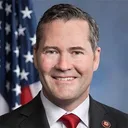
"Haiti has devolved into a lawless mess"
Mike Waltz U.S. Ambassador to the United Nations

President Biden will soon be replaced as candidate.
Dick Morris Political Strategist and Author
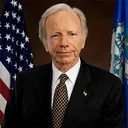
No Labels will have an alternative candidate shortly.
Joe Lieberman Former U.S. Senator from Connecticut

What is Senator Schumer doing? Israel?
KT McFarland Former Deputy National Security Advisor

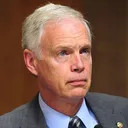
The border and the budget are crucial issues. TikTok ban?
Ron Johnson U.S. Senator from Wisconsin
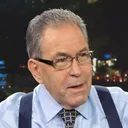
This week's guest: Michael Rudder, Rudder Principal Group
Michael Stoler Real Estate Expert


Heavy missile launch. Ultimately, set for Mars.
Steve Kates Space and astronomy broadcaster (Dr. Sky)